Ziziphus oenopolia
Rhamnaceae

Main specimen
Habit
Ziziphus oenopolia is a very thorny, large-sized, deciduous and climbing shrub.
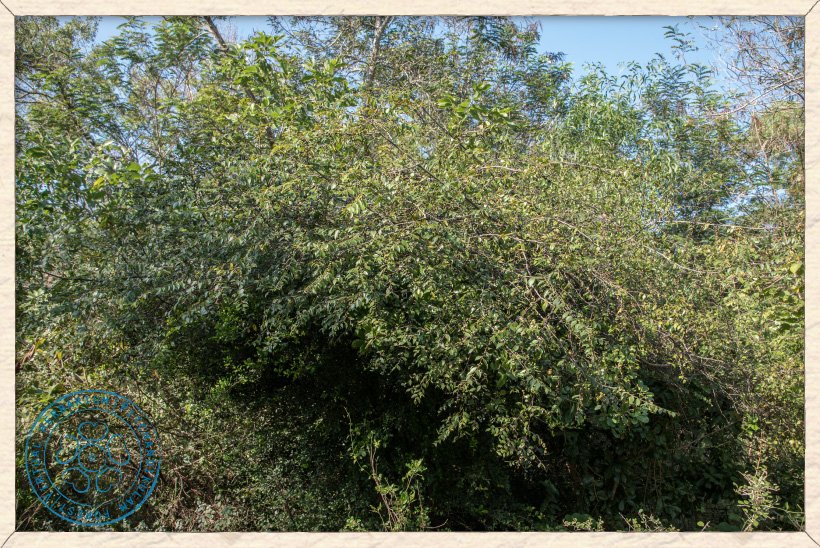
Ziziphus oenopolia climbing shrub
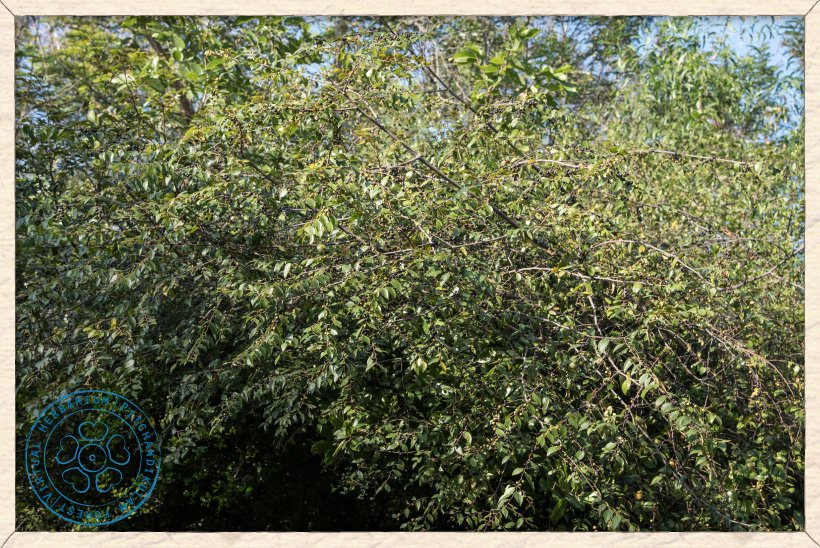
Ziziphus oenopolia shrub
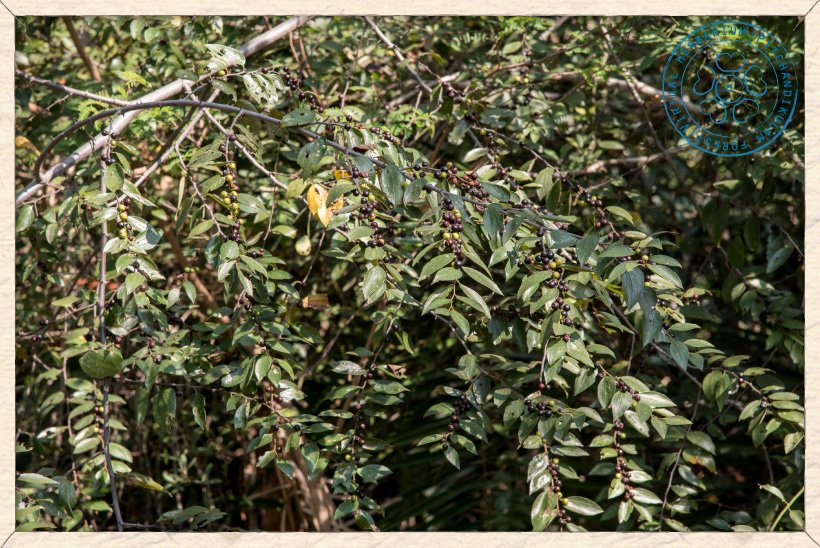
Ziziphus oenopolia in fruit
Stem Bark
The bark of Ziziphus oenopolia is greyish-coloured and densely lenticellate.
Ziziphus oenopolia is very thorny, it is armed with numerous and sharp prickles.
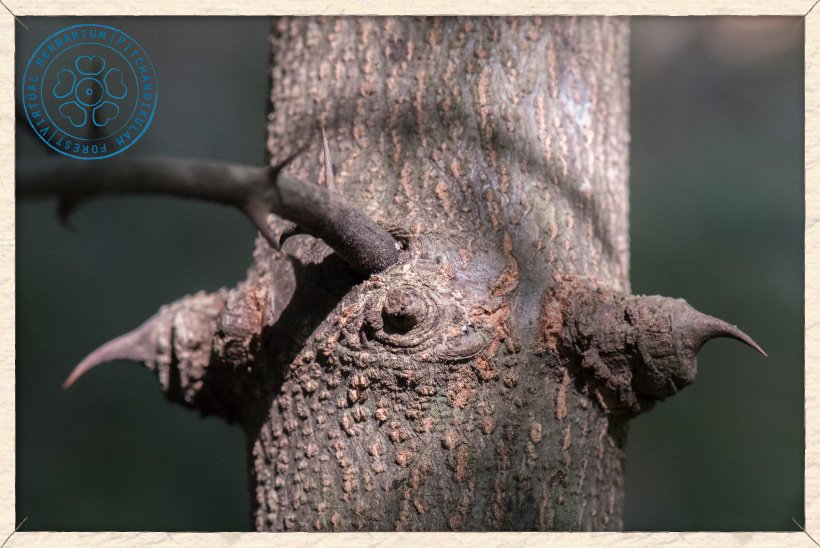
Ziziphus oenopolia thorny stem
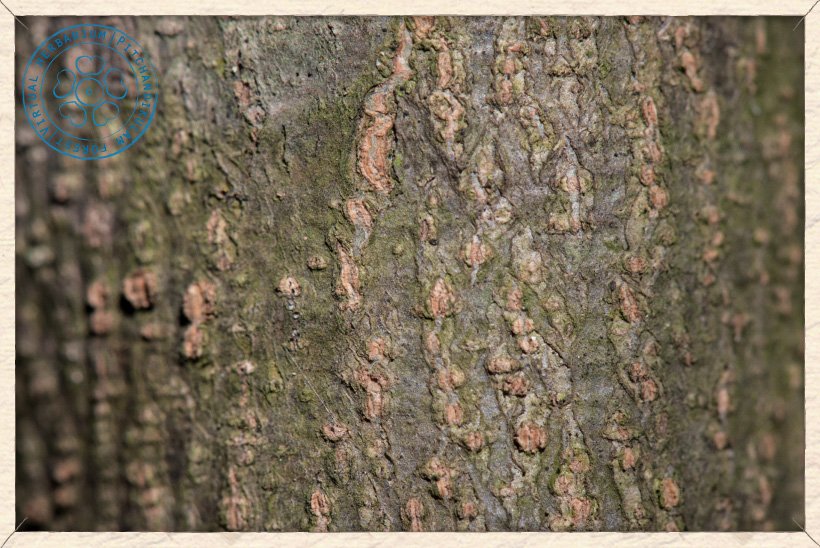
Ziziphus oenopolia bark
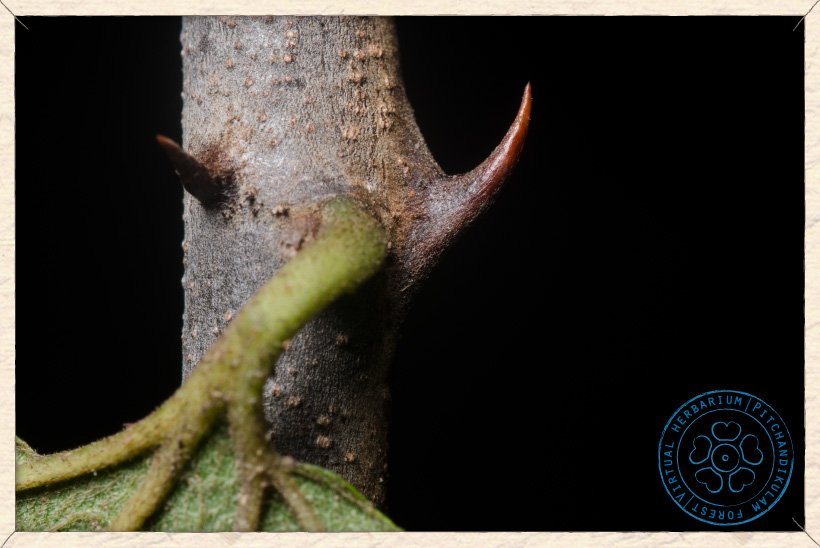
Ziziphus oenopolia prickle
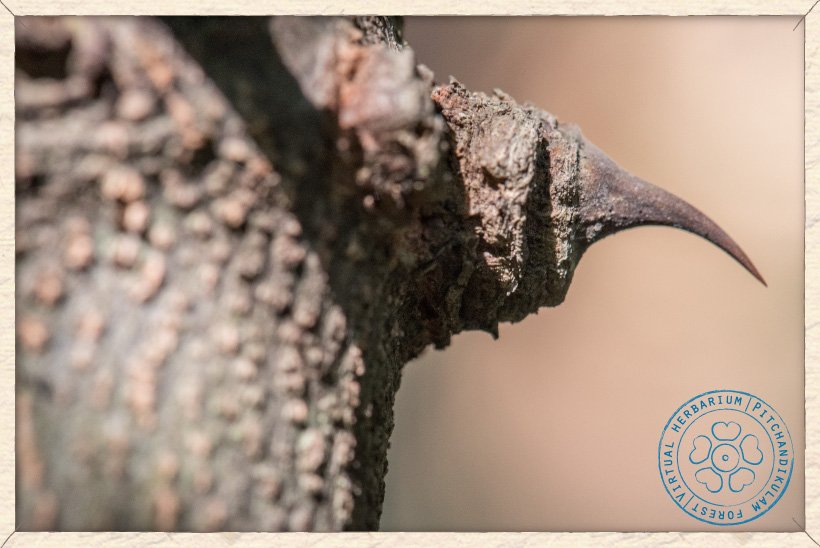
Ziziphus oenopolia prickle
Leaf
The leaves of Ziziphus oenopolia grow alternately on the stem.
The leaf is simple, bright green-coloured above and paler beneath. The leaf is coriaceous and pubescent (rusty hairs).
The leaves have a 5-6 mm long petiole.
The leaf of Ziziphus oenopolia is 3-4 cm long and 2-3 cm wide. The shape of the blade is obliquely-ovate, the apex is acute-acuminate, the base is oblique and rounded and the margins are slightly serrate and hairy.
The venation of the leaf is reticulate with 3 prominent veins.
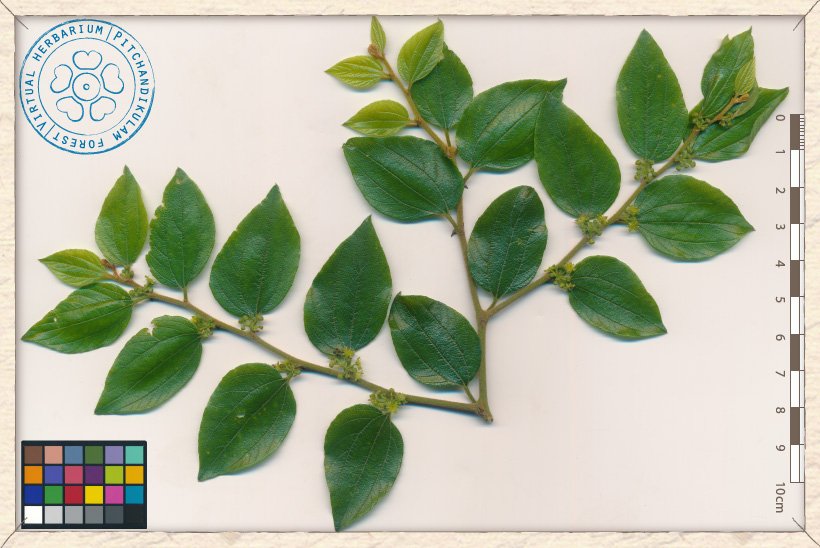
Ziziphus oenopolia branchlets (upper side)
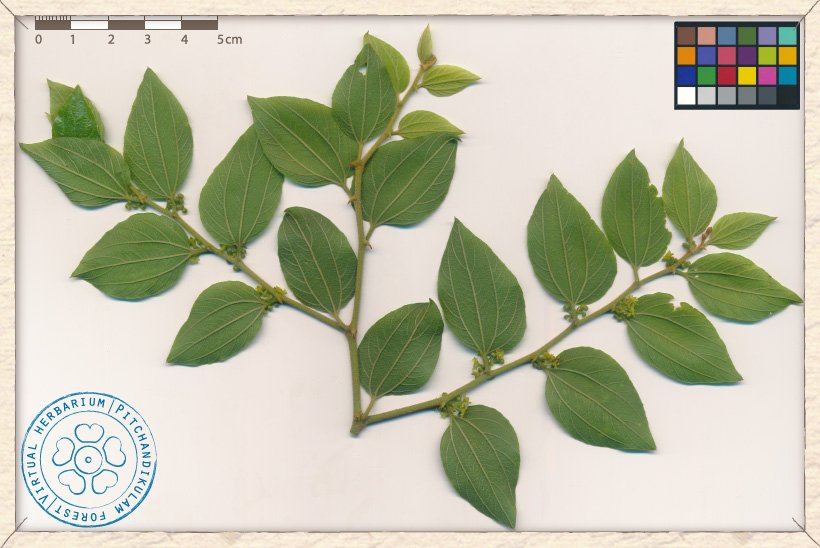
Ziziphus oenopolia branchlets (lower side)
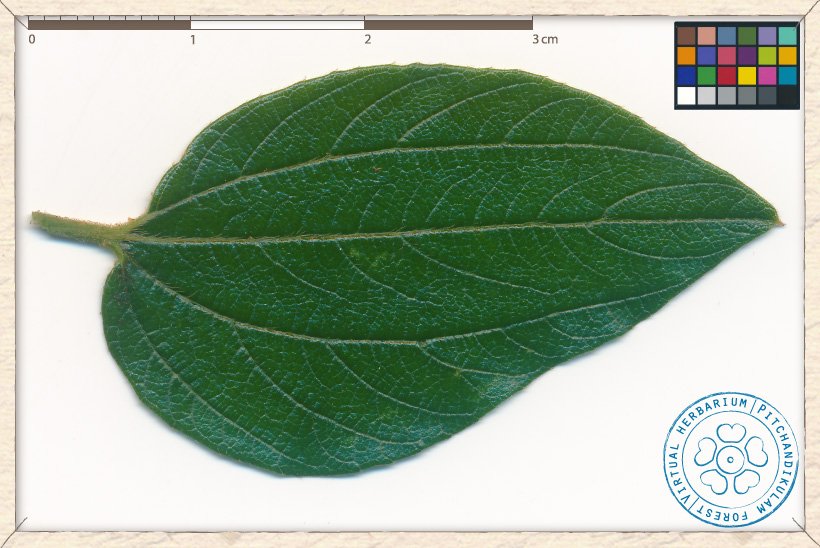
Ziziphus oenopolia leaf (upper side)
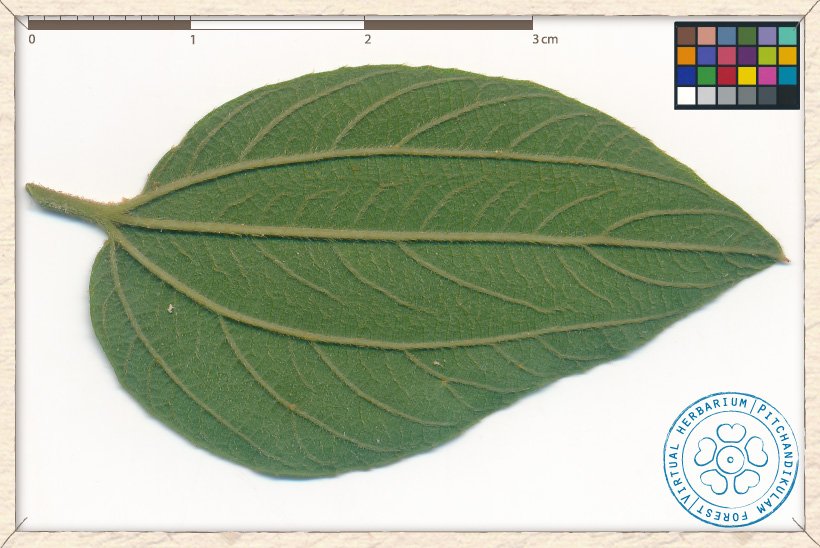
Ziziphus oenopolia leaf (lower side)
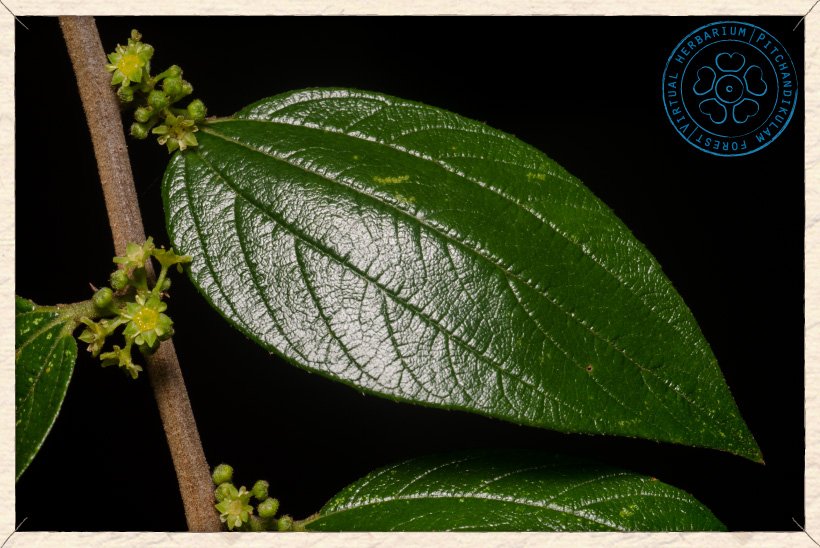
Ziziphus oenopolia leaf (upper side)
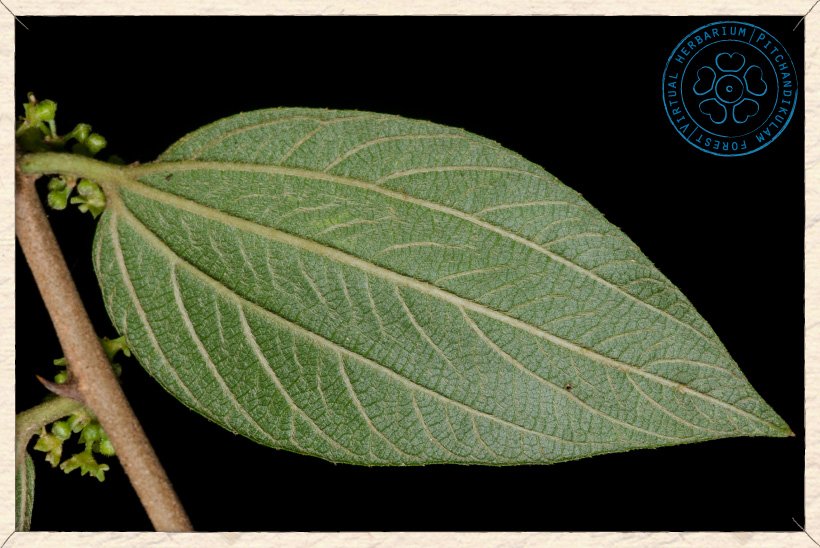
Ziziphus oenopolia leaf (lower side)
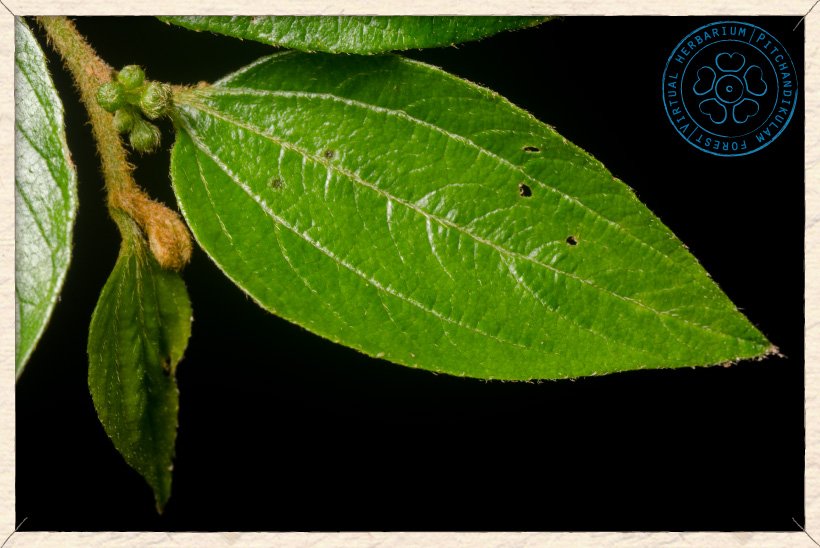
Ziziphus oenopolia new leaves
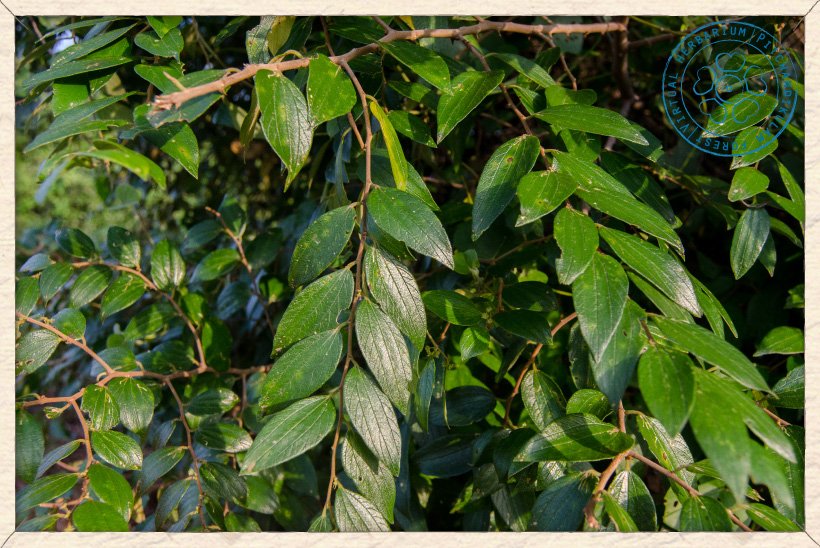
Ziziphus oenopolia foliage
Flower
The flowers of Ziziphus oenopolia are grouped in short axillary cymes (at the upper axils of the leaves).
The flowers are 5-merous.
The calyx-tube is cup-shaped, 5-lobed. The sepals are ovate with an acute apex, they are 1.5 mm long and 1 mm wide. The calyx is light green and pubescent.
The corolla is composed of 5 light green-coloured and glabrous petals. The petals are orbicular and clawed, about 1 mm long and 0.5 mm wide.
The androecium is composed of 5 stamens. The filaments are 0.6-0.7 mm long with globose anthers at the tip. They are inserted at the base of a nectariferous disc.
There are 2 connate, short and stout styles with simple stigmas at the end.
The ovary is globose and 2-celled.
The buds are covered with rusty hairs.
The flowers are fragrant.
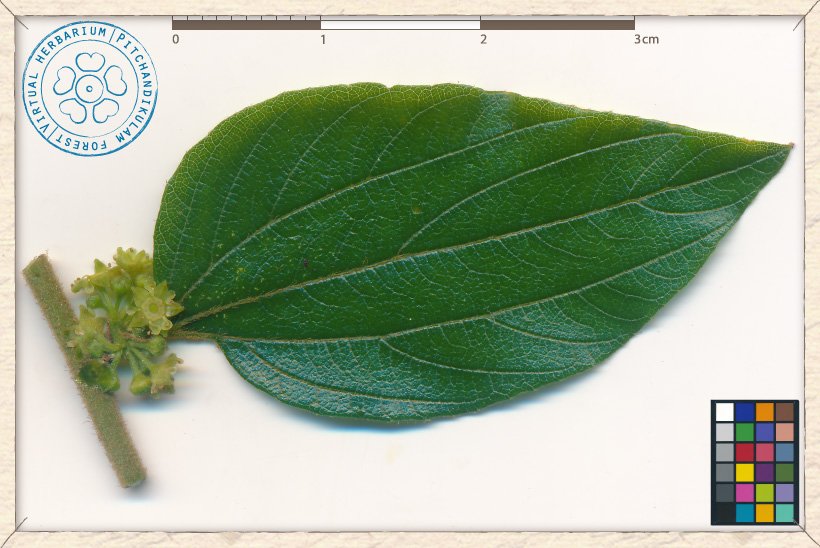
Ziziphus oenopolia inflorescence
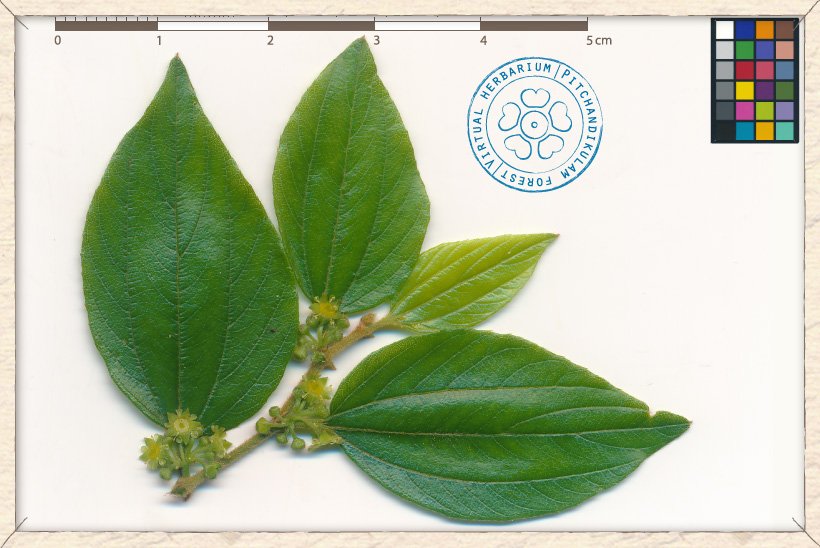
Ziziphus oenopolia blossoming branchlet
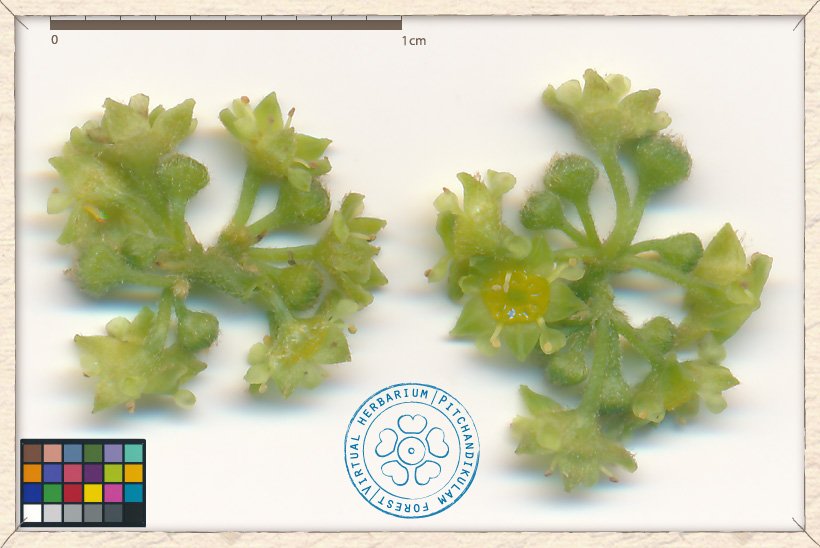
Ziziphus oenopolia cymes
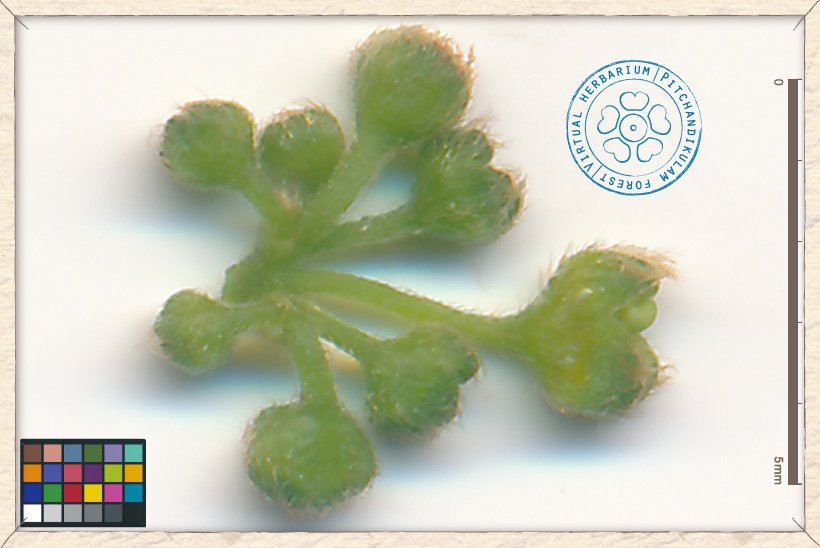
Ziziphus oenopolia flower buds
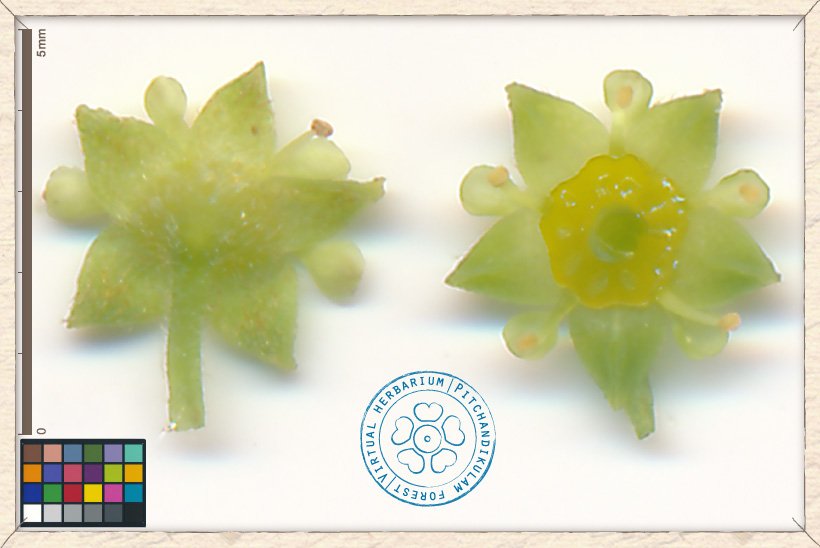
Ziziphus oenopolia flower (lower and upper sides)
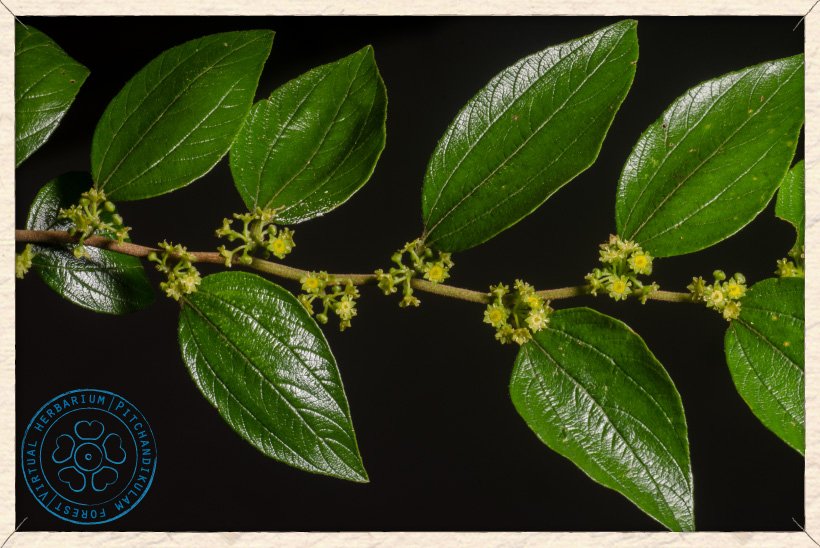
Ziziphus oenopolia blossoming branchlet
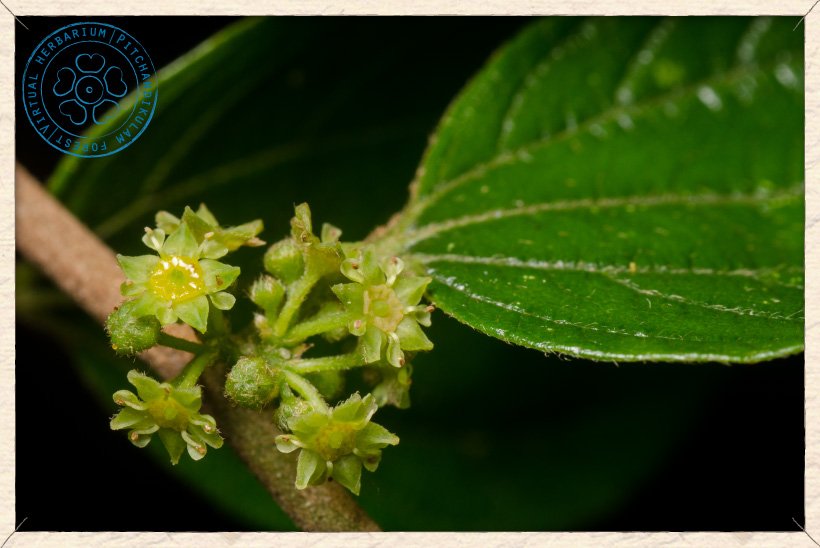
Ziziphus oenopolia inflorescence (cyme)
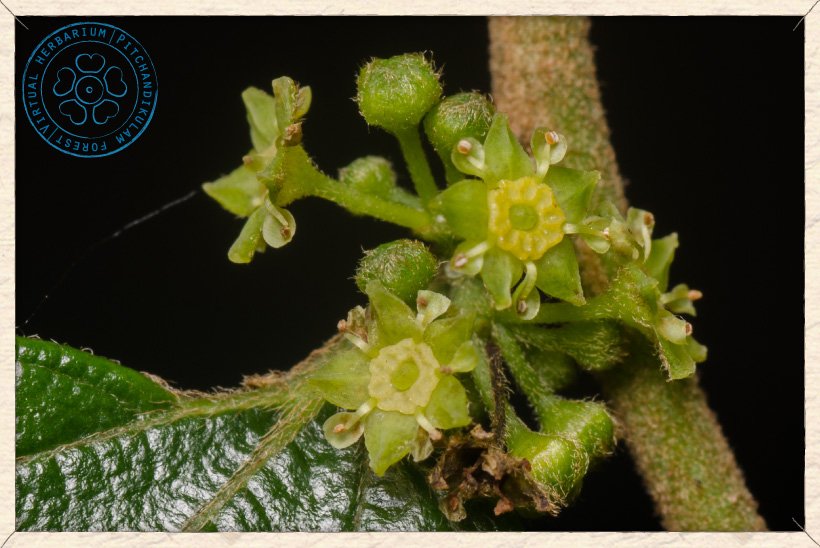
Ziziphus oenopolia flowers
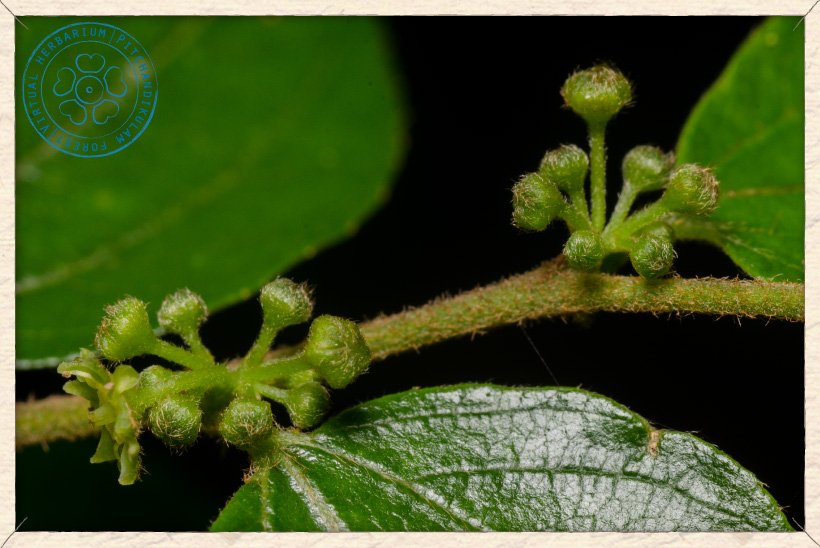
Ziziphus oenopolia flower buds
Fruit
The fruit of Ziziphus oenopolia is a globose drupe. The fruit is about 8 mm across with a 1.5 mm long peduncle. It is shiny and black-coloured when ripe and it contains 1 stone.
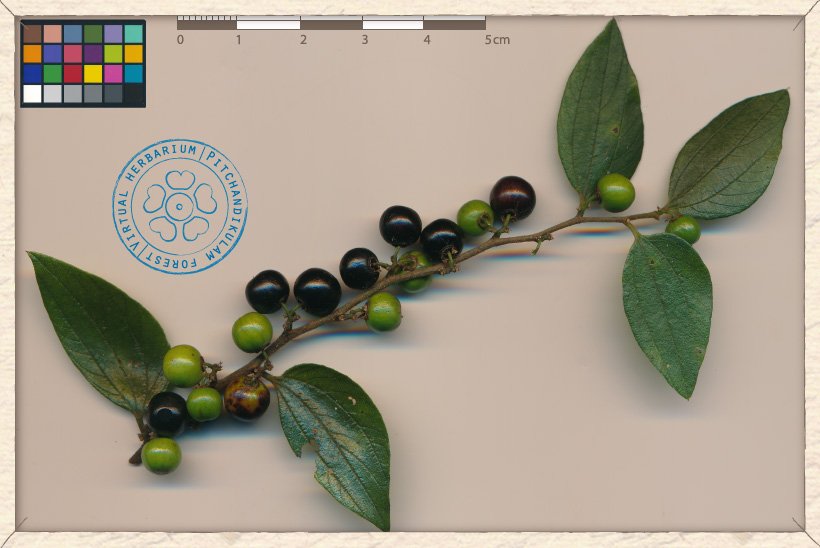
Ziziphus oenopolia fruiting branchlet
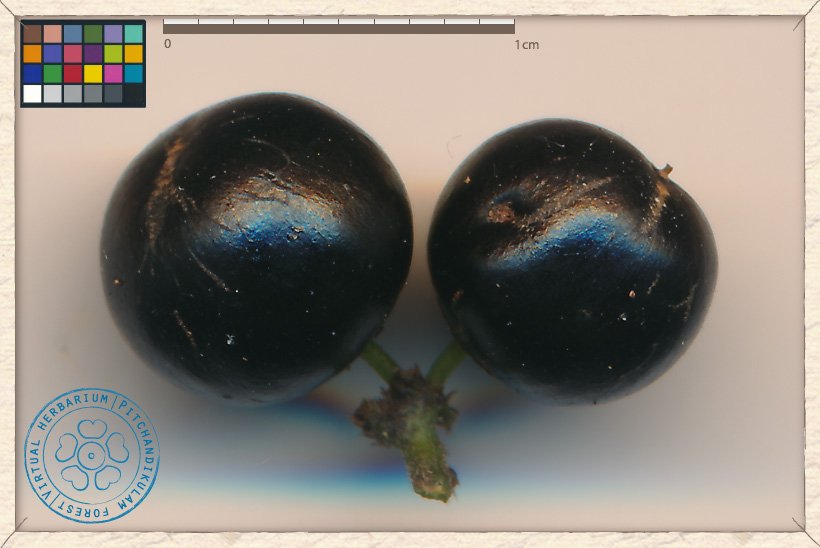
Ziziphus oenopolia ripe fruits
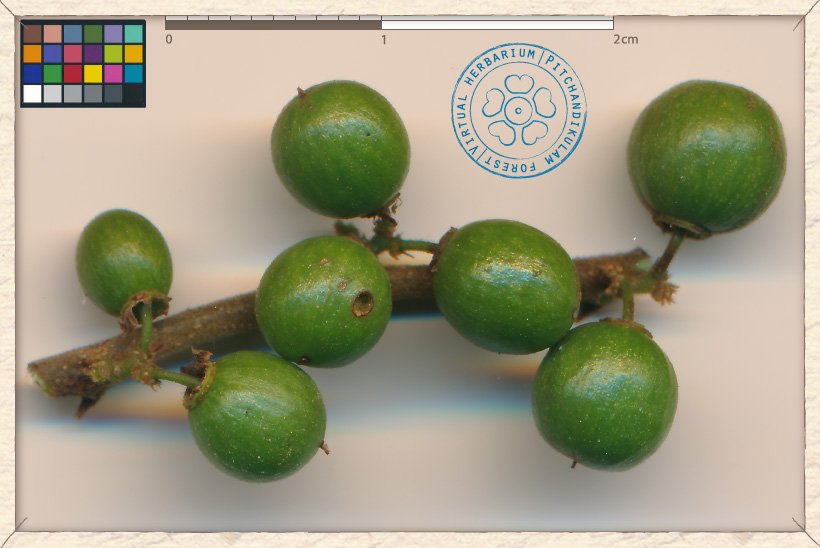
Ziziphus oenopolia unripe fruits
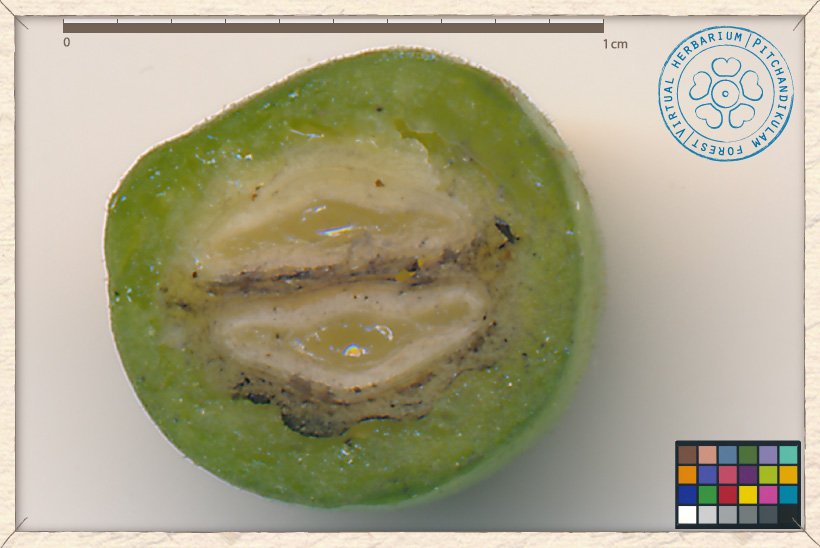
Ziziphus oenopolia unripe fruit transversal section
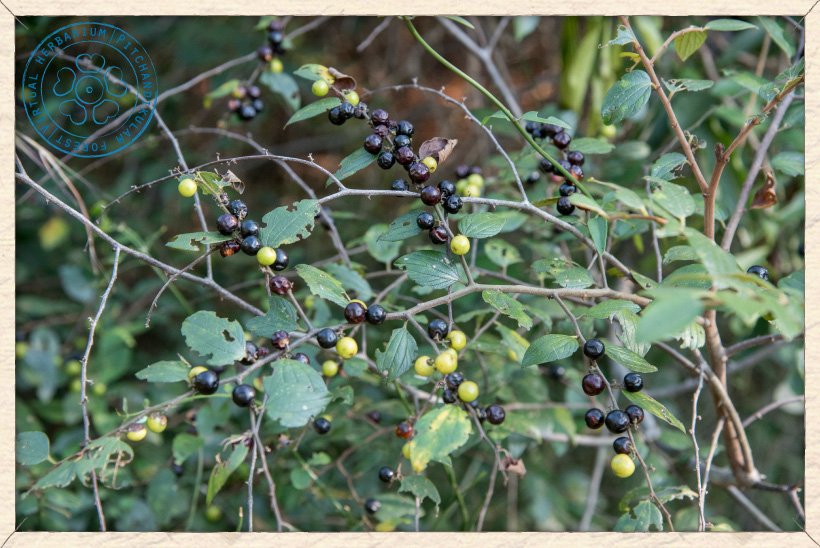
Ziziphus oenopolia in fruit
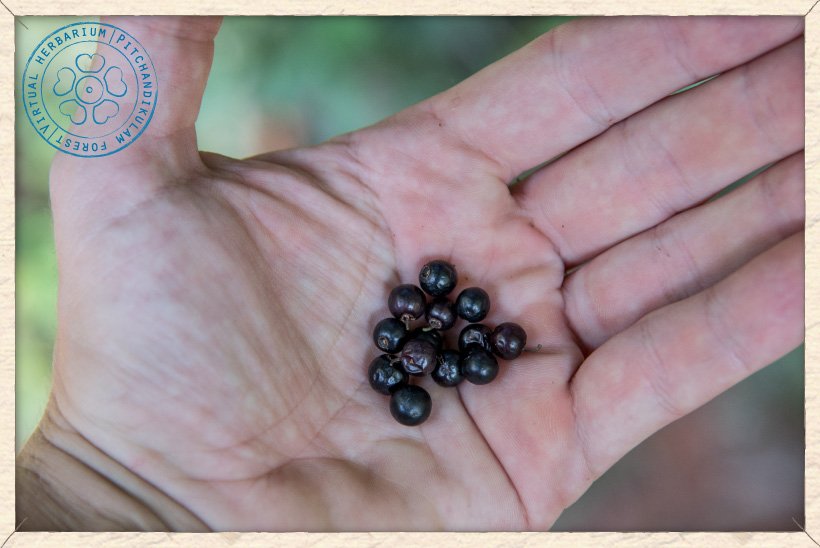
Ziziphus oenopolia ripe fruits
Seed
The seed of Ziziphus oenopolia is enclosed into a globose and very hard stone. The stone is wrinkled, brownish-coloured and about 5 mm across. It contains one seed.
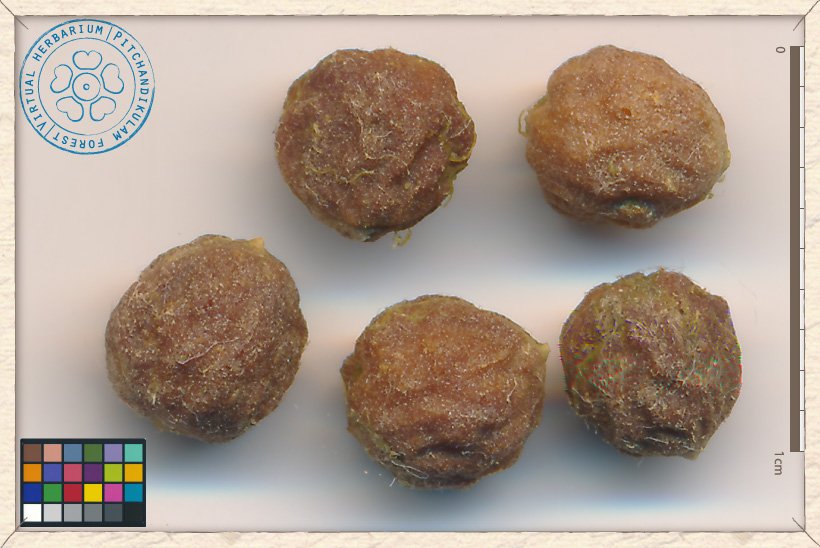
Ziziphus oenopolia stones
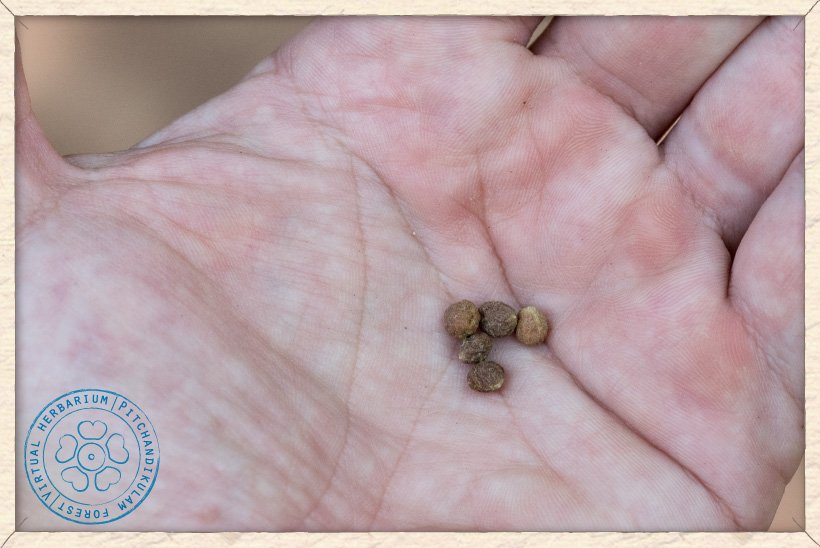
Ziziphus oenopolia stones
Human Uses
Ziziphus oenopolia is useful as a living fence.
The ripe and raw fruits are edible (very tasty).
Ziziphus oenopolia is used in Ayurveda and Siddha medicines.
The fruits are digestive and stomachic.
The bark is antiplasmodial, antimycobacterial, febrifuge, digestive and tonic.
It is used for healing wounds and stomachache.
The root bark decoction is used to treat fresh wounds.
The root paste mixed with water is given for abdominal pain.
The root is also a remedy against hyperacidity and ascaris infection.
Sources :
- Arya Vaidya Sala, 1996, Indian Medicinal plants
- Basu & Kirtikar, 1918, Indian Medicinal Plants
- Chopra, 1956, Glossary of Indian medicinal plants
- Khare, 2007, Indian Medicinal Plants, An Illustrated Dictionary
- Quattrocchi, 2012, CRC World Dictionary of Medicinal and Poisonous Plants
Ecology
Ziziphus oenopolia is found in thickets, scrub jungles, forest edges and deciduous slopes from the coastal plains up to 1200 m high in the hills.
Distribution
Indo-Malesia biogeographical region, China and Australia.
Source
Information on this page is sourced from: