Indian cork tree
Millingtonia hortensis
Bignoniaceae
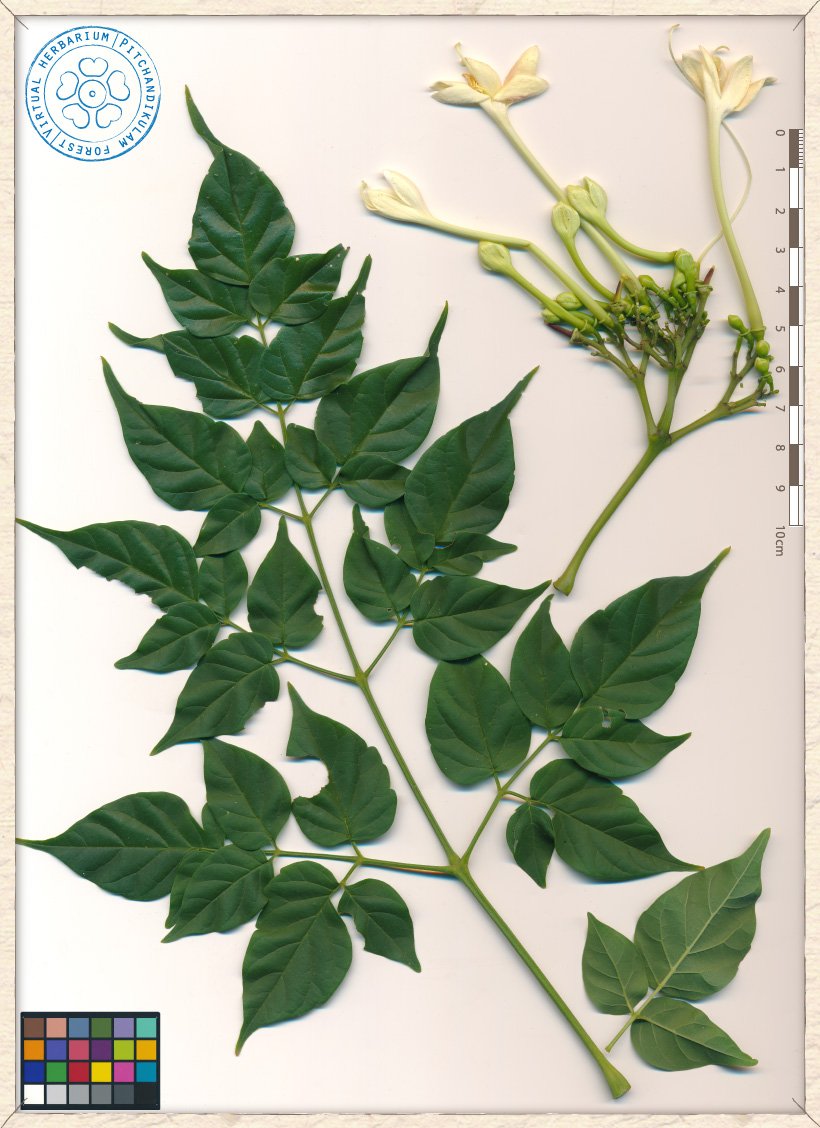
Main specimen
Habit
Millingtonia hortensis is a thornless, medium-sized and deciduous tree growing up to 12-15 m high.

Millingtonia hortensis tree
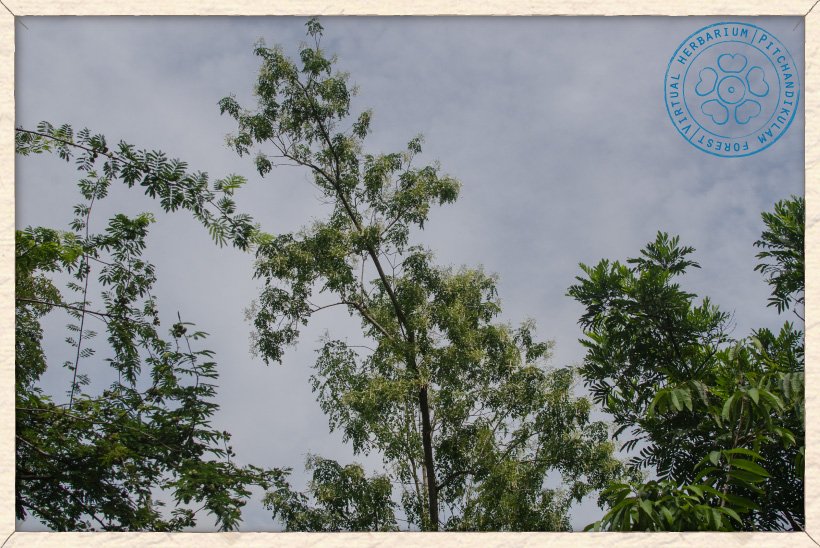
Millingtonia hortensis crown
Stem Bark
The bark of Millingtonia hortensis is yellowish brown-coloured, thick and corky, longitudinally fissured and transversally cracked.
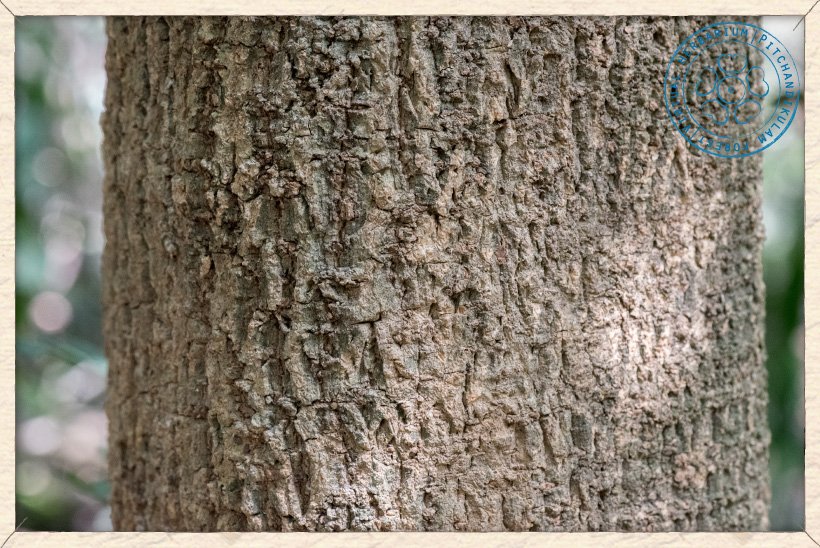
Millingtonia hortensis trunk
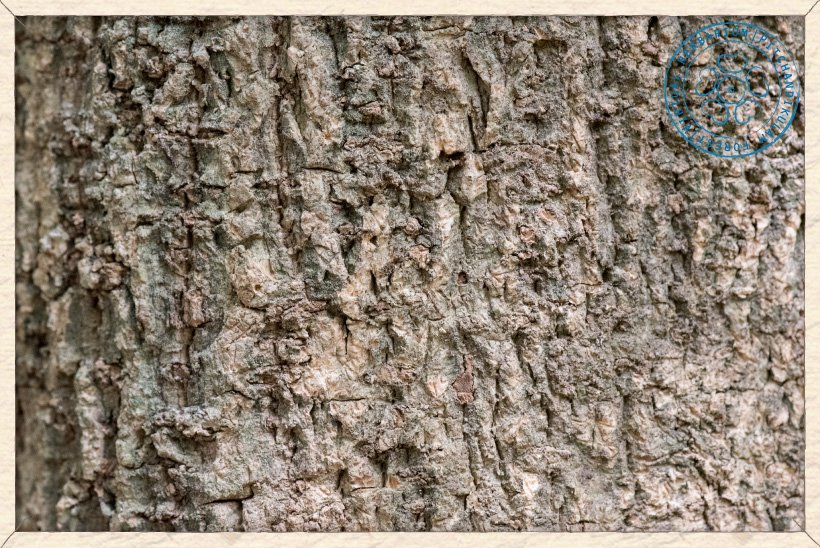
Millingtonia hortensis bark
Leaf
The leaves of Millingtonia hortensis grow alternately on the stem (spirally arranged).
The leaf is compound (bi-imparipinnate). The leaflets are bright green-coloured above and paler beneath. The leaflets are chartaceous and glabrous on both sides.
The leaflets have a 2-3 mm long petiole.
The leaflets of Millingtonia hortensis are 4-7 cm long and 2-3 cm wide. The shape of the blade is ovate, the apex is acuminate, the base is oblique and the margins are dentate-crenate.
The venation of the leaf is reticulate with a prominent midrib.
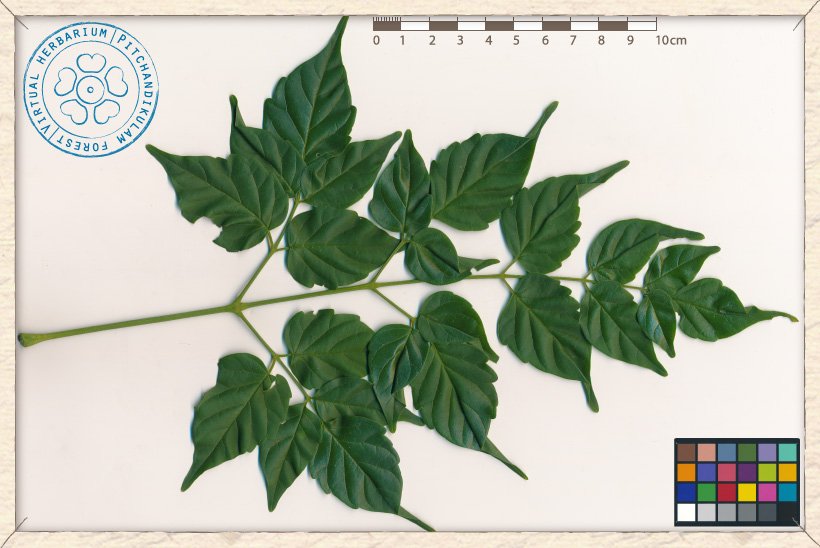
Millingtonia hortensis compound leaf (upper side)
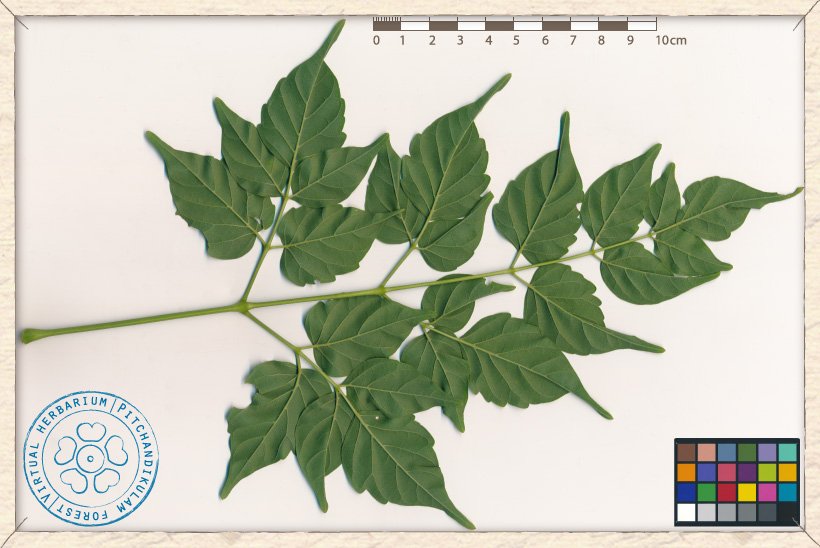
Millingtonia hortensis compound leaf (lower side)
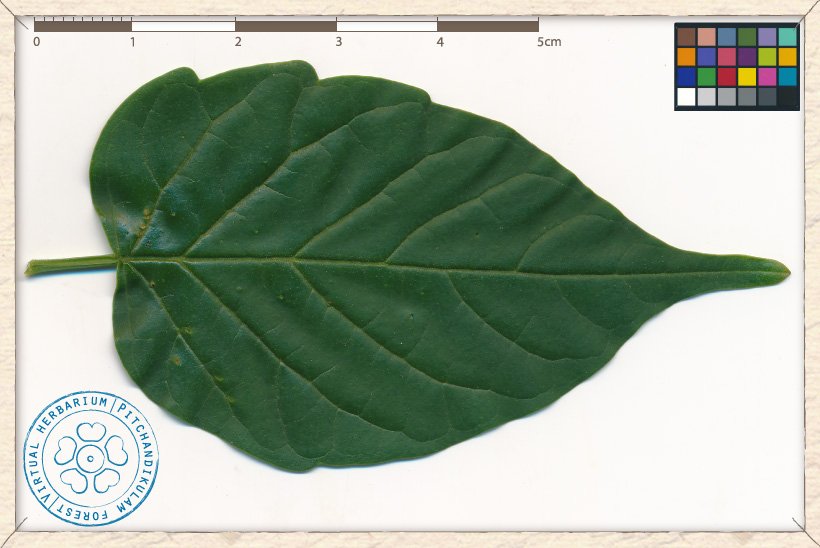
Millingtonia hortensis leaflet (upper side)
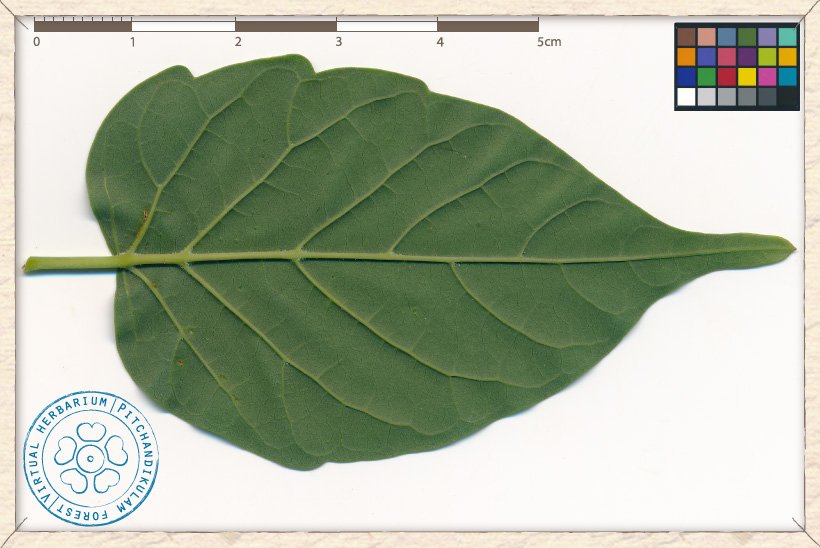
Millingtonia hortensis leaflet (lower side)
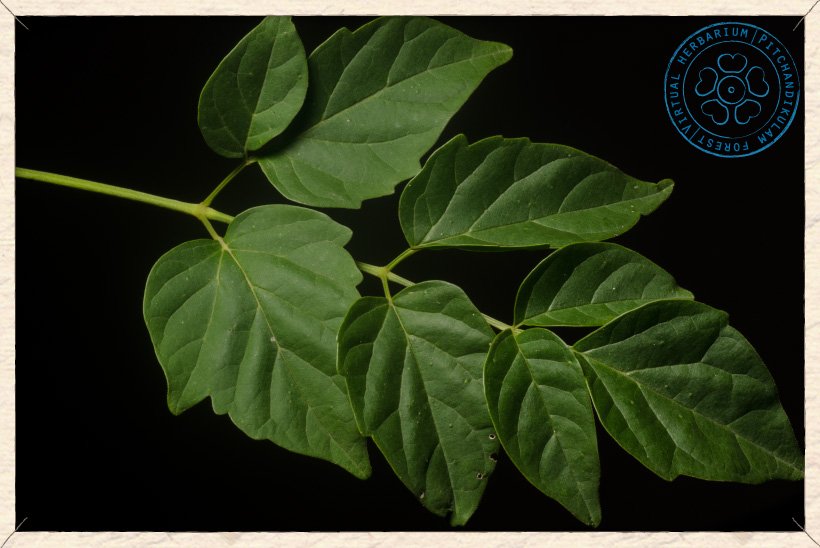
Millingtonia hortensis pinna (upper side)
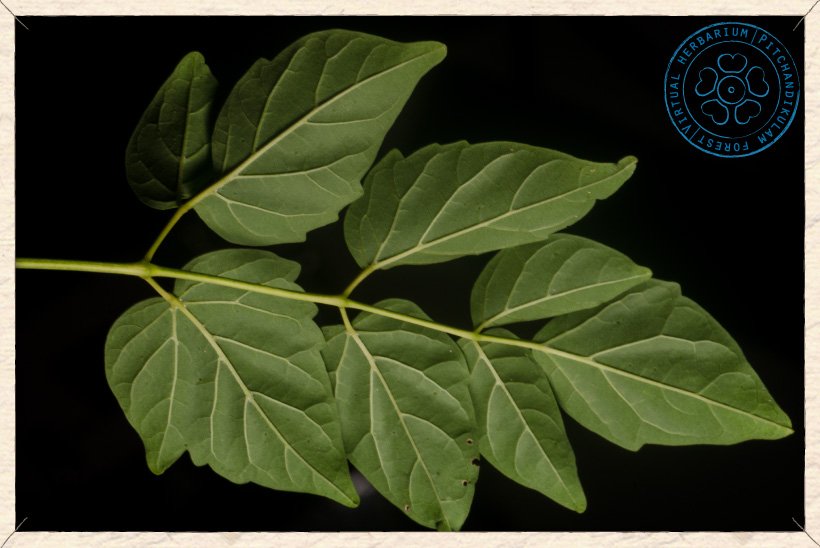
Millingtonia hortensis pinna (lower side)
Flower
The flowers of Millingtonia hortensis are grouped in corymbose panicles.
The calyx-tube is cup-shaped with 5 recurved and short lobes. The calyx is light green and 3 mm long and wide.
The corolla is composed of a long tube (6-8 cm long and 2-3 mm across) and 5 lobes. The 5 corolla-lobes are ovate-elliptic, 1.5 cm long and 6-7 mm wide.
The androecium is composed of 4 stamens. The filaments are 4 or 6 mm long and connate into a 3 mm long tube with ovoid anthers borne on the free tips of the filaments.
The pistil is about 8 cm long.
The flowers are very fragrant.
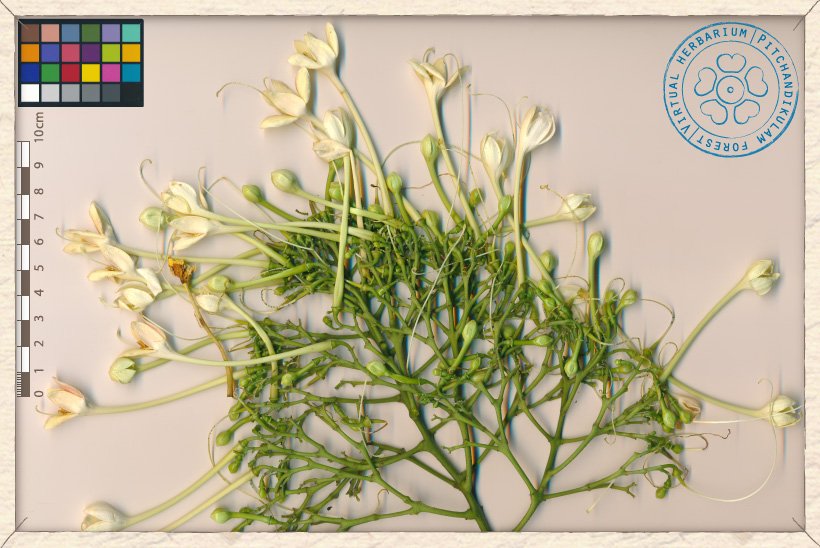
Millingtonia hortensis inflorescences
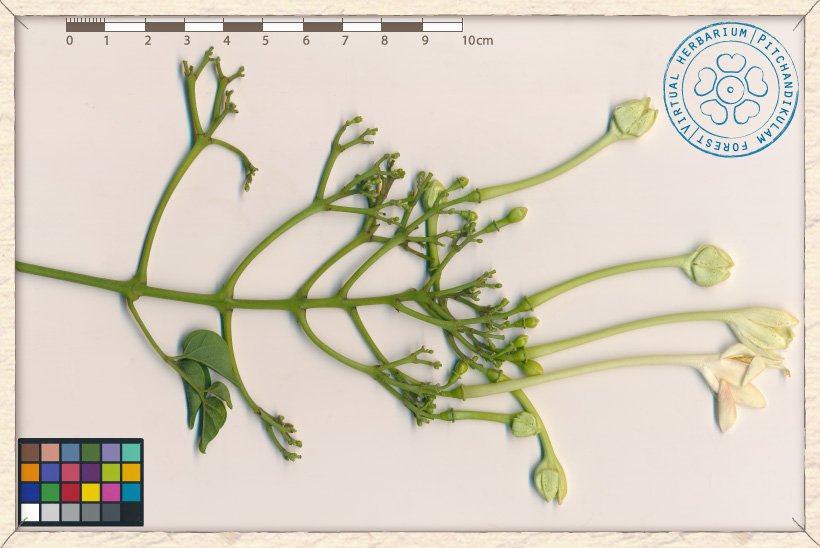
Millingtonia hortensis inflorescence
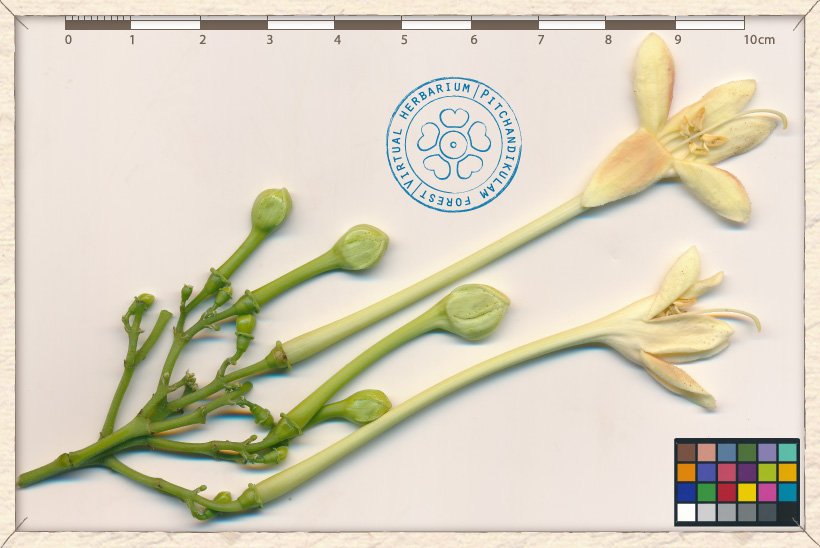
Millingtonia hortensis inflorescence
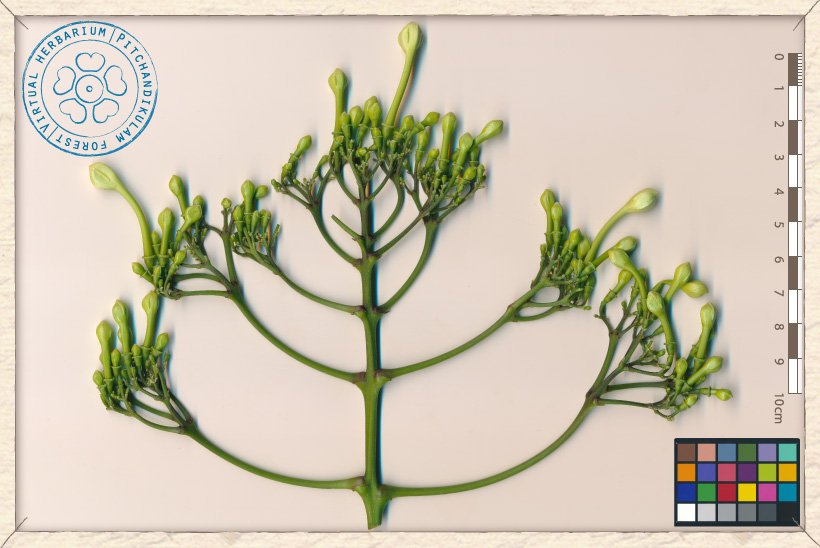
Millingtonia hortensis inflorescences in bud
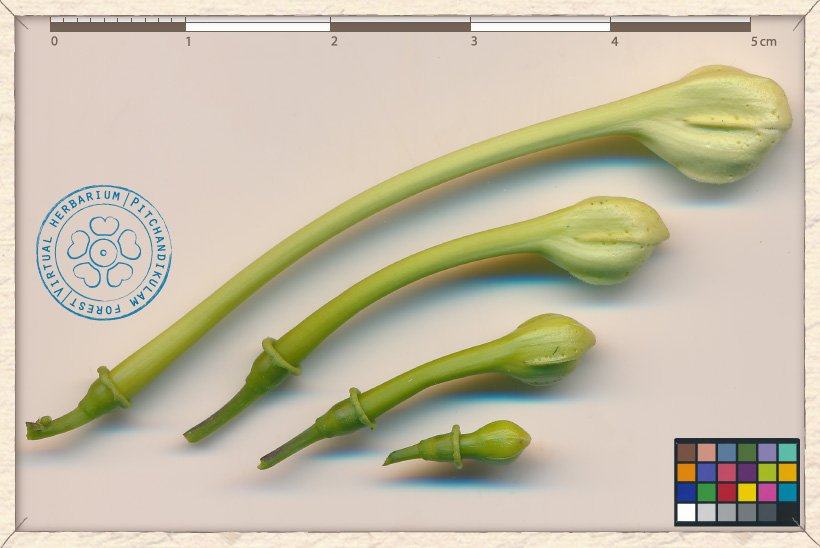
Millingtonia hortensis flower buds
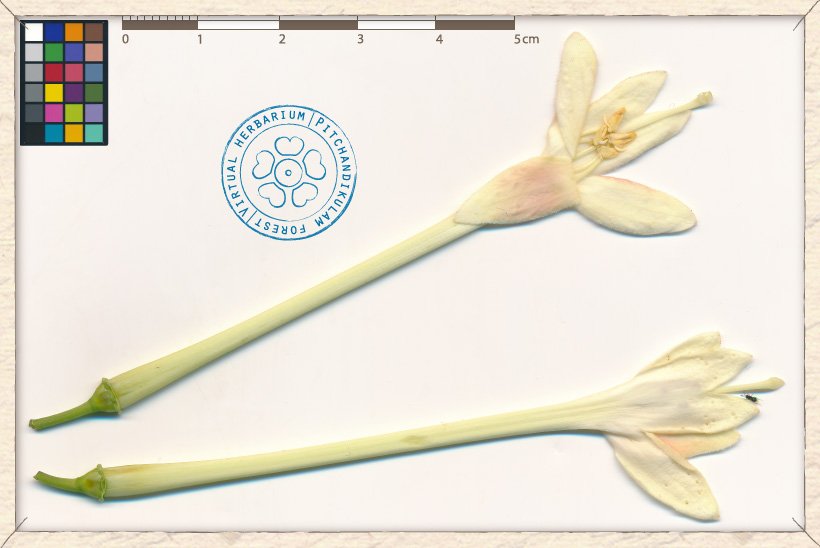
Millingtonia hortensis flowers
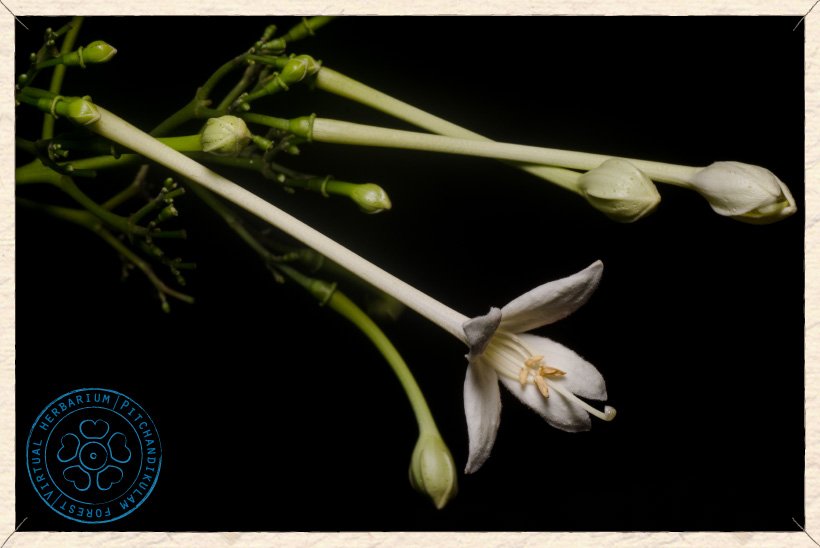
Millingtonia hortensis flowers and buds
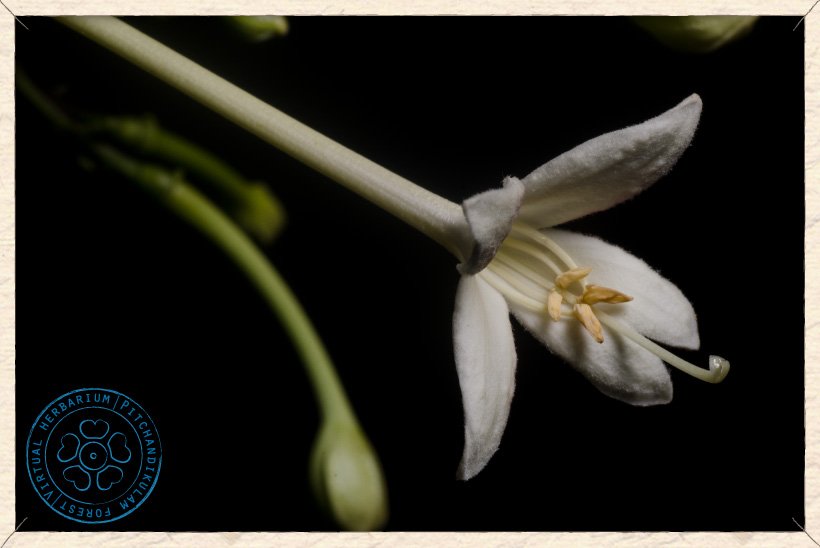
Millingtonia hortensis flower
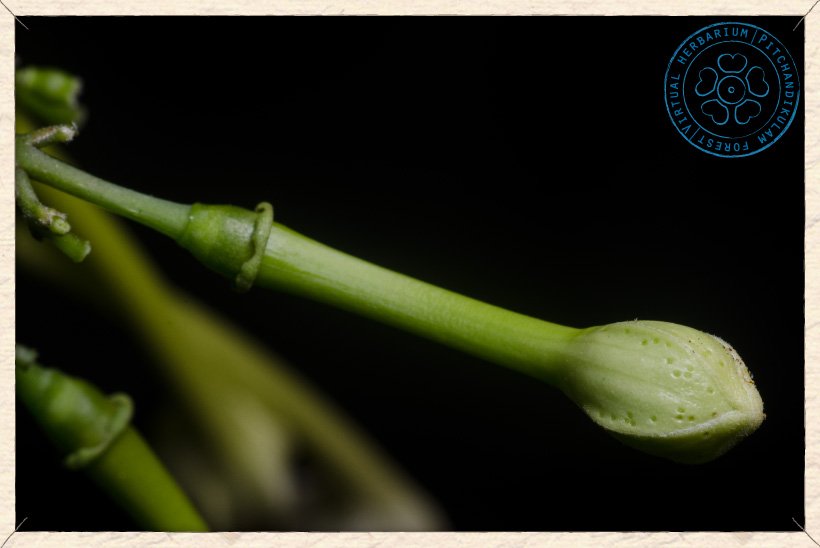
Millingtonia hortensis flower bud
Human Uses
Millingtonia hortensis is cultivated in gardens and avenues for its shade and beautiful and fragrant flowers.
The wood of Millingtonia hortensis is used as timber.
The bark is used as an inferior substitute for cork.
The leaves are also used as a cheap substitute for tobacco in cigarettes.
Source : Wikipedia (https://en.wikipedia.org/wiki/Millingtonia)
The crushed leaves are used on skin diseases.
The root decoction is drunk to treat malaria.
The bark decoction is used to cure typhoid and as antipyretic.
The flowers are used to treat asthma and sinusitis.
Sources :
- Khare, 2007, Indian Medicinal Plants, An Illustrated Dictionary
- Quattrocchi, 2012, CRC World Dictionary of Medicinal and Poisonous Plants
Ecology
In India, Millingtonia hortensis is used in roadside plantings and in parks.
Distribution
Millingtonia hortensis is native to South Asia and South East Asia. The species is cultivated in most parts of India.
Source
Information on this page is sourced from: