Senna siamea
Fabaceae

Main specimen
Habit
Senna siamea is a medium-sized (10-15 meters) deciduous tree. It has usually a short and straight bole and a dense and spreading crown.
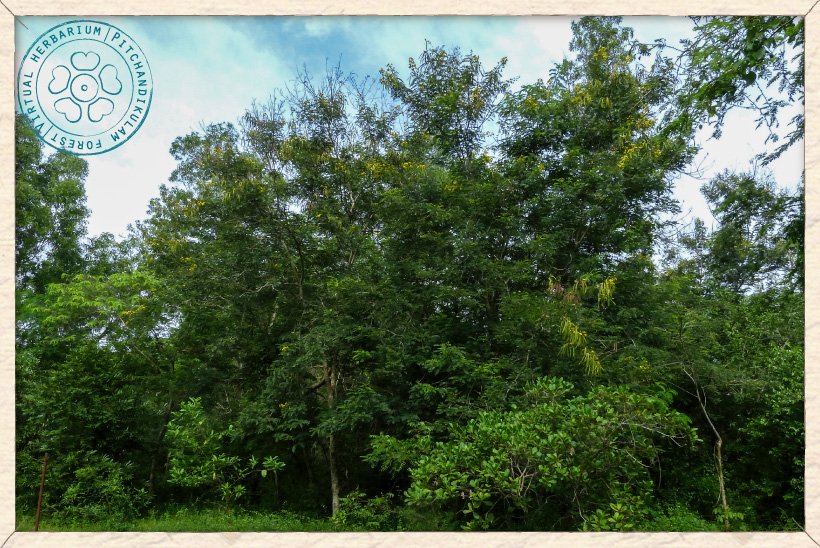
Senna siamea trees
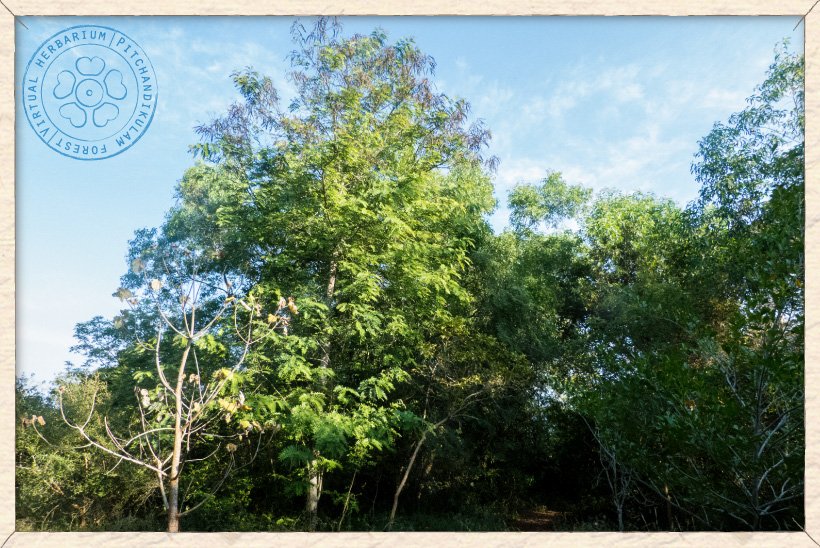
Senna siamea tree
Stem Bark
Senna siamea has a straight and short trunk usually reaching no more than 30 cm in diameter.
Its bark is smooth, greyish and slightly fissured longitudinally with age.
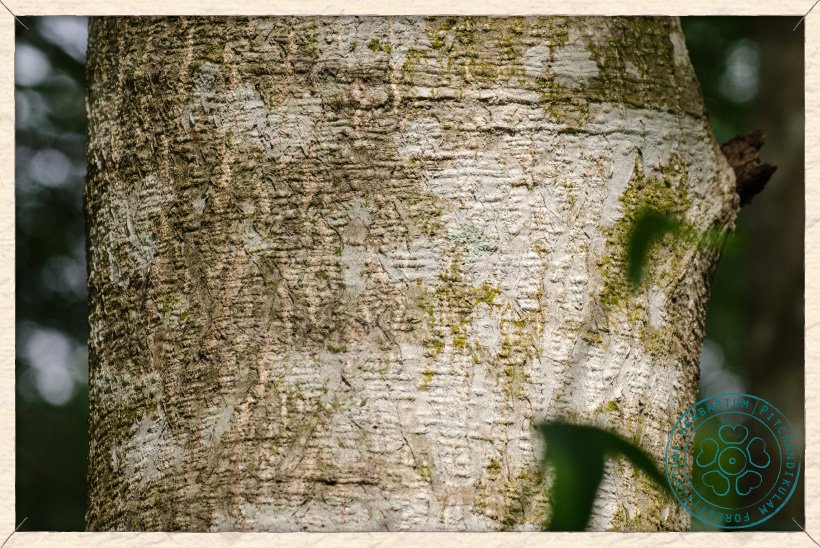
Senna siamea trunk
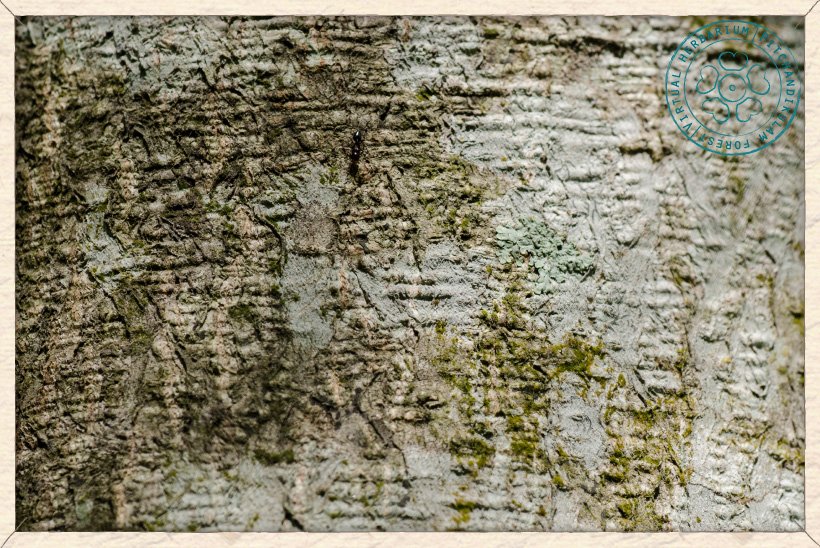
Senna siamea bark
Leaf
The leaves of Senna siamea grow alternately on the stem (spirally arranged).
Senna siamea has compound leaves : paripinnate leaves.
The leaf is 15-30 cm long and 6-12 cm wide.
The leaves have a 3-4 cm long petiole with a pair of caducous and subulate stipules at the axil of the stalk.
The rachis is slender, reddish coloured above and green beneath.
There are 7-12 pairs of chartaceous leaflets, dark green coloured on the upper side and pale light green beneath. They are glabrous on both sides (some minute hairs on the nerves beneath). The leaflets are ovate-oblong with a rounded base and an obtuse (somewhat emarginate) apex tipped with a minute sharp mucro. The margins are entire, orange-reddish coloured. On the lower side, the midrid is prominent and orange-reddish coloured too.
The leaflets have a 3 mm long petiolule.
The venation of the leaf is reticulate.
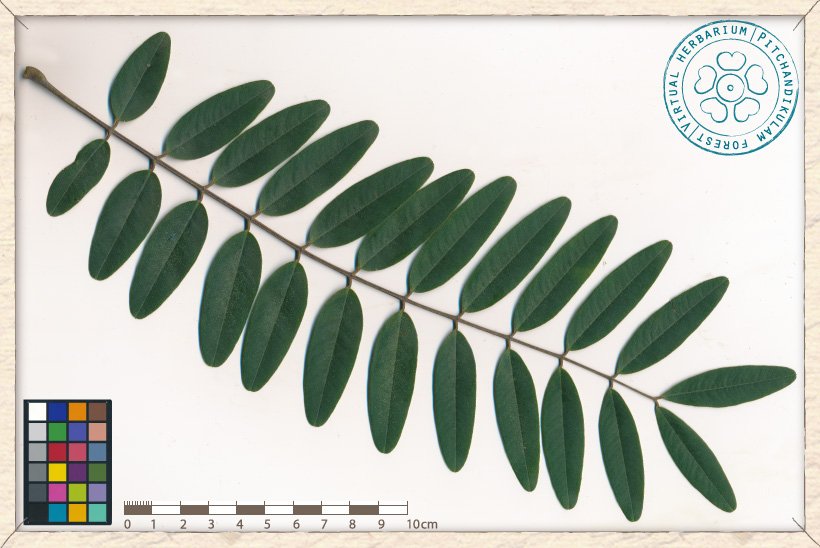
Senna siamea compound leaf (upper side)
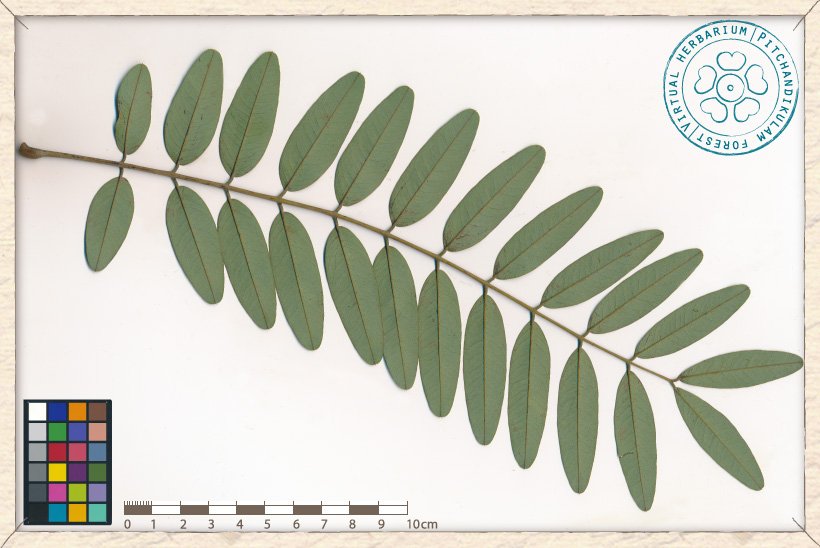
Senna siamea compound leaf (lower side)
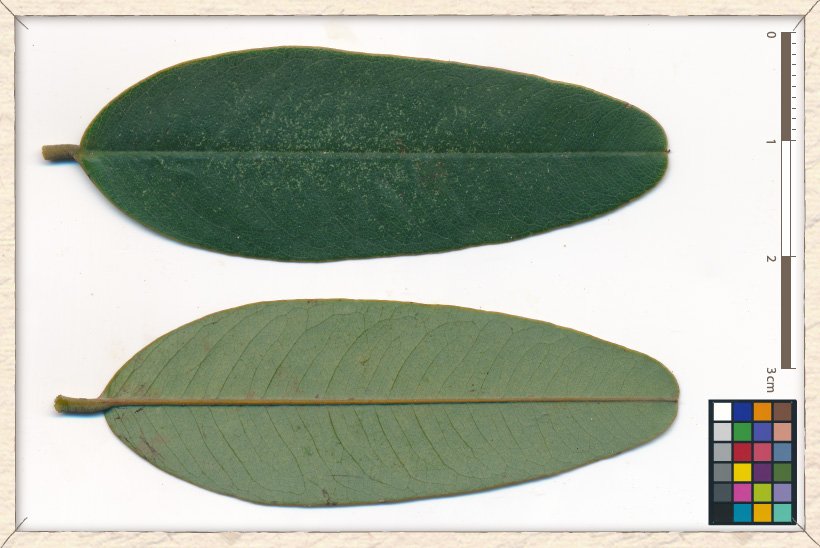
Senna siamea leaflet (upper and lower sides)
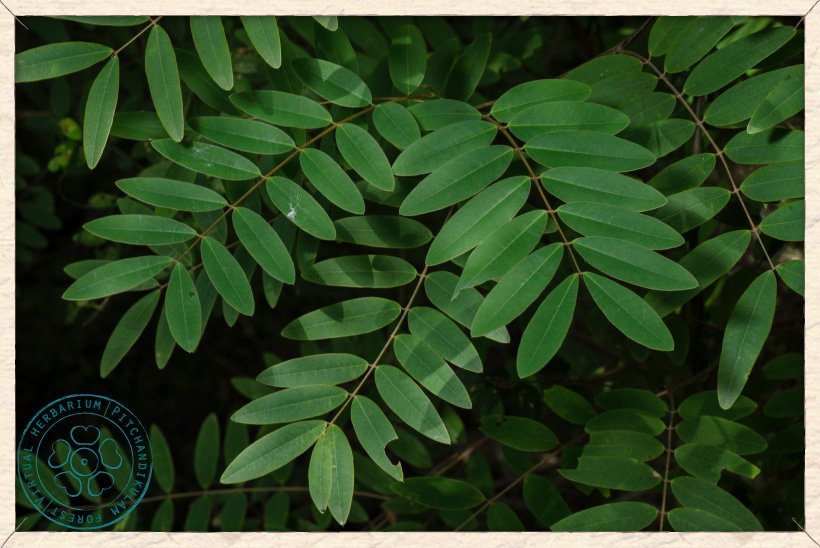
Senna siamea leaves
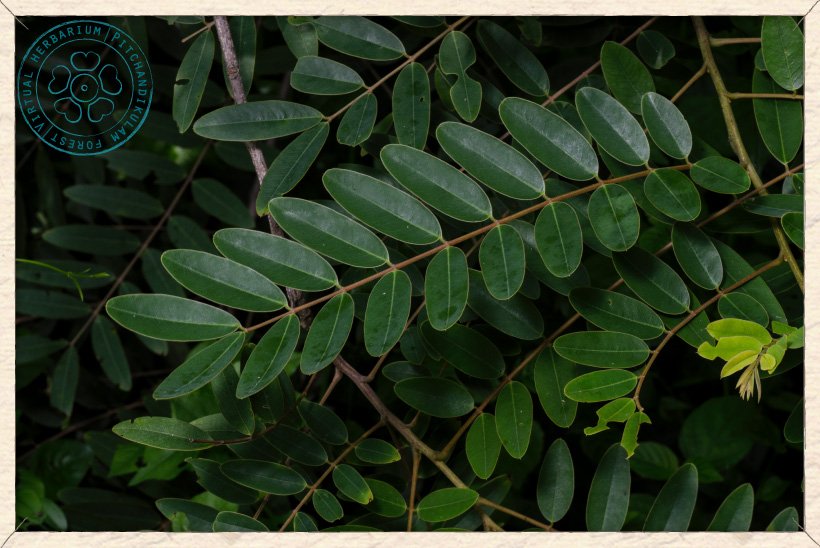
Senna siamea leaves
Flower
The inflorescence of Senna siamea is a terminal panicle. These panicles are pyramidal and erected at the end of twigs. These large inflorescences (up to 30 cm long and 15 cm wide) are composed of numerous bright yellow flowers.
The flowers are 3 cm across with a 2.5 cm long and hairy pedicel.
The calyx is composed of 5 hairy, yellow-greenish coloured and ovate lobes and a calyx-tube. The calyx lobes are 6-7 mm long and 4-5 mm wide, concave and ovate with an obtuse apex.
The corolla is composed of 5 bright yellow petals. These petals are obovate, clawed and with an obtuse apex. They are 1.3-1.5 cm long and 0.8-1 cm wide. The calyx is glabrous.
The androecium is composed of 10 stamens of different sizes, from 4 mm to about 1.5 cm long. The filament are thick and straight and about the twice as long as the anthers. The anthers are erected, basifixed and brownish coloured. The smaller are 2 mm long and the longer about 7 mm.
The ovary is superior, linear and grooved, 1 cm long and pubescent. The style is linear, curved, glabrous and 4-5 mm long.
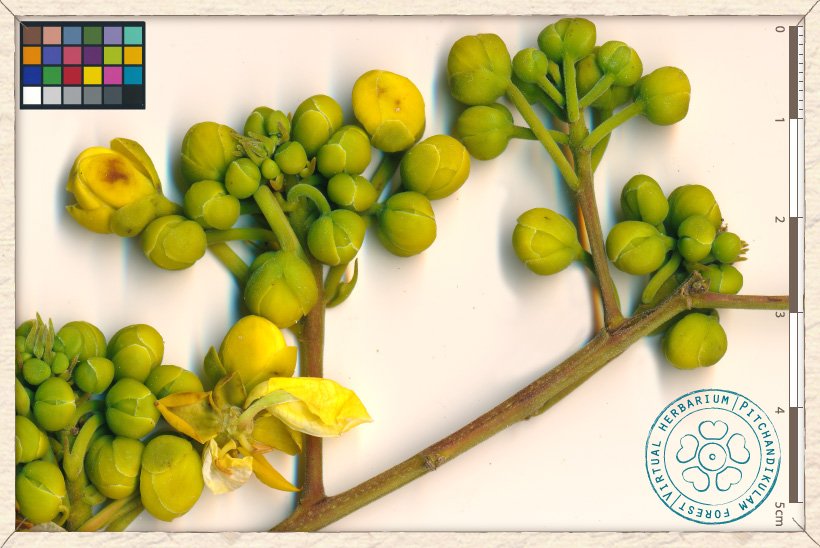
Senna siamea inflorescence : a part of the panicle with flower buds
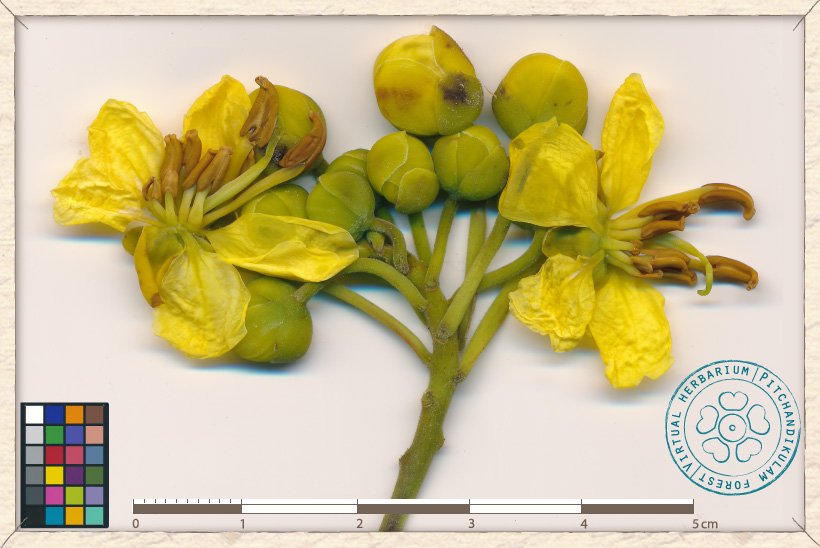
Senna siamea flowers in bloom and flower buds
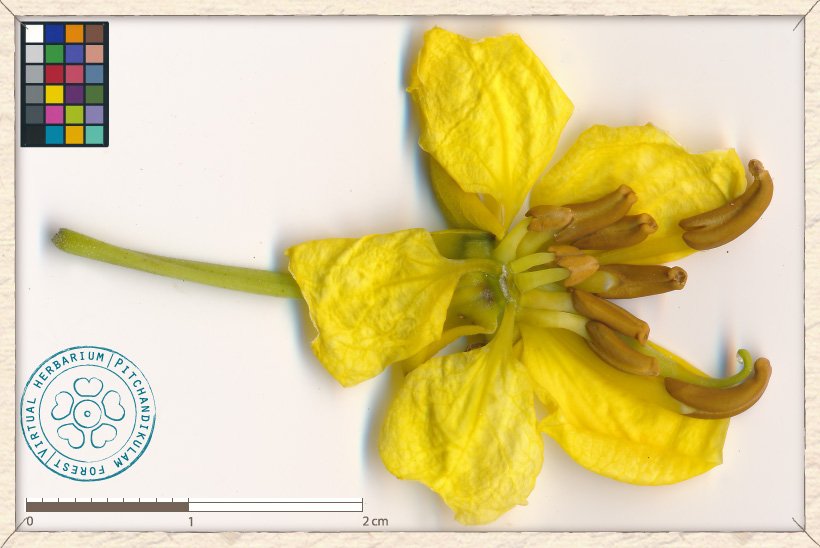
Senna siamea flower
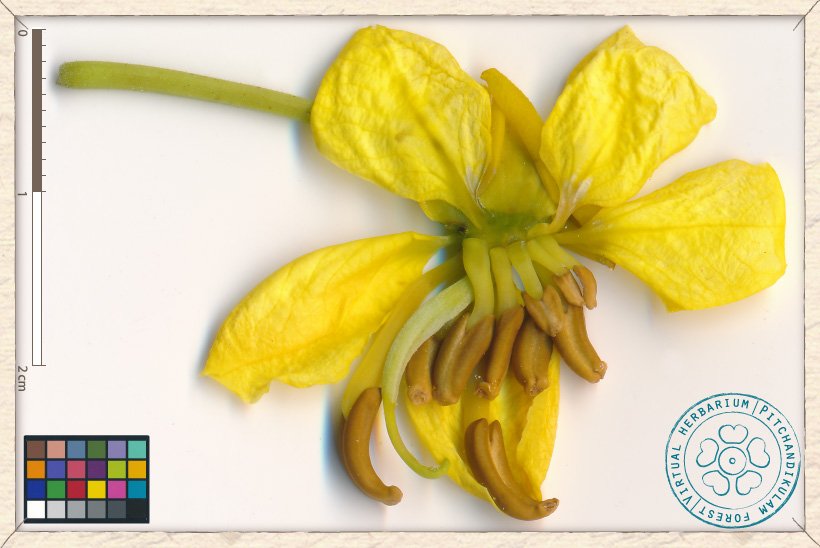
Senna siamea flower
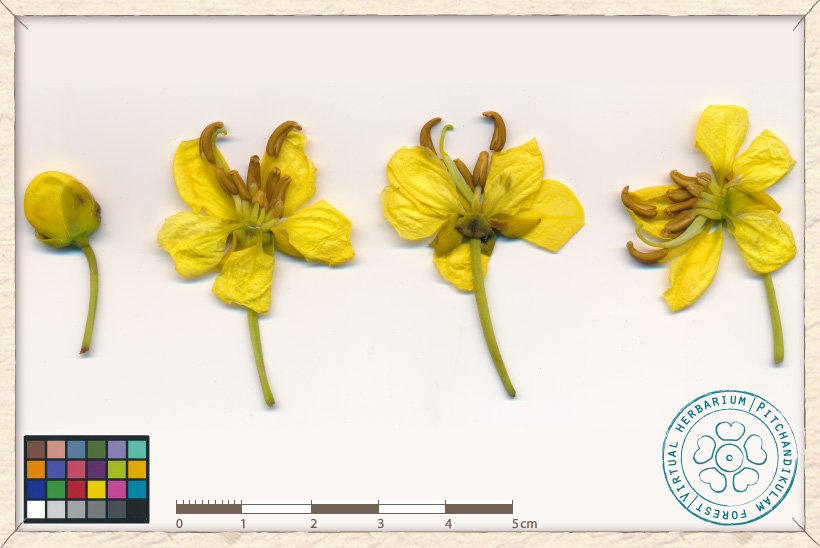
Senna siamea bud and flowers in full bloom
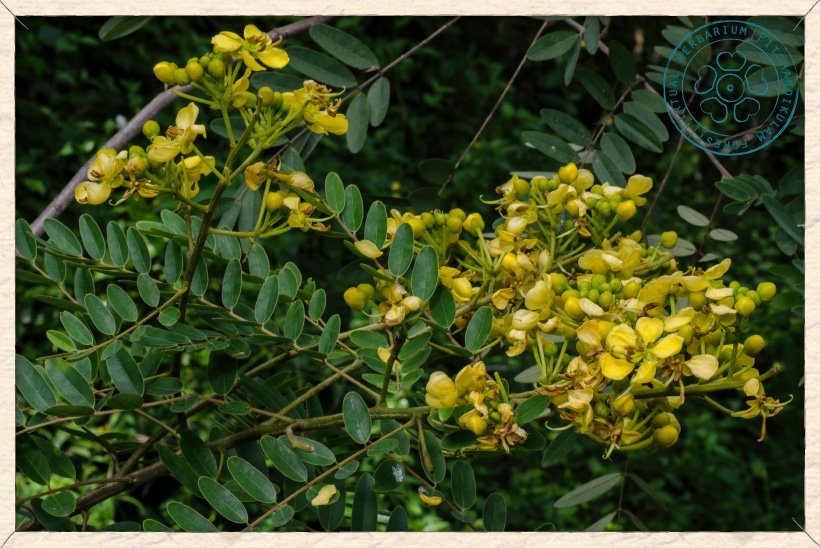
Senna siamea twigs bearing inflorescences
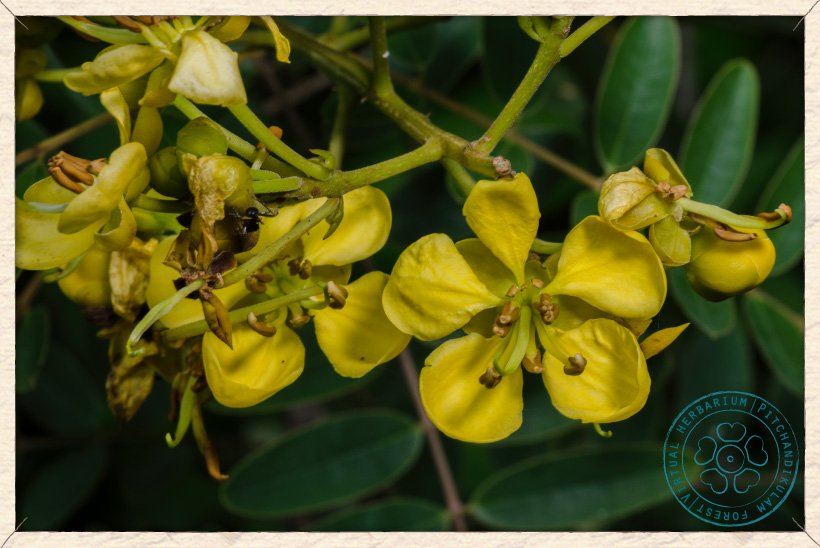
Senna siamea flowers
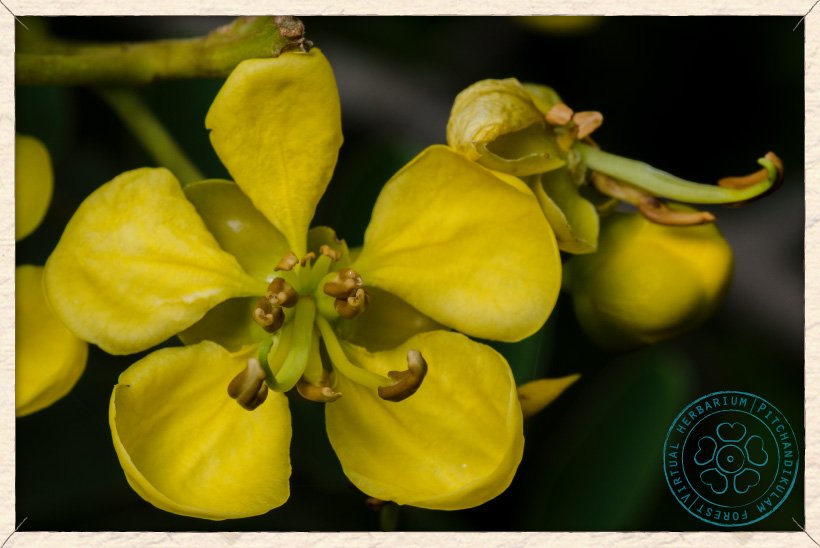
Senna siamea flower
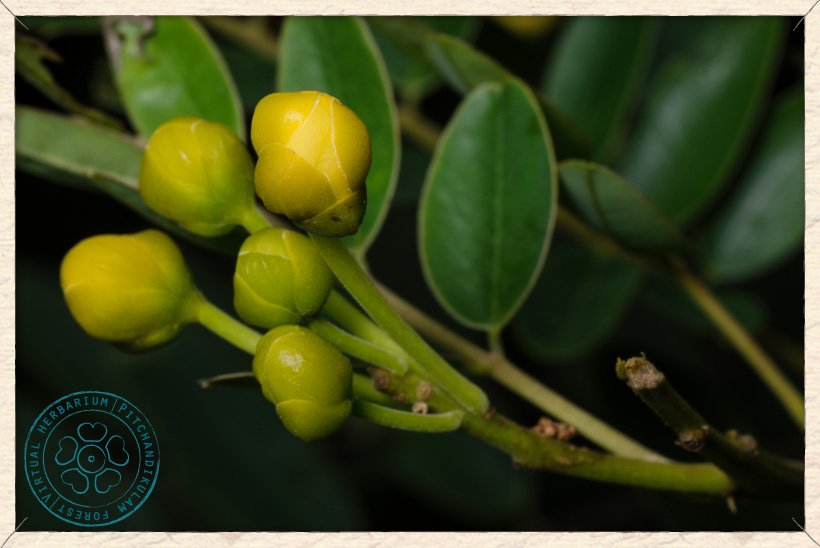
Senna siamea flower buds
Fruit
The fruit of Senna siamea is a long, flat and narrow pod.
It is 20-25 cm long and 1 cm wide, woody and dark brown when ripe.
These pod contains numerous seeds.
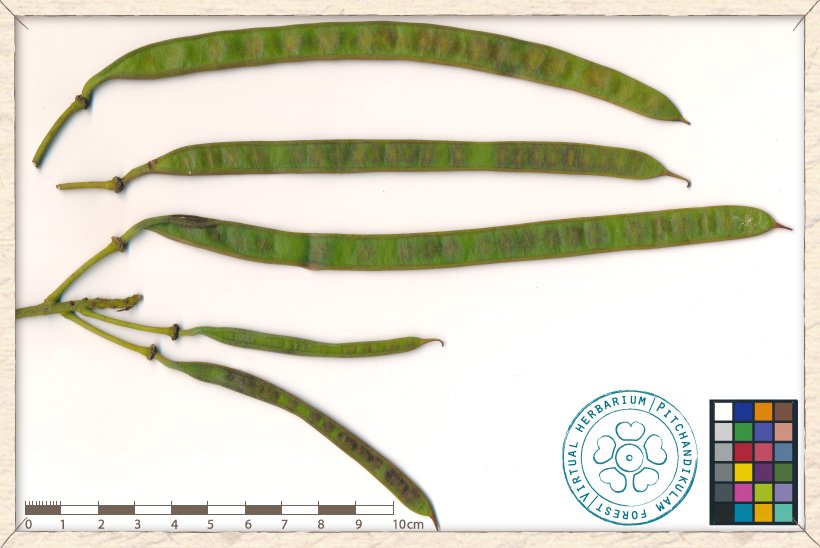
Senna siamea immature fruits
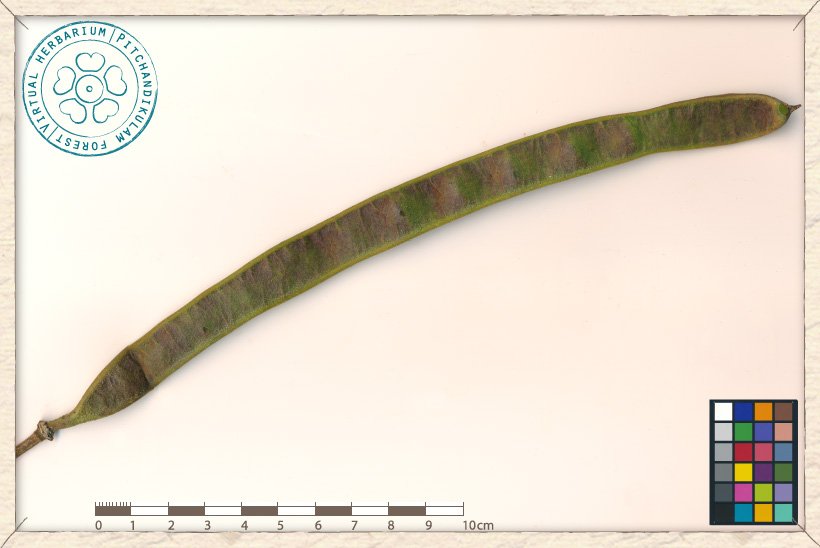
Senna siamea pod (almost ripe)
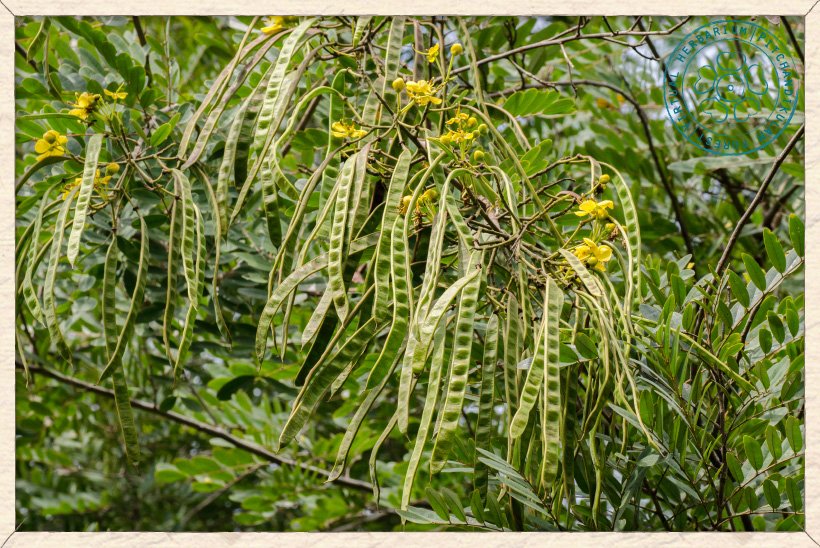
Senna siamea twigs bearing clusters of unripe pods
Seed
The seeds of Senna siamea are flat, smooth, glossy and brown coloured with a distinct areola.
These seeds are oblong, 8 mm long and 5-6 mm wide.
There are 15-20 seeds in a pod.
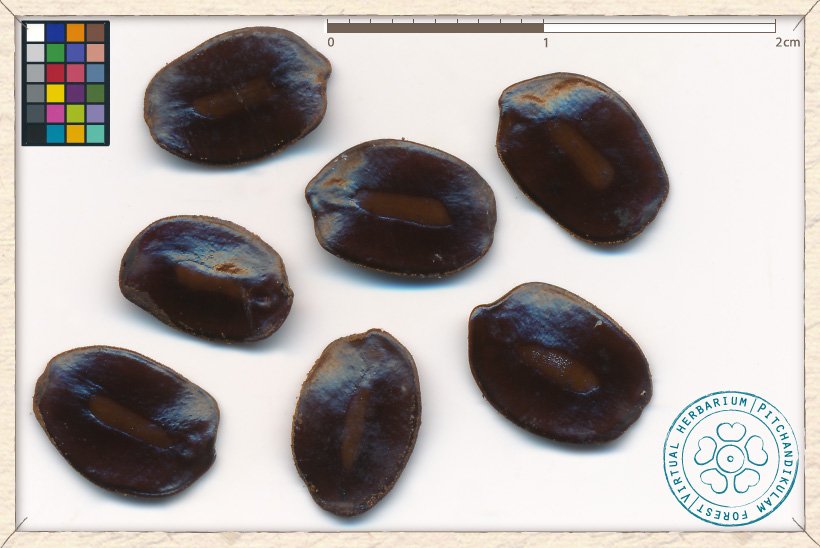
Senna siamea seeds
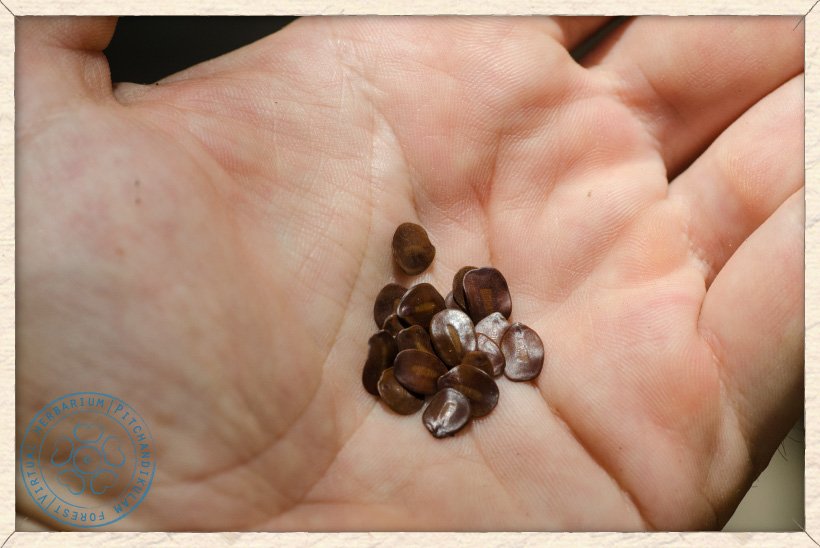
Senna siamea seeds
Human Uses
The leaves of Senna siamea are used as green manure to improve the soil quality.
Senna siamea can be planted to limit erosion : the tree increase water infiltration in the topspoil, reducing runoff and soil erosion.
The dense wood of Senna siamea makes good fuel and it gives an excellent charcol.
The wood of Senna siamea was formerly used for locomotive engines.
Senna siamea is grown as a shade tree along roads and in cocoa, coffee and tea plantations.
The tree is often planted as an ornamental for its abundant shiny yellow flowers.
In India, the species is used as a host for the parasitic and well-known aromatic sandalwood (Santalum spp.).
Senna siamea is also used extensively for rehabilitation of degraded land (as aluminium mine tailings).
Source : Orwa C, A Mutua, Kindt R , Jamnadass R, S Anthony (2009) Agroforestree Database : a tree reference and selection guide
The leaves and seeds are eaten by cattle and sheep but are toxic to non-ruminants. (Trees of Delhi, P. Krishen)
Senna siamea yields a medium-weight to heavy hardwood. The heartwood is black-brown with paler streaks (it is known as "Bombay blackwood") and the sapwood is pale. This hard and durable wood is resistant to termites.
The nicely figured wood is used for joinery, furniture making, inlaying, handles, sticks and for making many decorative objects. The wood is also used for building.
All the parts of plants are rich in tannins, they can be used for tanning. Highest tannin concentration is found in the leaves.
Sennna siamea is used in China as a host plant for the lac insect (Kerria lacca) to produce the resin known as lac or shellac.
Source : Orwa C, A Mutua, Kindt R , Jamnadass R, S Anthony. 2009 Agroforestree Database : a tree reference and selection guide
In Thailand, the young fruits and leaves are eaten as a vegetable. During preparation the cooking liquid is replaced 3 times to remove toxins.
In Sri Lanka, the flowers and young fruits are used in curries.
Source : Orwa C, A Mutua, Kindt R , Jamnadass R, S Anthony. 2009 Agroforestree Database : a tree reference and selection guide
The fruits and the roots of Senna siamea are used to treat intestinal worms.
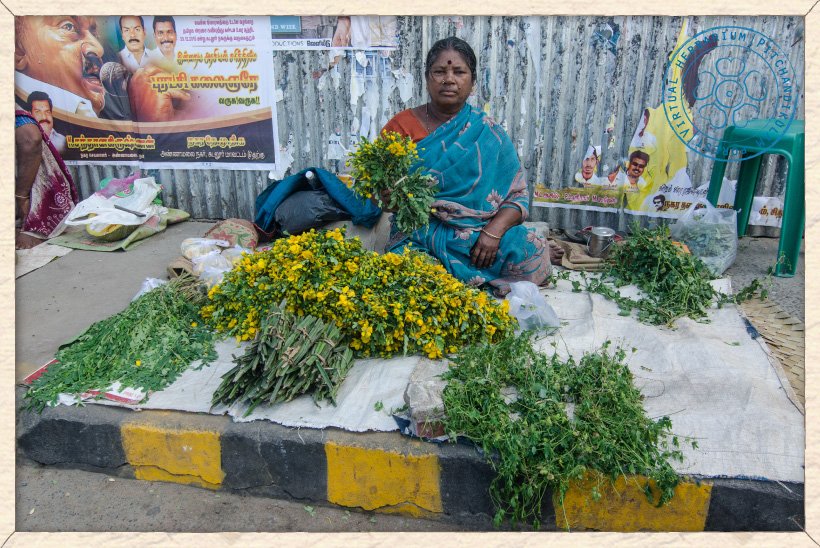
Market stall of medicinal plants in Thanjavuru with bundles of Senna siamea flowers and leaves
Bundles of flowers and leaves of Senna siamea
Ecology
Senna siamea grows under a wide variety of climatic conditions but is particularly suited to lowland tropics with a monsoon climate. Its light requirements are high and it prefers well-drained soils.
It is a very fast-growing species.
Distribution
Senna siamea is native to South and South-east Asia. Its exact origin is unknown.
Today the species is distributed throughout the tropics in semi-arid and subhumid tropics.
In India, the species is planted by the roadsides, on agricultural boundaries, parks, etc.
Source
Information on this page is sourced from: