Neolamarckia cadamba
Rubiaceae

Main specimen
Habit
Neolamarckia cadamba is a thornless, large-sized and deciduous tree growing up to 30-35 m high.
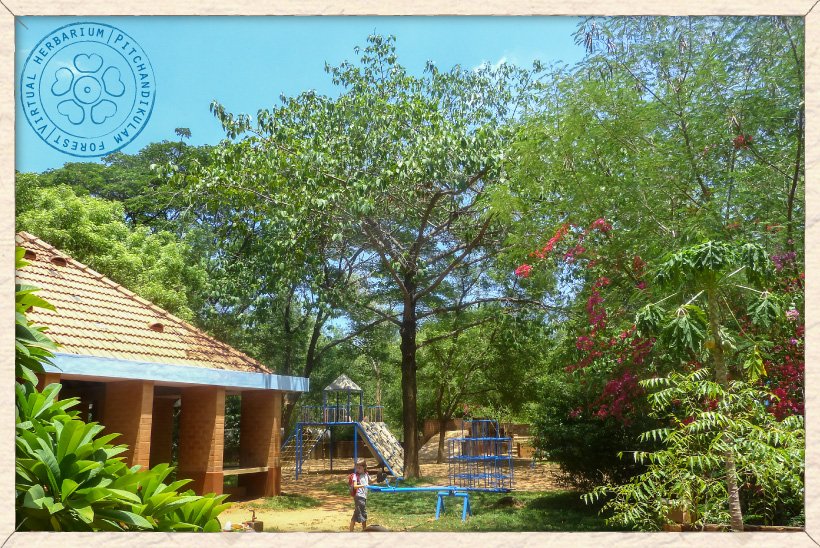
Neolamarckia cadamba tree
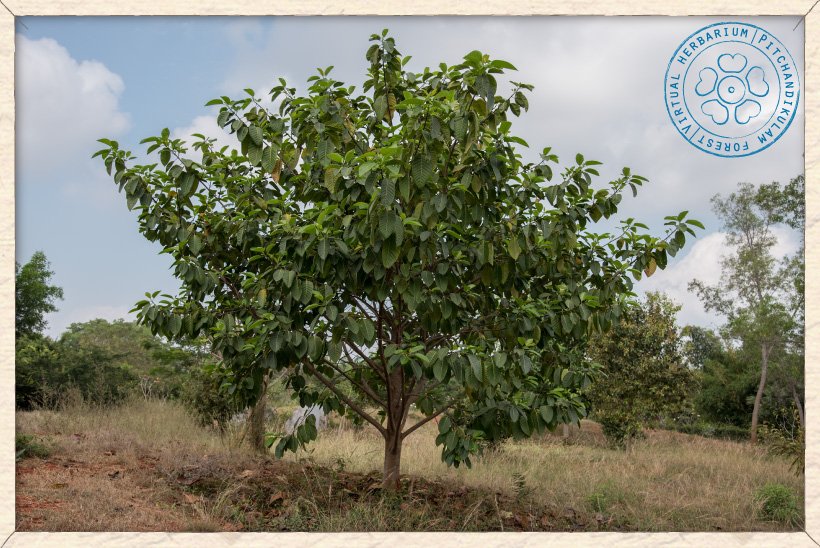
Neolamarckia cadamba young tree
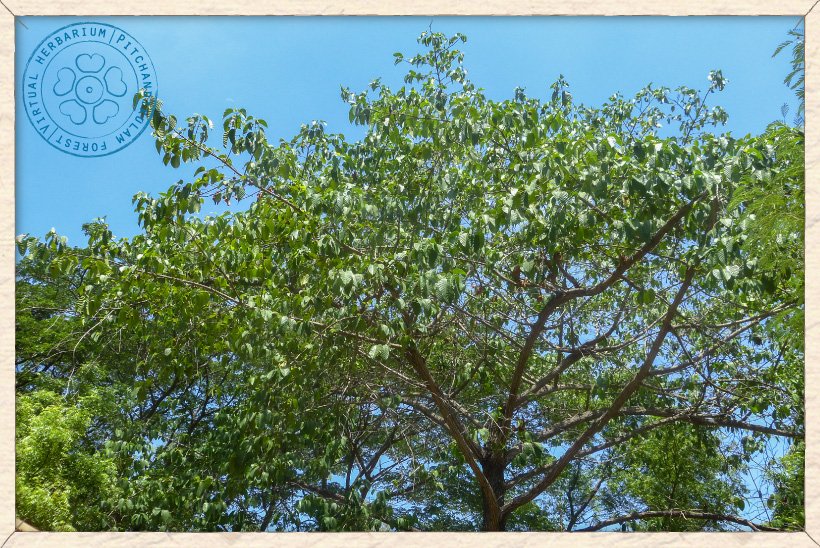
Neolamarckia cadamba crown
Stem Bark
The bark of Neolamarckia cadamba is light brown-coloured and rough. It is longitudinally fissured and flakes off in irregular scales.
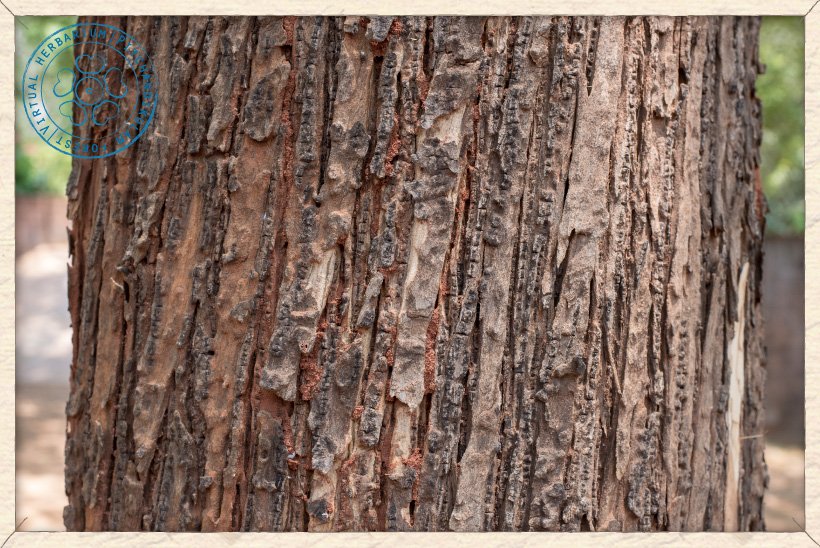
Neolamarckia cadamba trunk
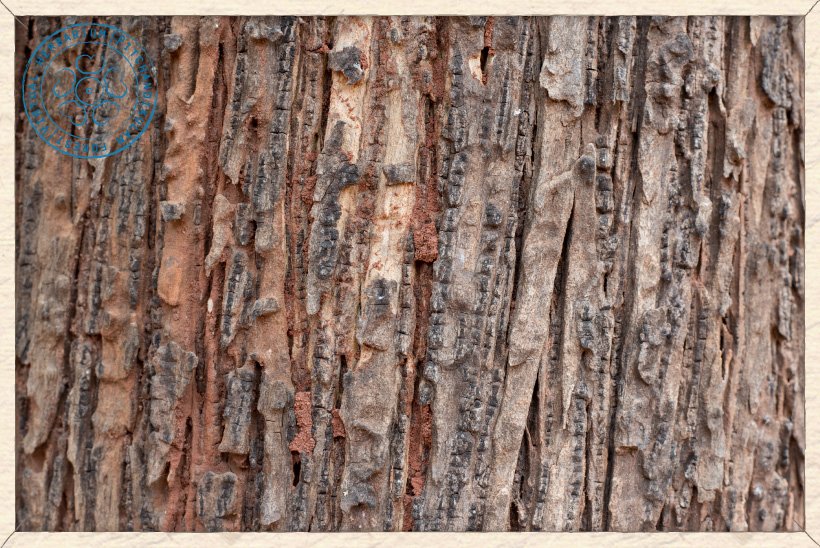
Neolamarckia cadamba bark
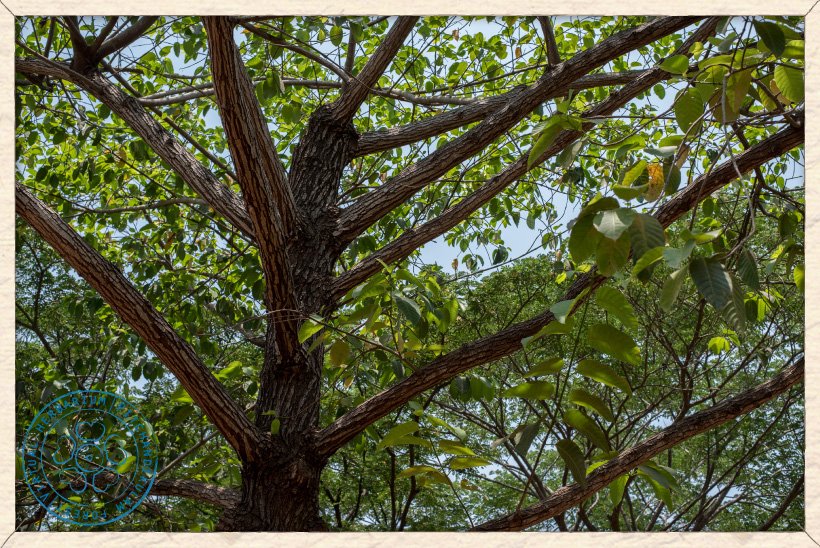
Neolamarckia cadamba trunk
Leaf
The leaves of Neolamarckia cadamba grow opposite on the stem.
The leaf is simple, bright green-coloured above and paler beneath. The leaf is coriaceous and glabrous on both sides.
The leaves have a 4-5 cm long petiole.
The blade of the leaf of Neolamarckia cadamba is 15-25 cm long and 8-12 cm wide. The shape of the blade is ovate, the apex is acuminate, the base is rounded and the margins are entire.
The venation of the leaf is reticulate with a prominent midrib.
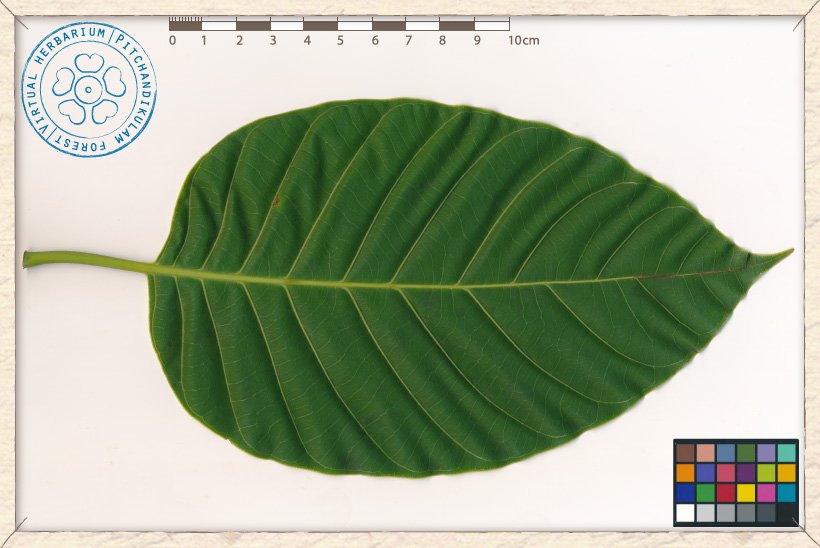
Neolamarckia cadamba leaf (upper side)
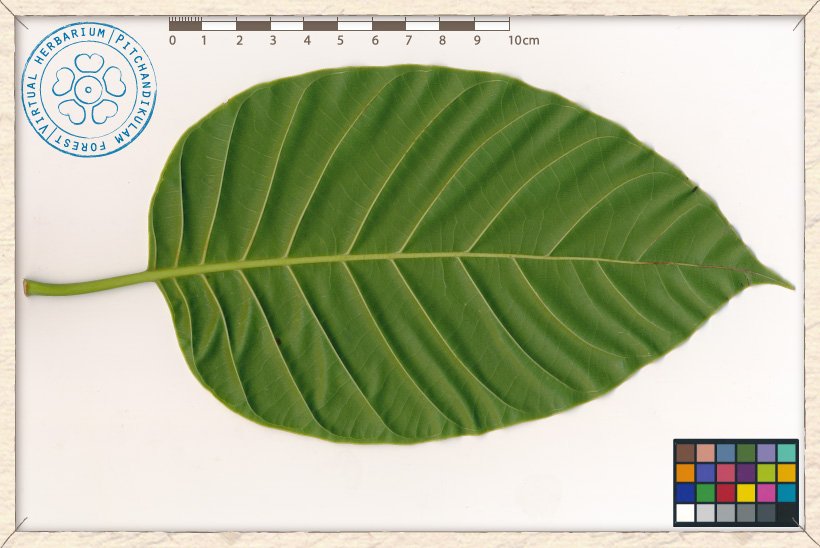
Neolamarckia cadamba leaf (lower side)
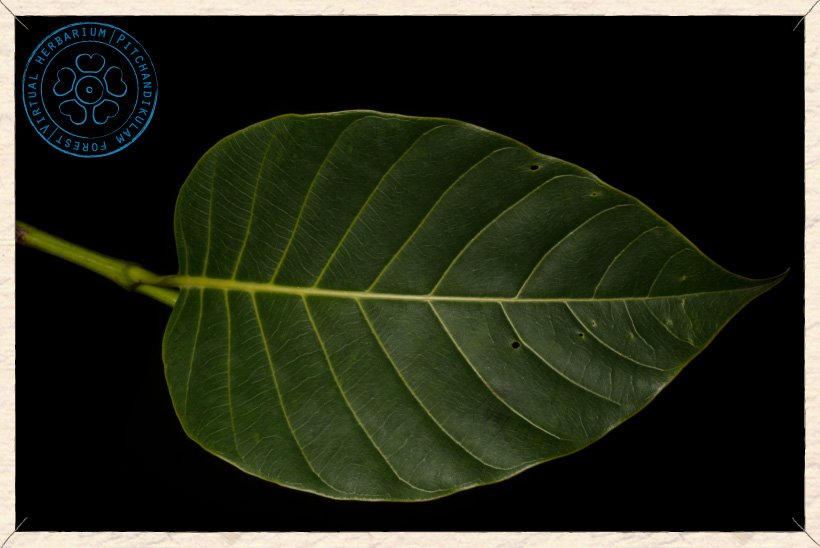
Neolamarckia cadamba leaf (upper side)
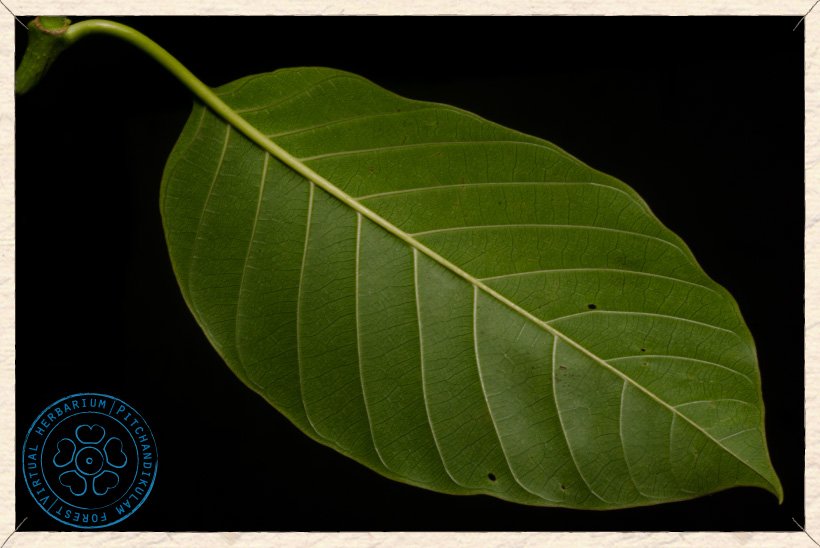
Neolamarckia cadamba leaf (lower side)
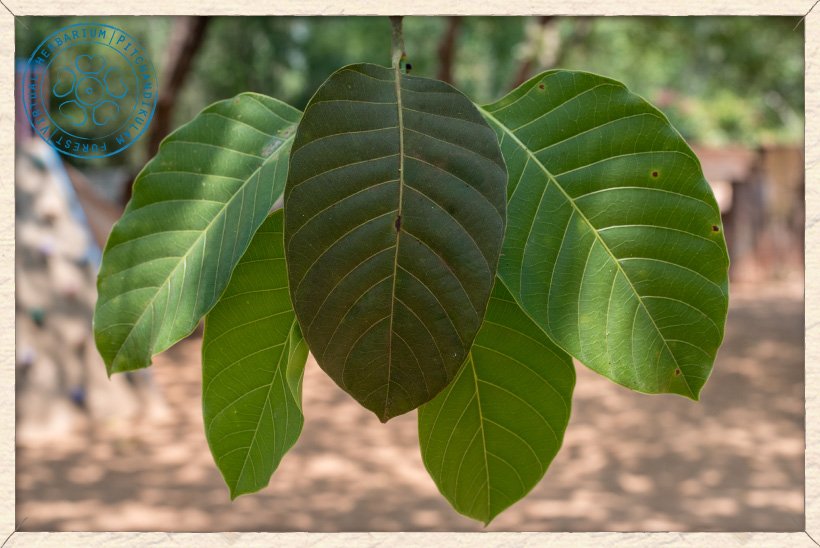
Neolamarckia cadamba leaves (upper side)
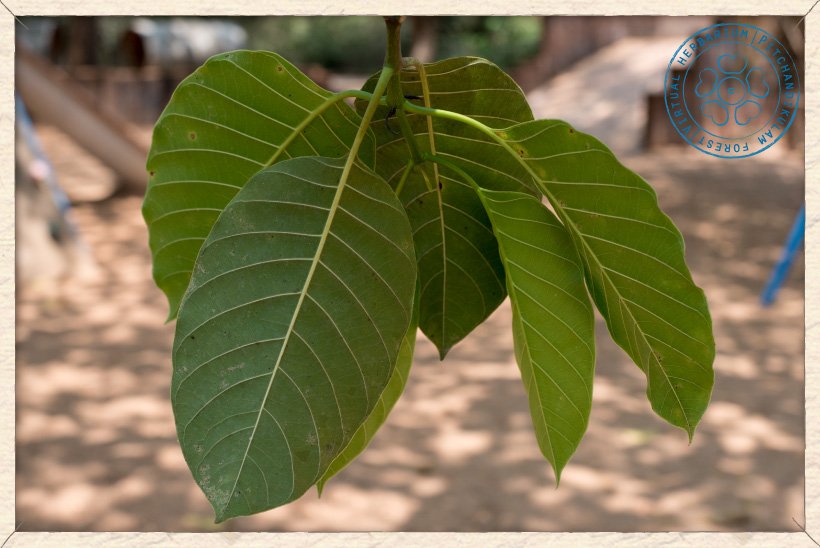
Neolamarckia cadamba leaves (lower side)
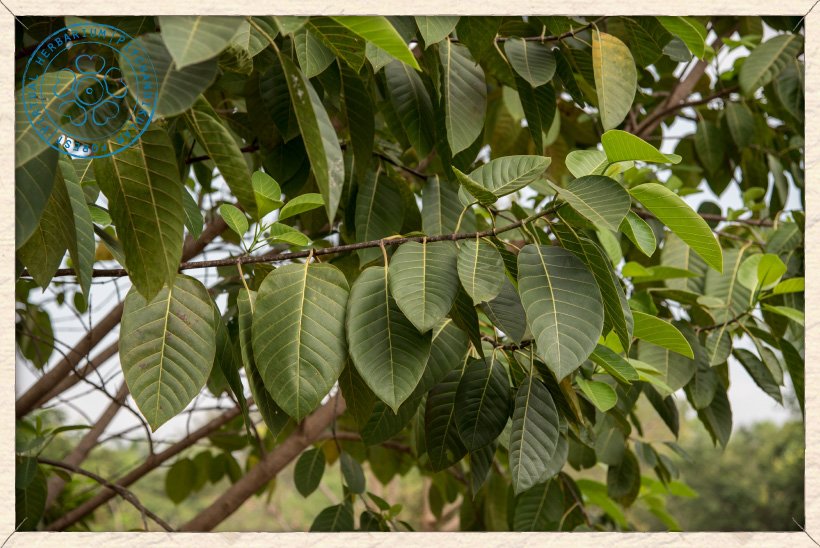
Neolamarckia cadamba foliage
Fruit
The pseudocarp (false-fruit) of Neolamarckia cadamba is globose, about 4 cm in diameter with a 2.5 cm long peduncle.
The fruit of Neolamarckia cadamba is a small capsule. The capsules are inserted on a fleshy receptacle.
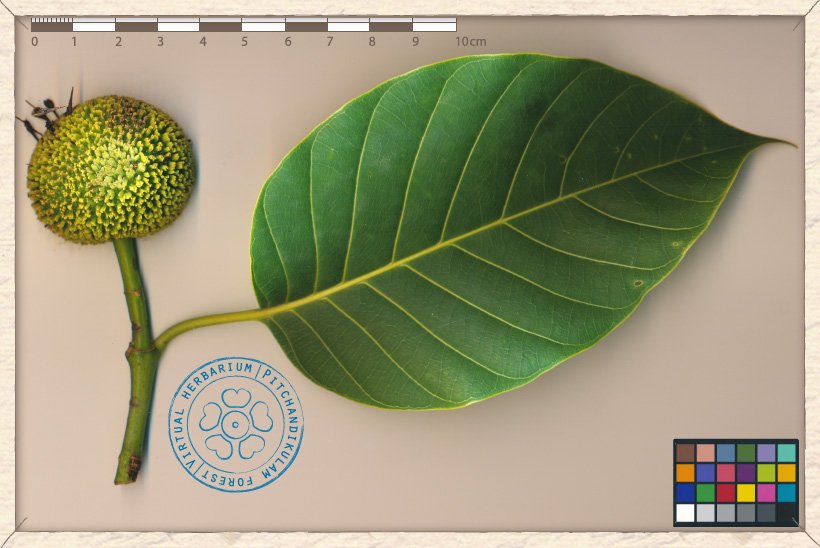
Neolamarckia cadamba pseudocarp (false-fruit)
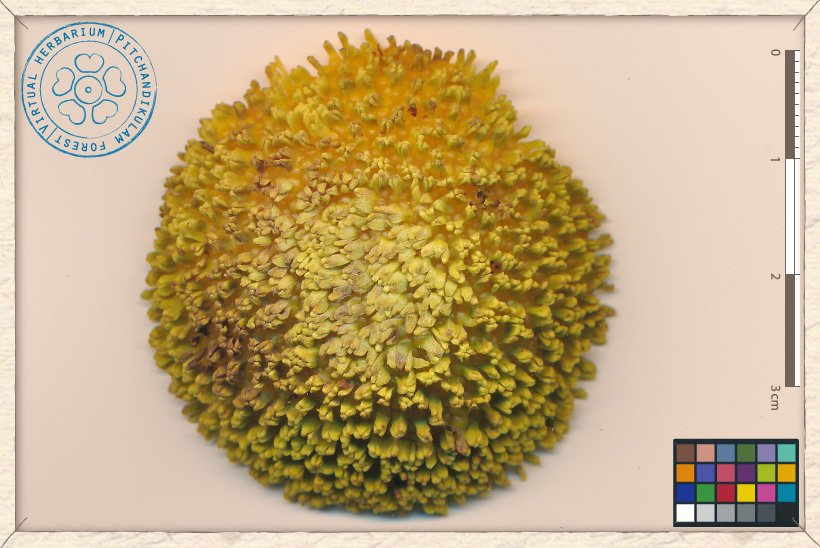
Neolamarckia cadamba pseudocarp (false-fruit)
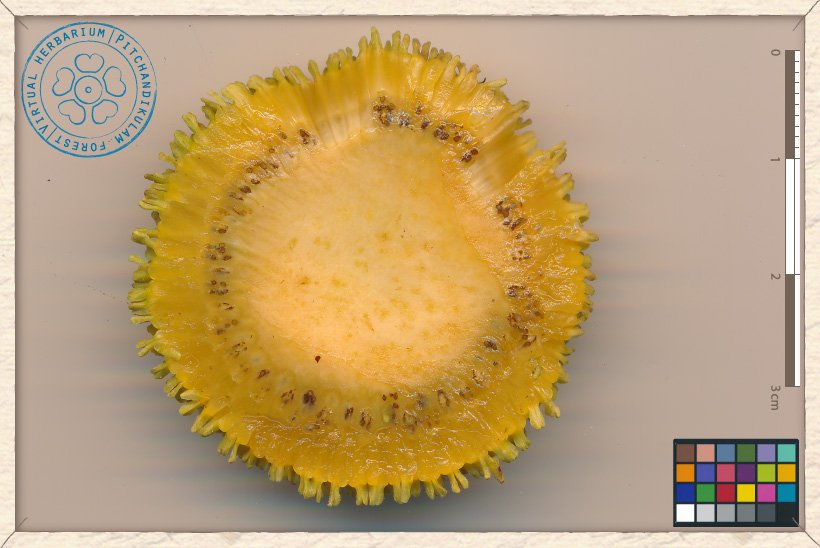
Neolamarckia cadamba pseudocarp section
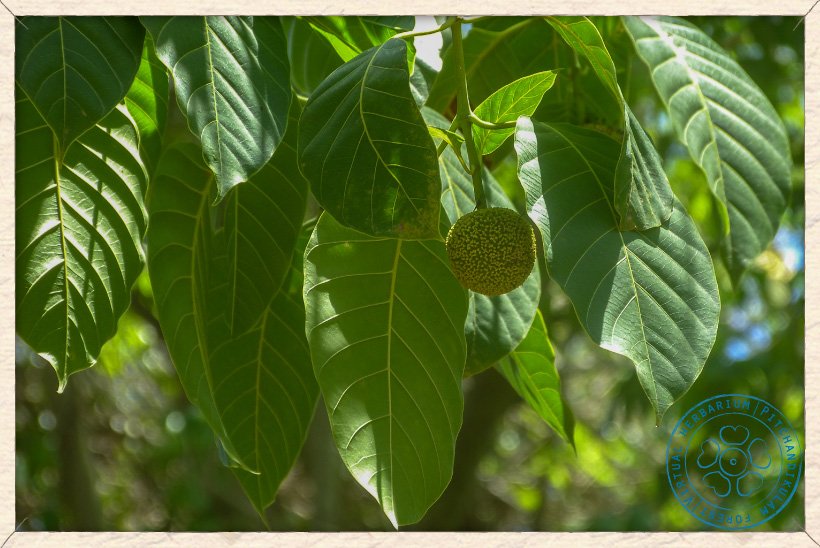
Neolamarckia cadamba fruiting branchlet
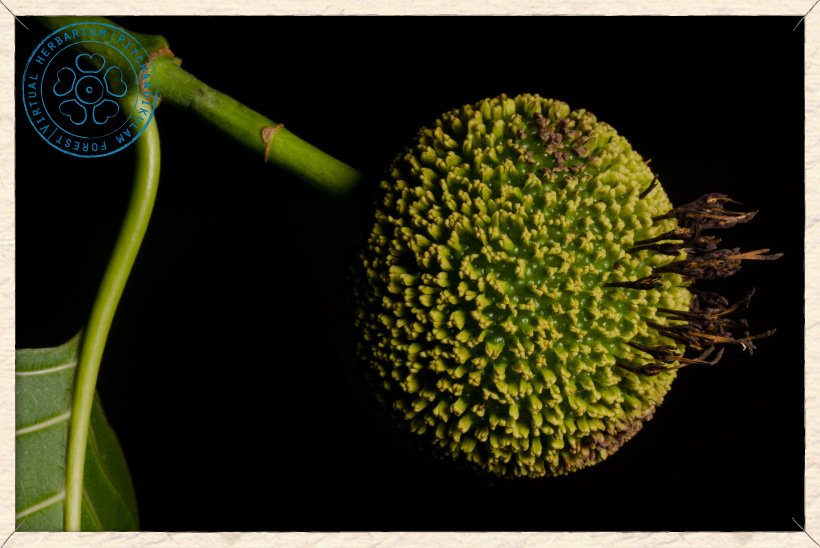
Neolamarckia cadamba pseudocarp (false-fruit)
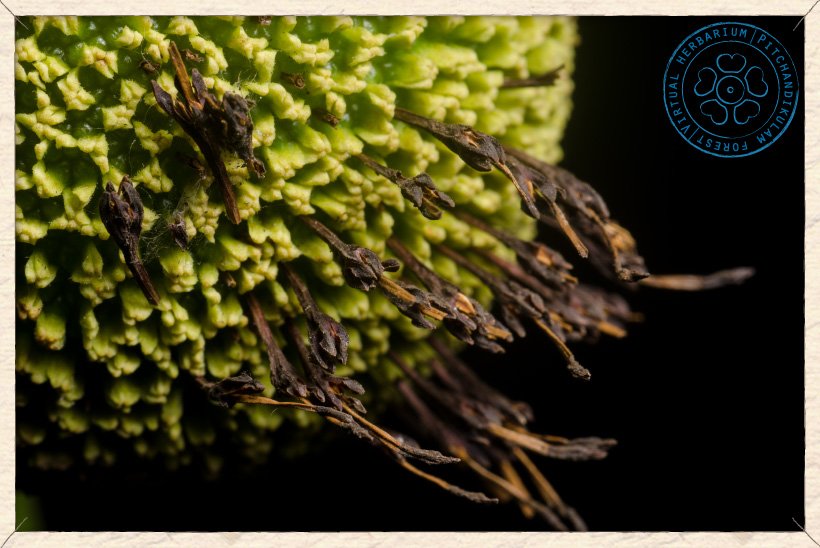
Neolamarckia cadamba pseudocarp with dried corolla
Seed
The seeds of Neolamarckia cadamba are tiny (about 0.5 mm long). There are few seeds in each capsule but they are numerous in each pseudocarp.
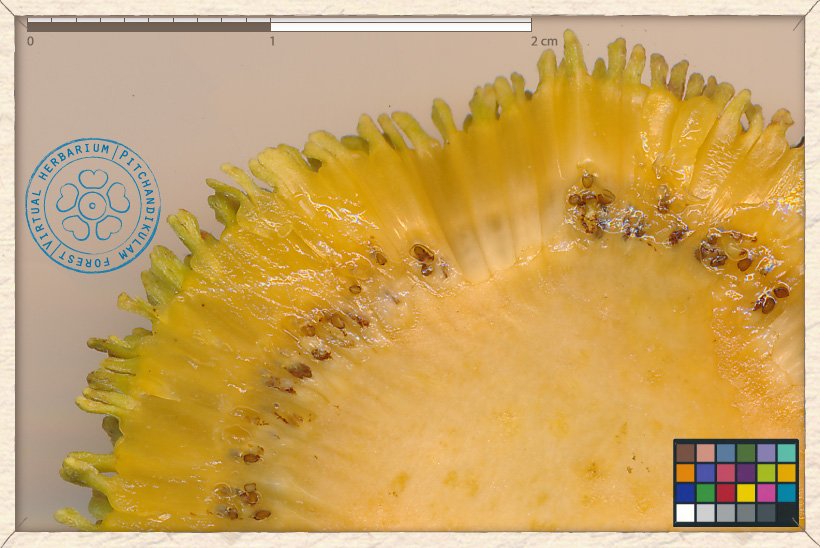
Neolamarckia cadamba tiny seeds
Human Uses
The tree is grown along avenues, roadsides and villages for its shade.
The fresh leaves are used as cattle fodder.
The wood of Neolamarckia cadamba is used for plywood, light construction, pulp and paper, boxes and crates, dug-out canoes, and furniture components...
The root bark yields a yellow dye.
Source : Orwa C., Mutua A., Kindt R., Jamnadass R., Anthony S., 2009, Agroforestree Database: a tree reference and selection guide
Neolamarckia cadamba is used in Ayurveda and Siddha medicines.
Neolamarckia cadamba is hepatoprotective, nematicidal, tonic, febrifuge and astringent.
The leaves extract is used as a mouth gargle.
The leaves decoction is used as a gargle to treat aphthae and stomatitis. The dried bark is used to relieve fever, burning sensation and as a tonic.
The bark juice is used in eyes inflammation.
The stem is used as a tooth brush in gum infection and dental caries.
The fresh juice of the fruit is used to kill worms in sores.
Sources :
- Arya Vaidya Sala, 1996, Indian Medicinal plants
- Basu & Kirtikar, 1918, Indian Medicinal Plants
- Quattrocchi, 2012, CRC World Dictionary of Medicinal and Poisonous Plants
- Useful Tropical Plants Database, Ken Fern, 2014 (http://tropical.theferns.info)
Ecology
Neolamarckia cadamba is "an early-succession species, it grows best on deep, moist, alluvial sites, often in secondary forests along riverbanks and in the transitional zone between swampy, permanently flooded and periodically flooded areas". (Orwa C., Mutua A., Kindt R., Jamnadass R., Anthony S., 2009, Agroforestree Database: a tree reference and selection guide)
Distribution
Indo-Malesian biogeographical region and China.
Source
Information on this page is sourced from: