Ficus religiosa
No common name set
EditMoraceae
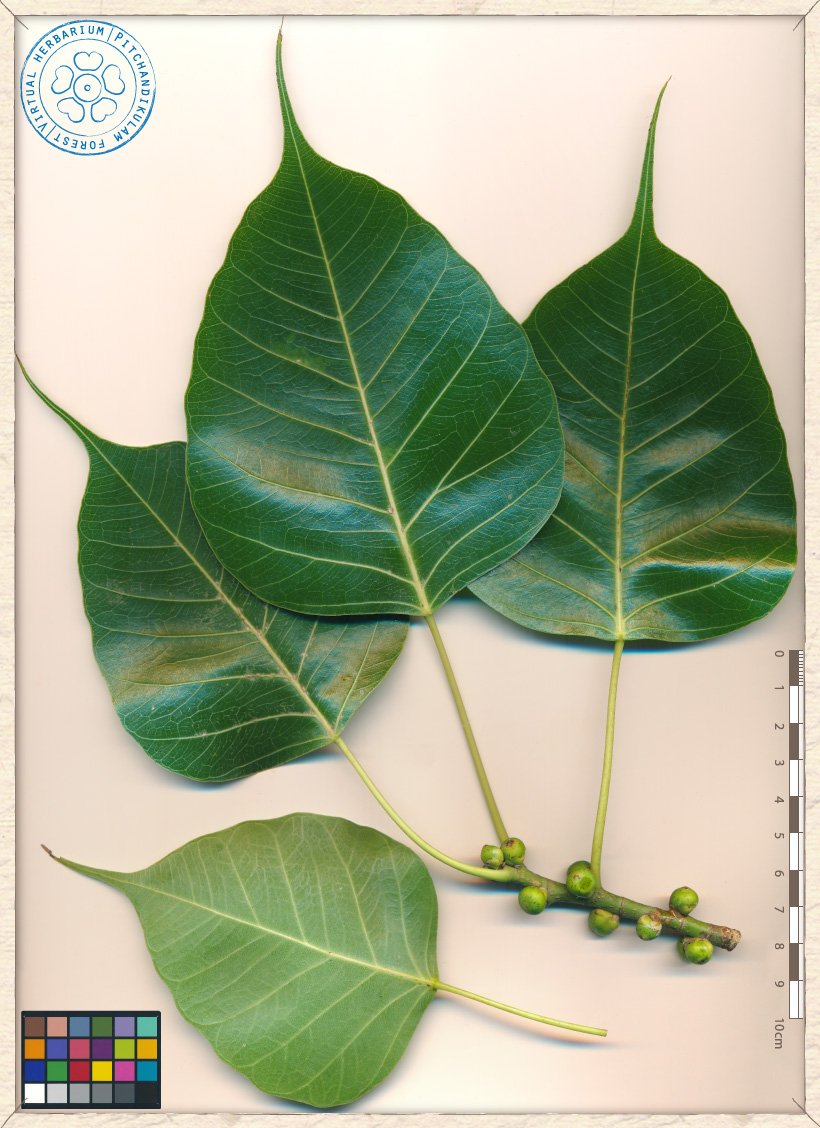
Main specimen
Habit
Ficus religiosa is a large deciduous tree growing up to 30 m high (the tallest ficus species of India). It has a fluting and straight trunk and a spreading crown. Ficus religiosa has no aerial roots.
Ficus religiosa starts its life as an epiphyte (a plant that grows on another plant or object). The seeds germinate in the cracks of a host tree or buildings. The mesh of roots growing around the support tree applies considerable pressure that often kills the host tree.

Ficus religiosa tree beside a temple

Ficus religiosa tree

Ficus religiosa young tree next to a small temple
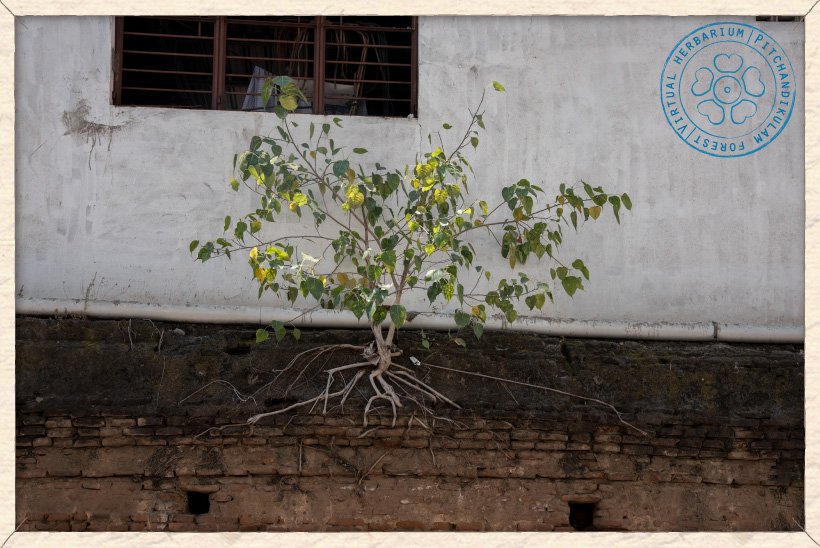
Young Ficus religiosa growing on a building wall
Stem Bark
The bark of Ficus religiosa is smooth and greyish-coloured (exfoliating in irregular rounded flakes with age). The trunk of old individuals are often fluted.
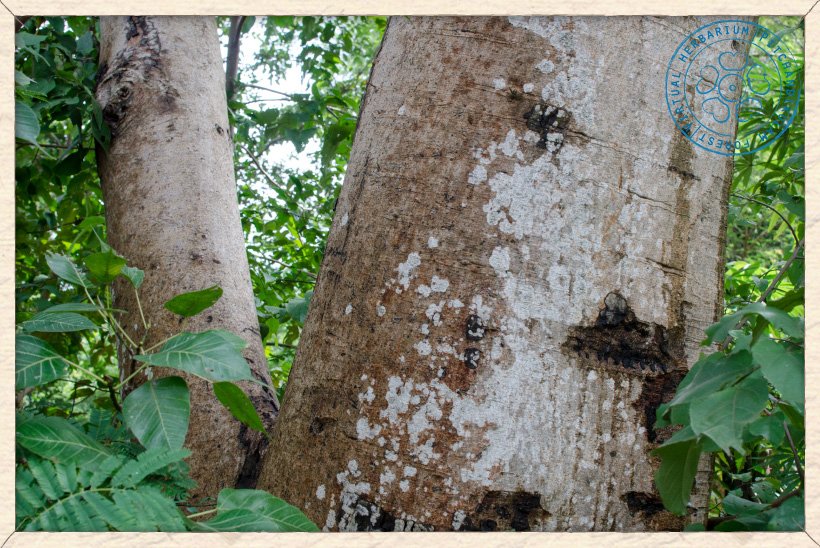
Ficus religiosa trunk
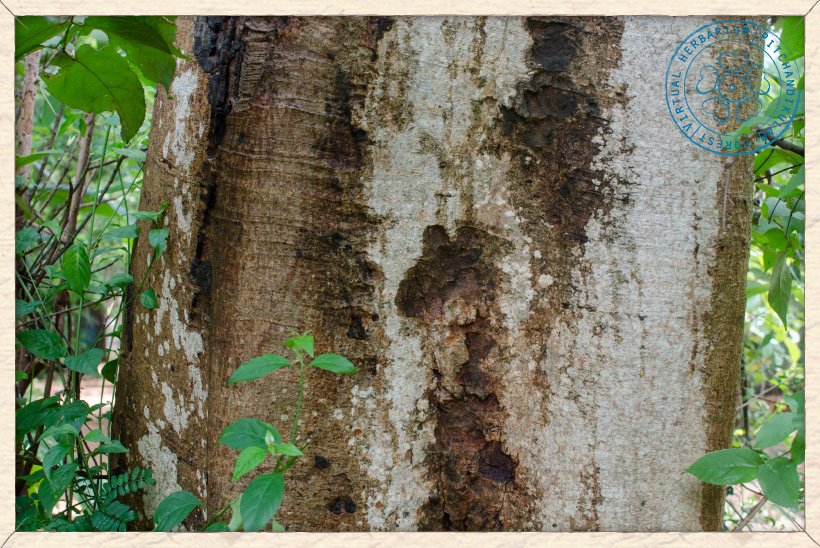
Ficus religiosa trunk
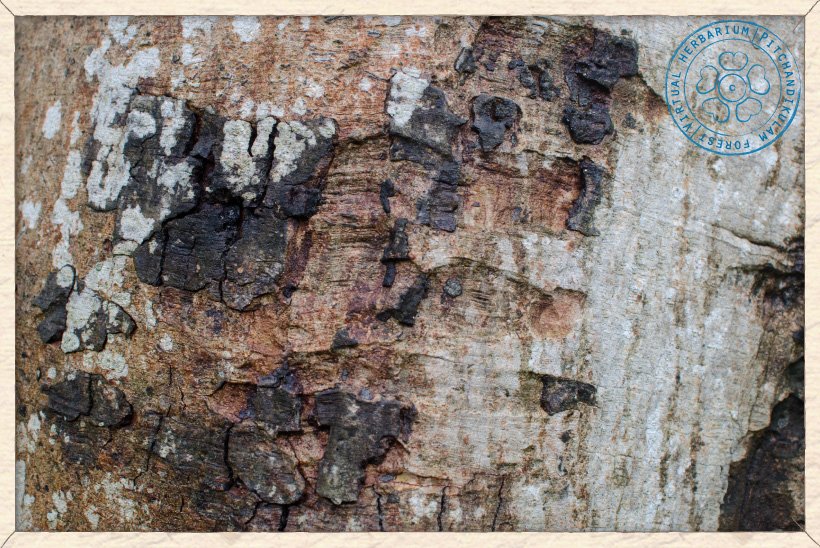
Ficus religiosa bark
Leaf
The leaves of Ficus religiosa grow alternately on the stem (spirally arranged).
The leaf is simple, bright green-coloured above and paler beneath. The leaf is glossy, coriaceous and glabrous on both sides.
The leaves have a long petiole (up to 10 cm).
The blade of the leaf of Ficus religiosa is 10-20 cm long and 7-15 cm wide. The shape of the blade is broadly ovate to cordate, the apex is acuminate with a very long cusp (up to 6-7 cm), the base is rounded or truncate and the margins are entire.
The venation of the leaf is reticulate with a prominent midrib.
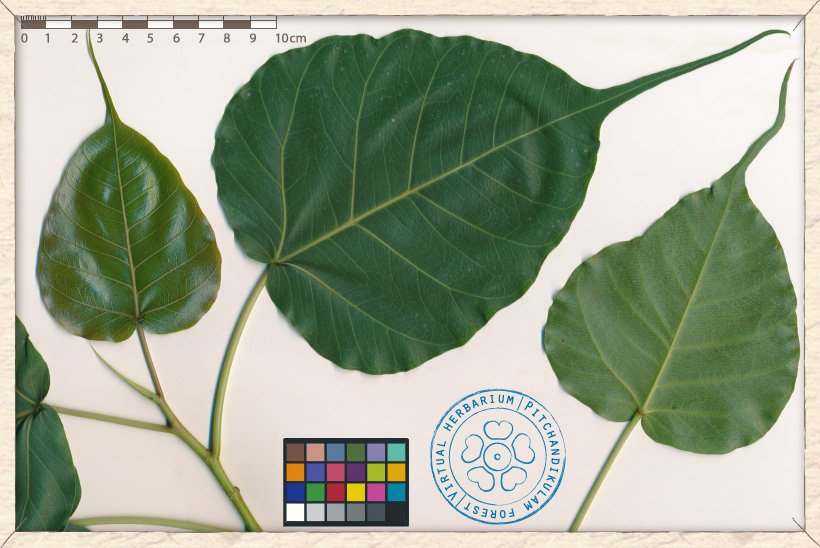
Ficus religiosa leaves
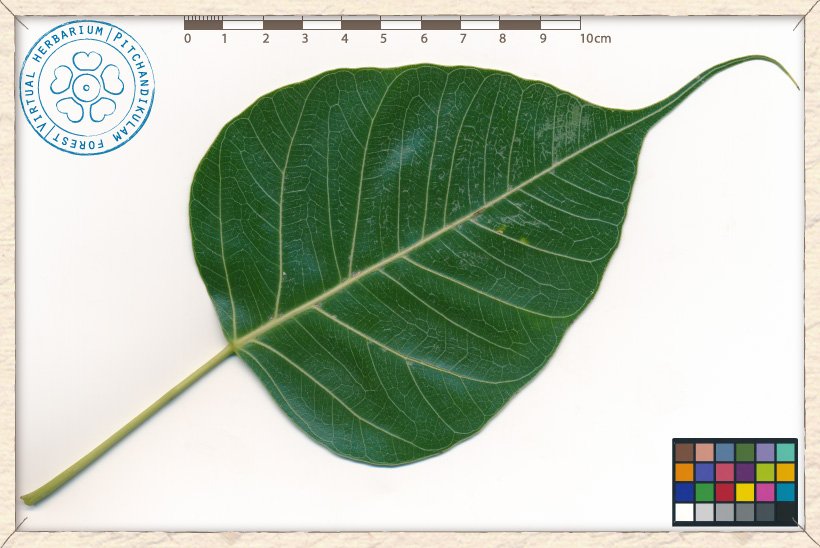
Ficus religiosa leaf (upper side)
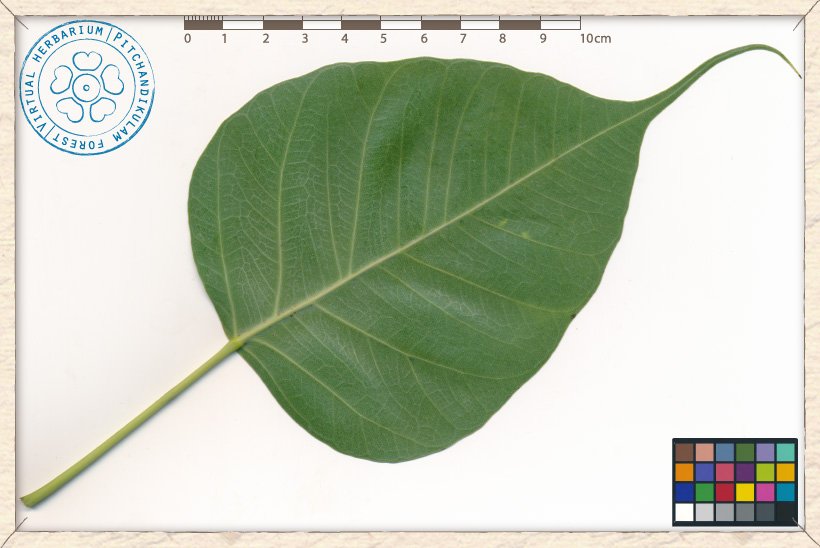
Ficus religiosa leaf (lower side)
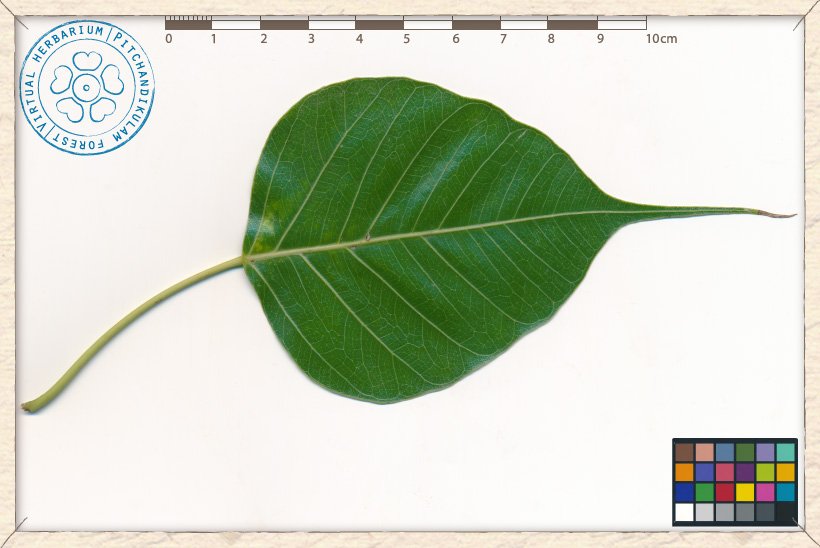
Ficus religiosa young leaf
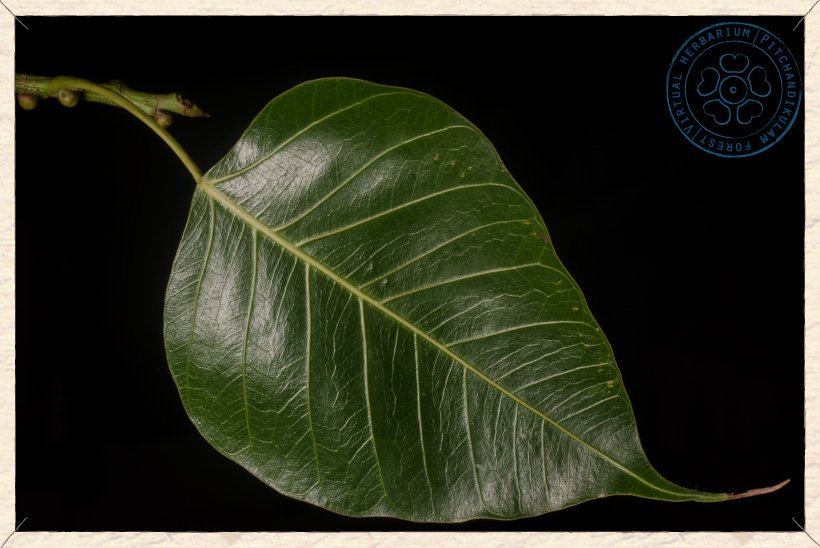
Ficus religiosa leaf (upper side)
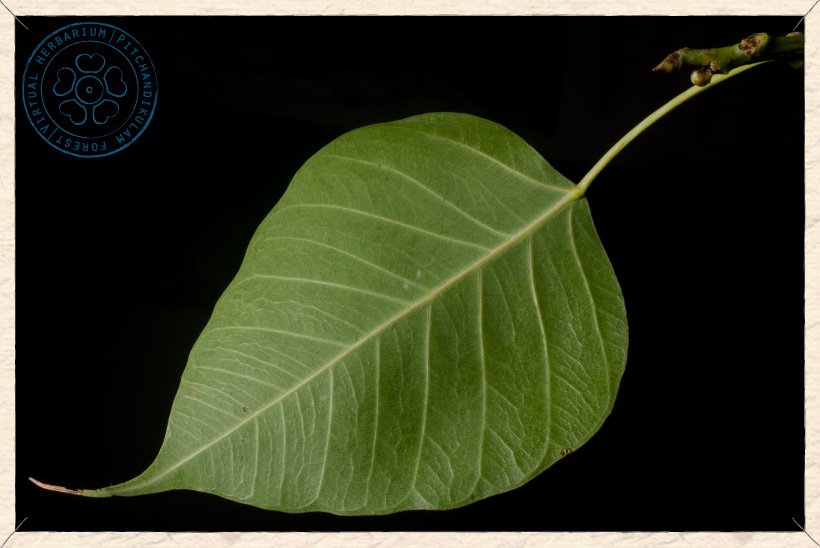
Ficus religiosa leaf (lower side)
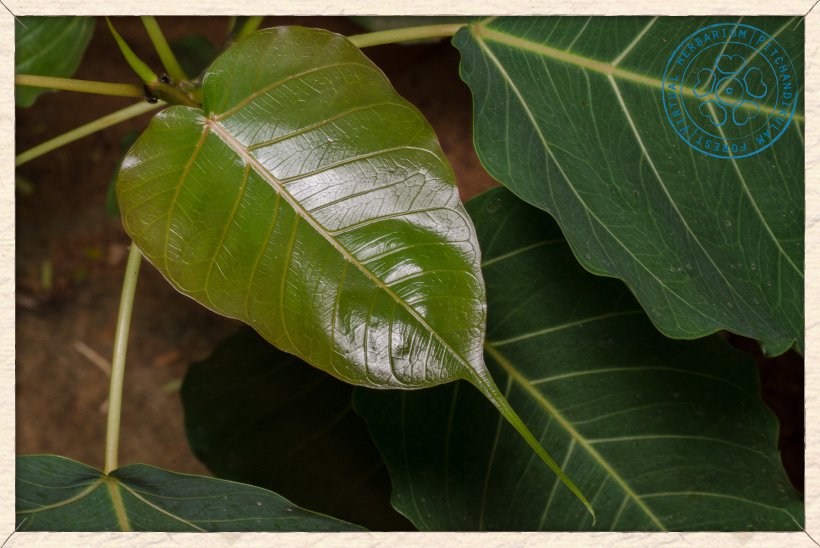
Ficus religiosa new leaf
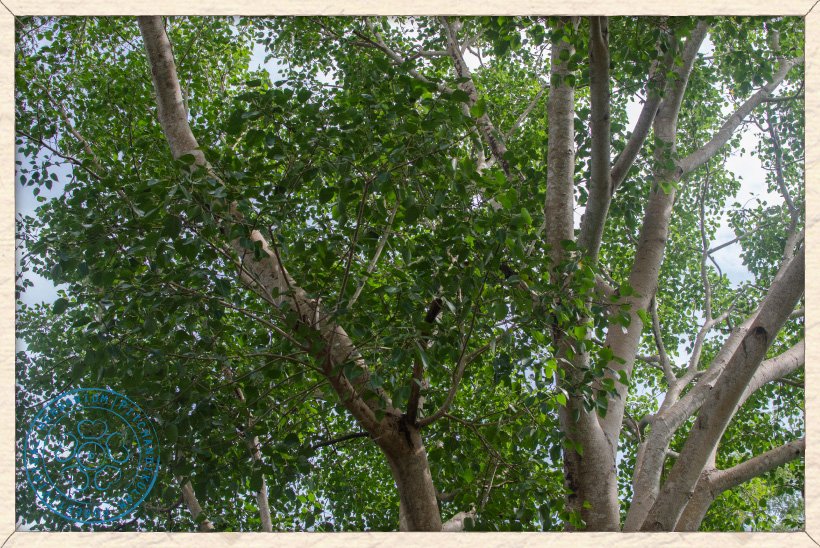
Ficus religiosa foliage
Flower
The flowers of Ficus religiosa are enclosed within a fleshy receptacle referred to as the fig. What we think of as a fruit is an inflorescence, a flower-bearing structure called syconium (*).
The syconium of Ficus religiosa is monoecious, containing both female and male flowers and also gall flowers (hosts of pollinators).
(*) The syconium is an urn-shaped receptacle which contains between 50 to 7000 (depending on the species) highly simplified uniovulate flowers or florets on its inner surface. It is closed off from most organisms by the ostiole, formed by bracts.
Syconia can be monoecious or functionally dioecious : the former contain female flowers with variable style length and few male flowers, and produce seeds and pollen. The latter have male and female forms in different plants : seed figs contain female flowers with long styles and produce seeds; gall figs contain female flowers with short styles and male flowers and produce pollen.
Once pollinated, the florets develop into achenes or drupes, in which the seeds are enclosed by a layer of endocarp. From this perspective, the fig is an enclosure with tens to thousands of fruits within it. (Galil, J., Fig biology, 1977)
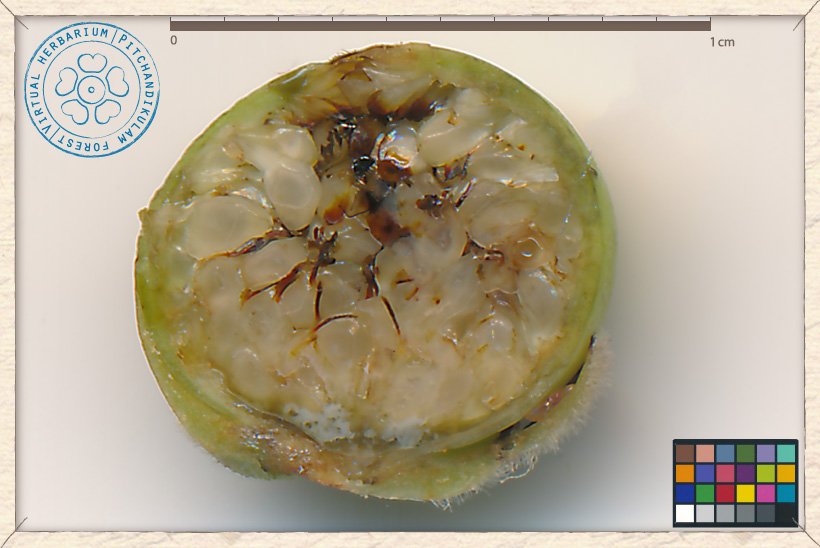
Ficus religiosa syconium section : enclosing the tiny male and female flowers
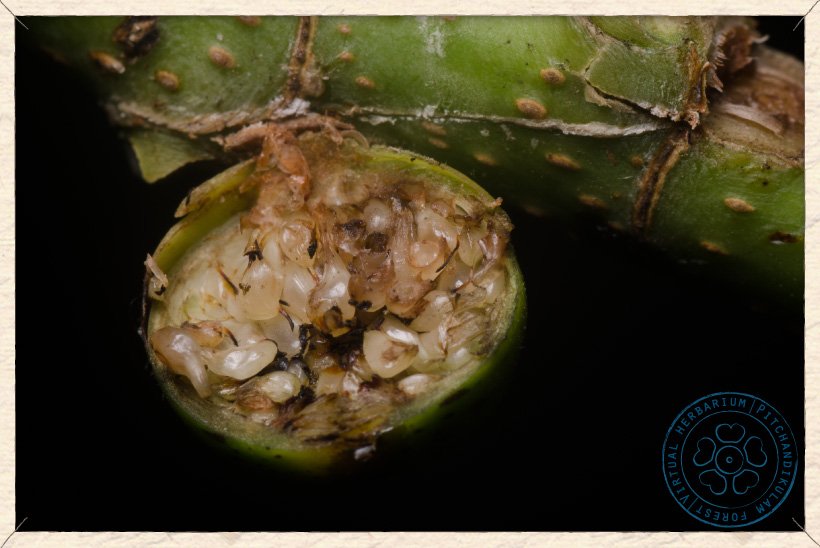
Ficus religiosa syconium section : enclosing the tiny male and female flowers
Fruit
The fig, what we referred to as a fruit, is in fact a fleshy enclosure, an infructescence that contains hundreds of tiny fruits (achenes).
The fruits of Ficus religiosa are globose achenes, brownish and about 1-2 mm across.
The figs are sessile, in pairs at the axil of the leaves. They are about 1 cm across, globose and they are yellow-reddish when ripe.
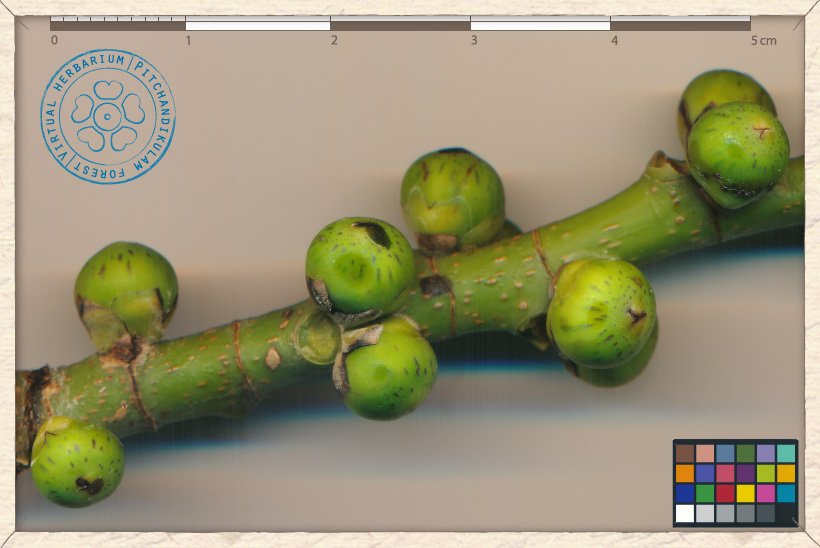
Ficus religiosa unripe figs
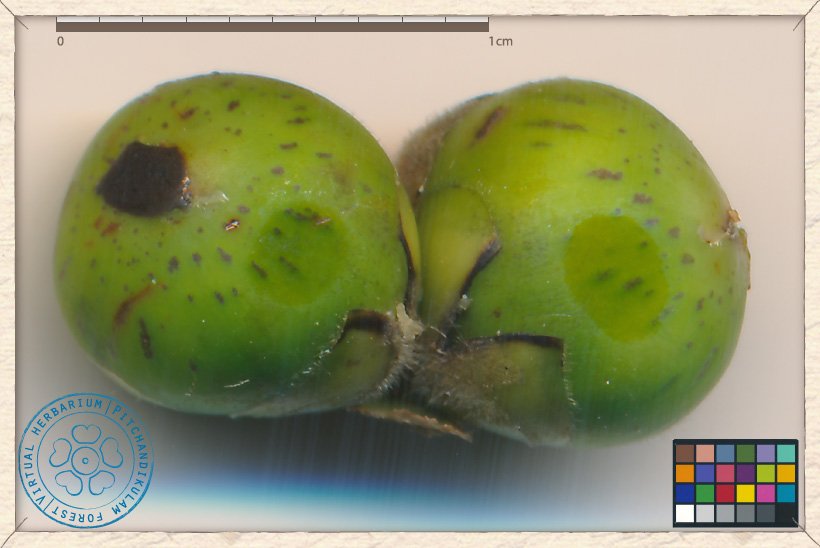
Ficus religiosa paired figs
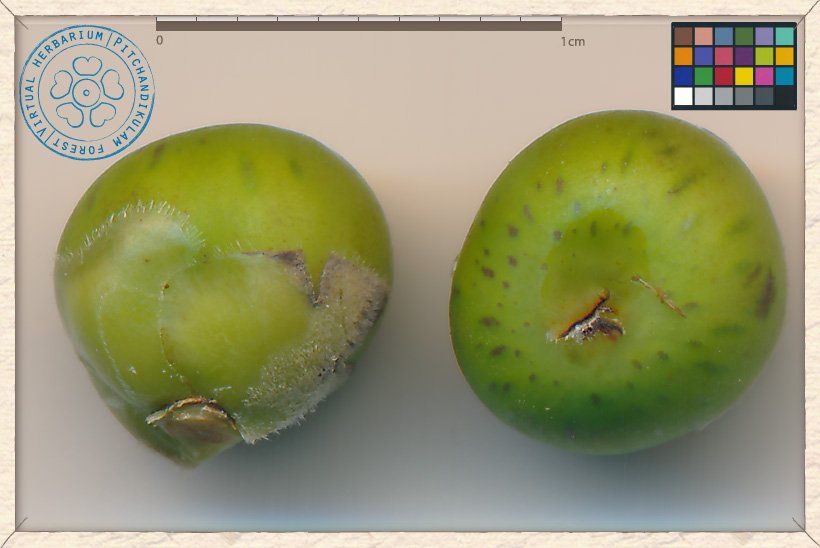
Ficus religiosa syconium (lateral and upper sides)
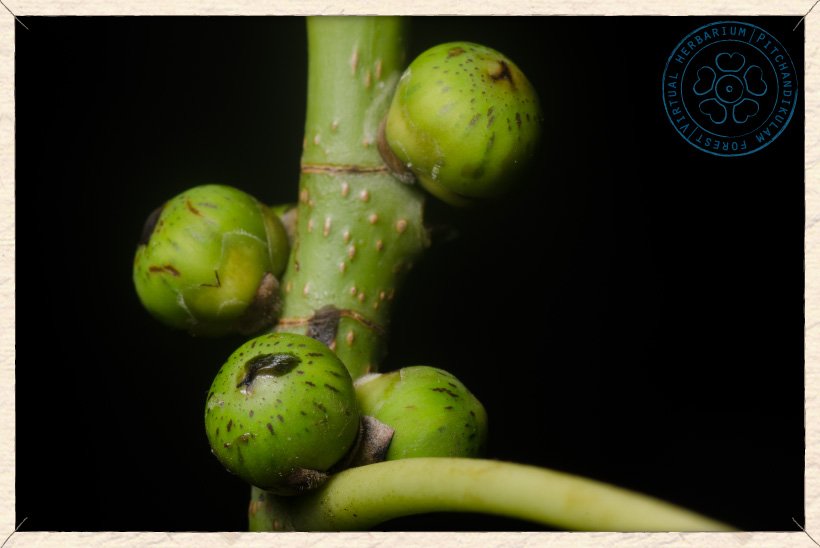
Ficus religiosa figs
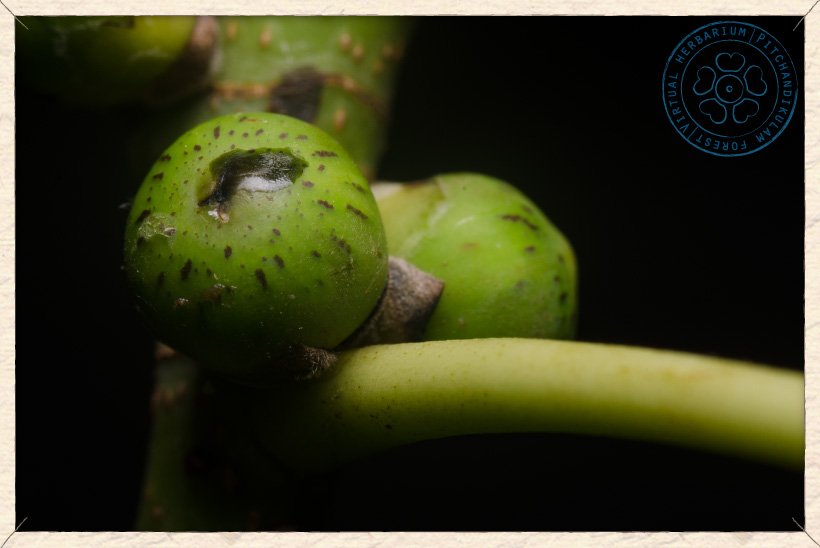
Ficus religiosa figs
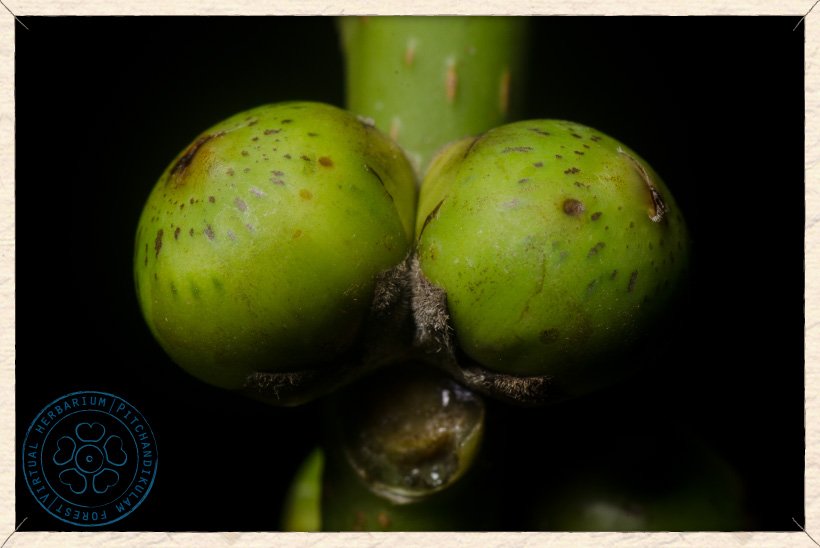
Ficus religiosa paired figs
Human Uses
The leaves of Ficus religiosa are a good fodder for goats and cattle (10-14% of crude protein) and a silage prepared from the leaves is palatable and digestible.
Source : (Orwa C., A. Mutua, R. Kindt, R. Jamnadass, S. Anthony, 2009, Agroforestree Database : a tree reference and selection guide version 4.0)
The wood of Ficus religiosa is greyish-white and moderately hard. It is moderately durable under cover and quite durable under water. It is little used but is occasionally converted into packing cases, cheap boarding, yokes, spoons and bowls. (Orwa C., A. Mutua, R. Kindt, R. Jamnadass, S. Anthony, 2009, Agroforestree Database : a tree reference and selection guide version 4.0)
The bark contains tannin and it is occasionally used for tanning and for dyeing. It also yields fibre made into ropes. (Dastur, 2006, Useful Plants of India and Pakistan)
The bark of Ficus religiosa is astringent, antiseptic, alterative, laxative, haemostatic, vaginal disinfectant. It is used in diabetes, diarrhoea, leucorrhoea, menorrhagia, nervous disorders and in skin diseases. (Khare, 2007, Indian Medicinal Plants, An Illustrated Dictionary)
The bark infusion is used to treat scabies. (Basu & Kirtikar, 1918, Indian Medicinal Plants)
The paste of the powdered bark is used to treat inflammatory swellings and burns. (Arya Vaidya Sala, 1996, Indian Medicinal plants)
The juice of the bark is used as a mouthwash to cure toothache and to strengthen gums. (Krishen, 2006, Trees of Delhi)
The fig is laxative and it helps digestion. The dried pulverised figs taken in water are used to treat asthma. (Arya Vaidya Sala, 1996, Indian Medicinal plants
The leaves and young shoots are purgative. (Basu & Kirtikar, 1918, Indian Medicinal Plants)
Ecology
Ficus religiosa is found in deciduous forests from the coastal plains up to 1500 m in the hills.
"Ficus religiosa grows on a wide variety of soils but prefers deep, alluvial sandy loam with good drainage. It is also found on shallow soils including rock crevices". (Orwa C., A. Mutua, R. Kindt, R. Jamnadass, S. Anthony, 2009, Agroforestree Database : a tree reference and selection guide version 4.0)
Ficus religiosa is often planted around temples.
Distribution
India, Sri Lanka, Pakistan, Bangladesh, Myanmar, Nepal, Bhutan, South-East Asia, South China (Caribbean and North America).
Source
Information on this page is sourced from: