Mitragyna parvifolia
No common name set
EditRubiaceae

Main specimen
Habit
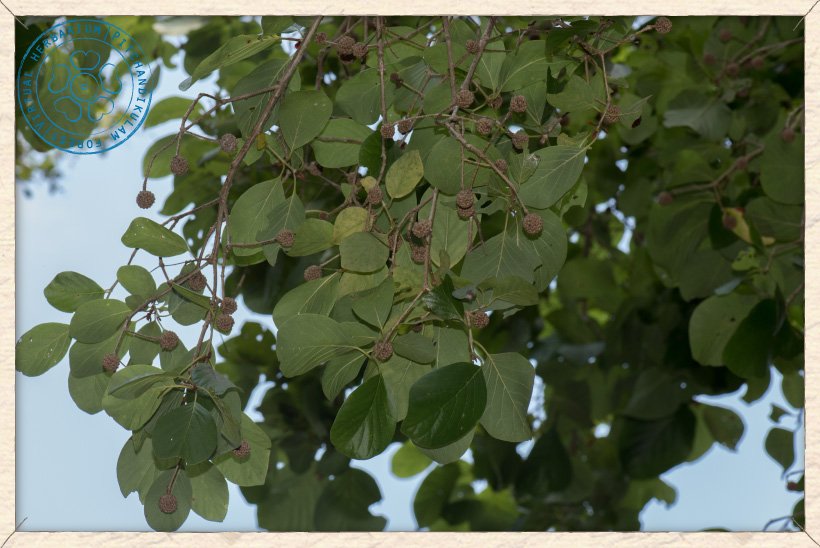
Mitragyna parvifolia is a large deciduous tree with a short and irregular trunk and a spreading crown.
Mitragyna parvifolia can grows up to 25-30 m high.
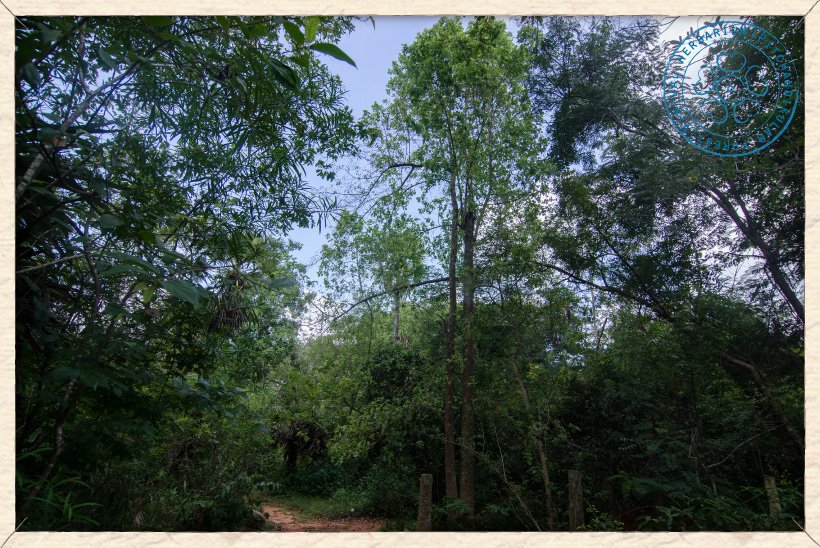
Mitragyna parvifolia young tree
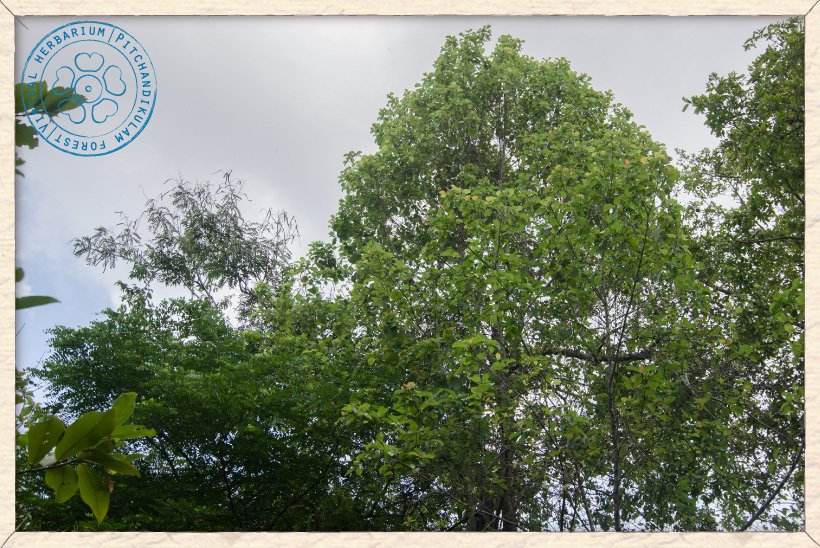
Mitragyna parvifolia crown
Stem Bark
The bark of Mitragyna parvifolia is pale grey-coloured, smooth with circular and shallow pits where old bark has flaked off.
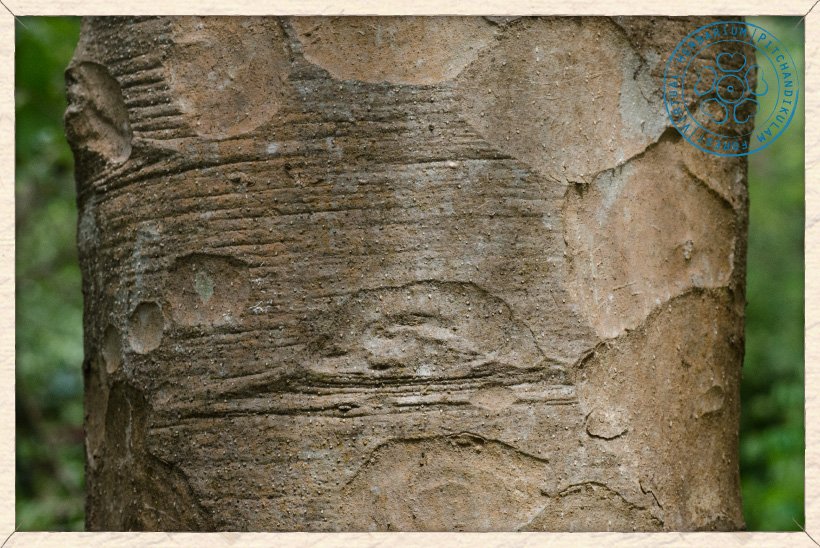
Mitragyna parvifolia trunk
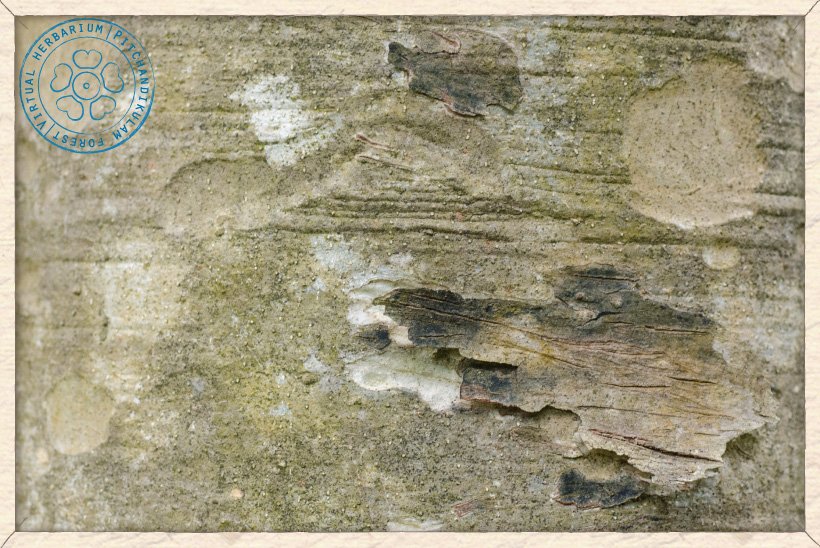
Mitragyna parvifolia bark
Leaf
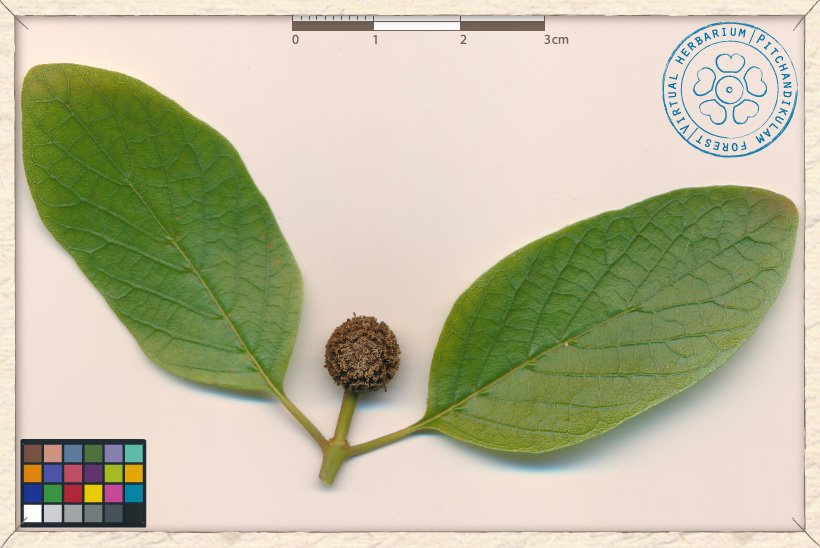
The leaves of Mitragyna parvifolia grow opposite on the stem.
The leaf is simple, bright green-coloured above and paler beneath. The leaf is glabrous on both sides (some minute hairs on the midrib beneath).
The leaves have a 1-1.5 cm long petiole.
The leaf of Mitragyna parvifolia is 7-11 cm long and 4-6 cm wide. The shape of the blade is ovate to oblong, the apex is obtuse, the base is rounded and the margins are entire.
The venation of the leaf is reticulate with a prominent midrib.
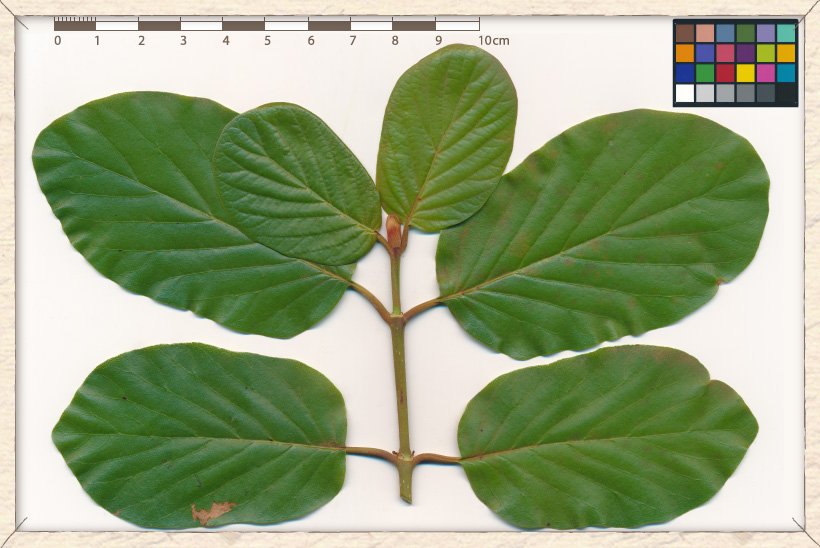
Mitragyna parvifolia twig
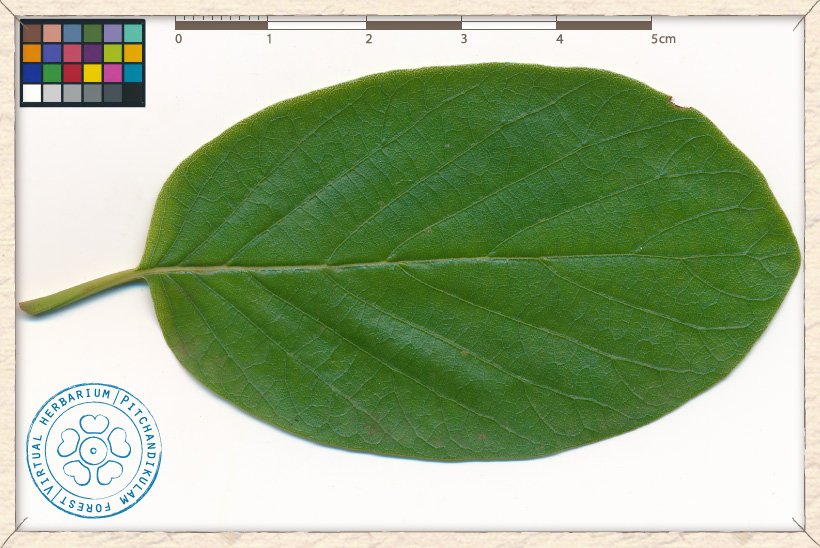
Mitragyna parvifolia leaf (upper side)
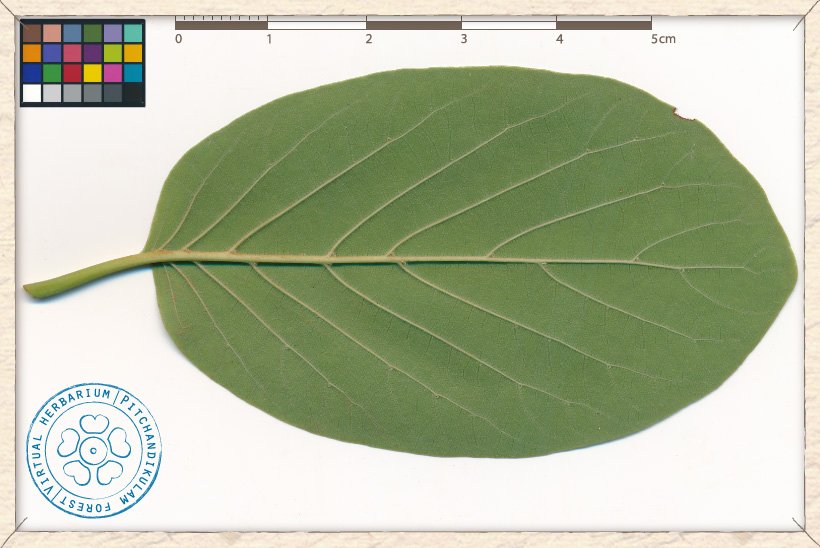
Mitragyna parvifolia leaf (lower side)
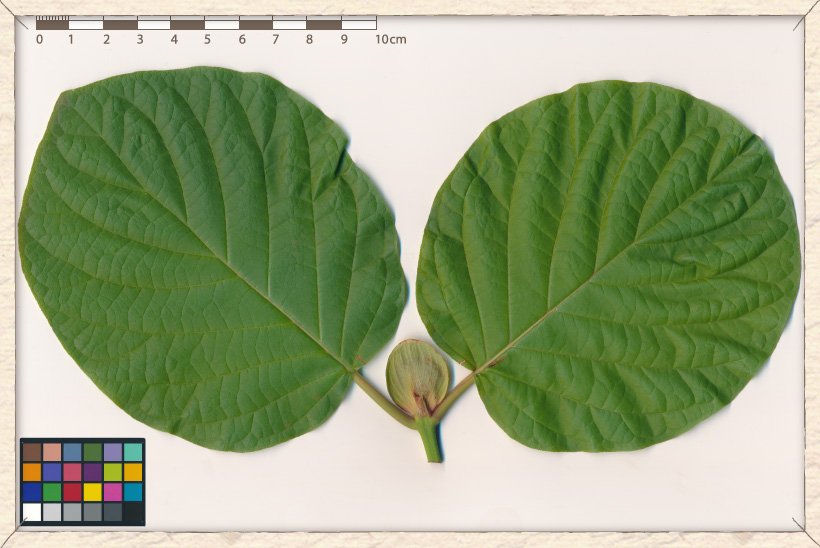
Mitragyna parvifolia new leaves
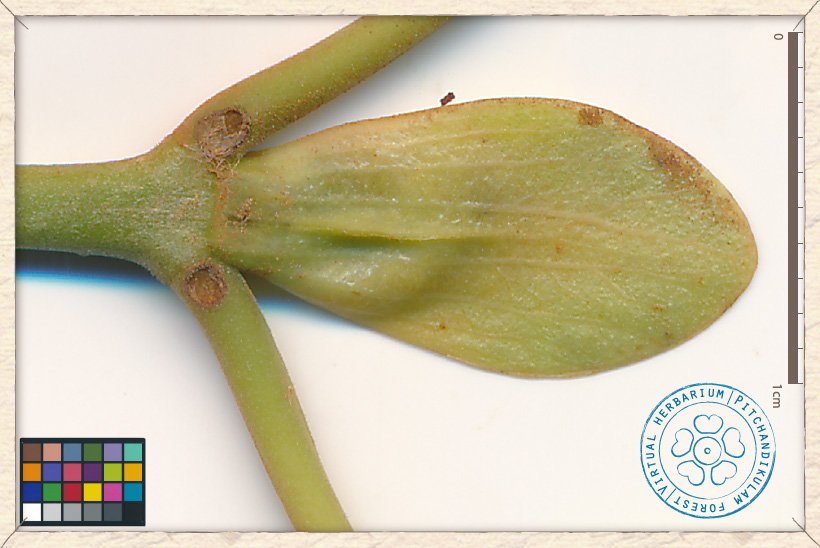
Mitragyna parvifolia stipule
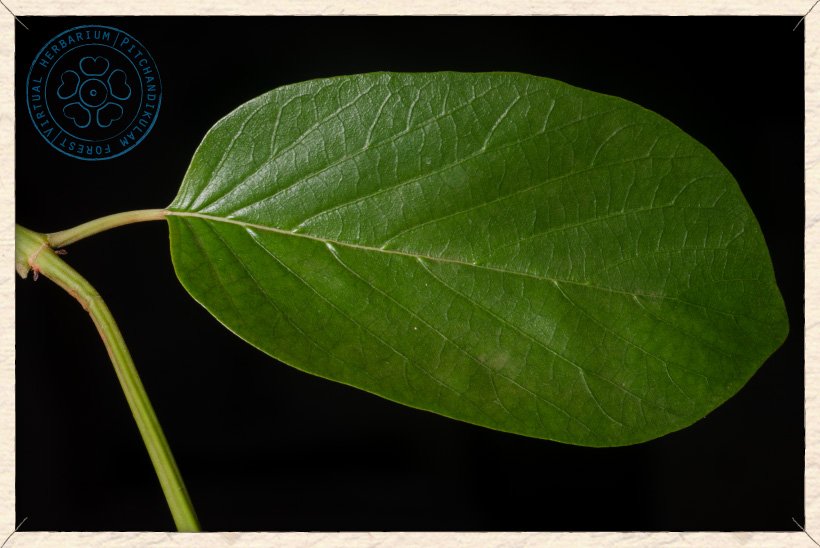
Mitragyna parvifolia leaf (upper side)
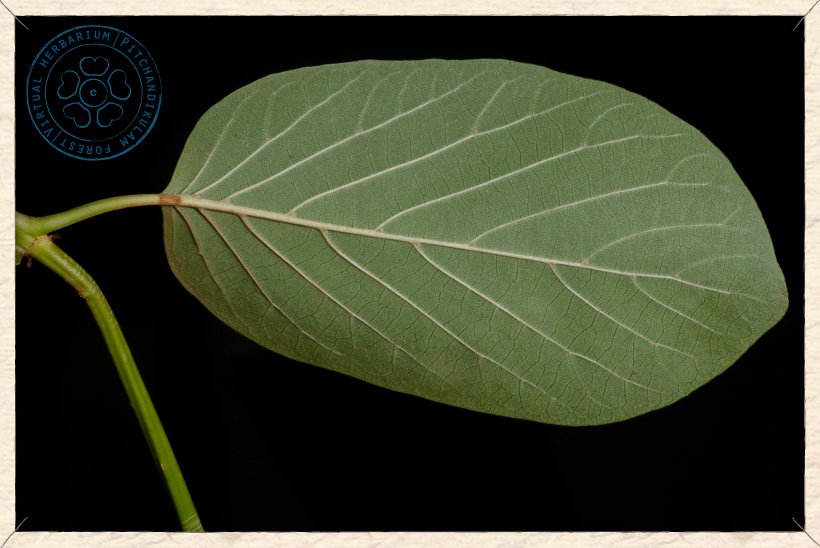
Mitragyna parvifolia leaf (lower side)
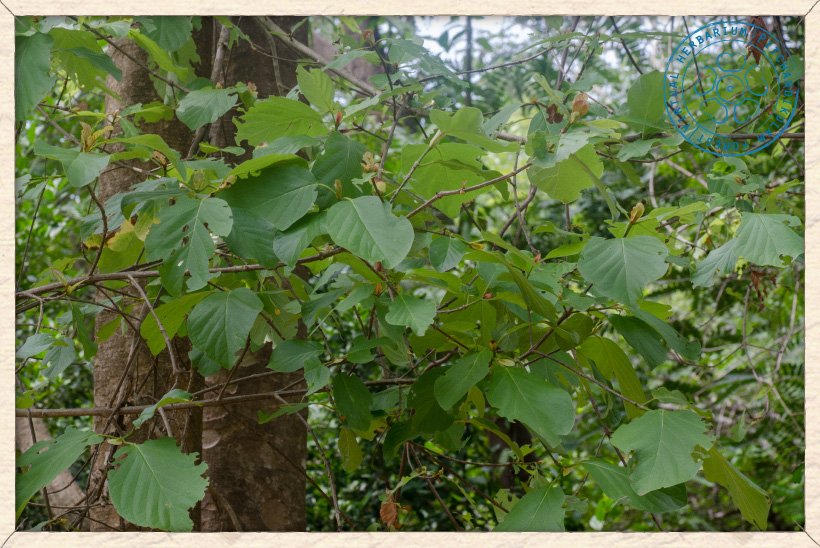
Mitragyna parvifolia foliage
Flower
The flowers of Mitragyna parvifolia are grouped in dense, axillary or terminal and globose heads (0.8-1.5 cm across).
The calyx is truncate. The calyx-lobes are minute and ciliate.
The corolla is cream-coloured. The corolla-tube is 5 mm long. The corolla is 5-lobed. The lobes are 2.5 mm long and recurved.
The androecium is composed of 5 stamens attached near the corolla throat. The filament are 3 mm long and the anthers are oblong.
The style is filiform and 5 mm long.
The ovary is obconic, 1.5 mm long and 2-celled.
The flowers are fragrant.
Mitragyna parvifolia flower buds
Fruit
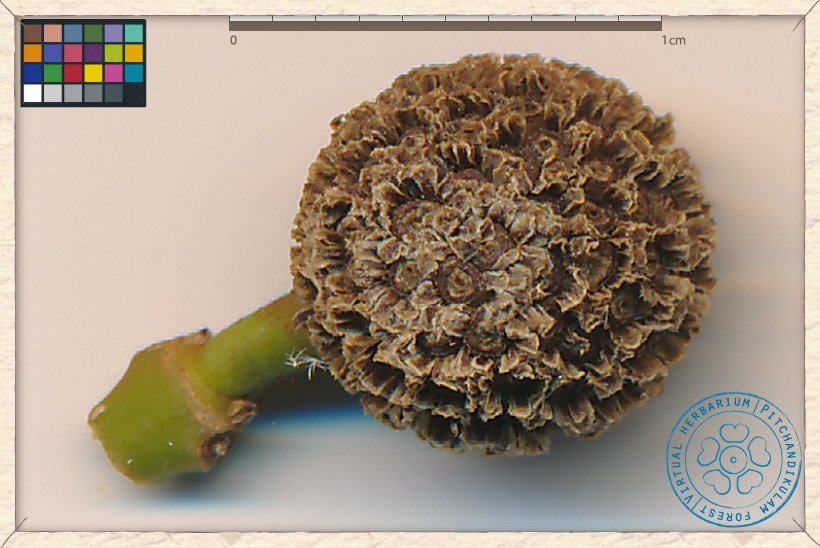
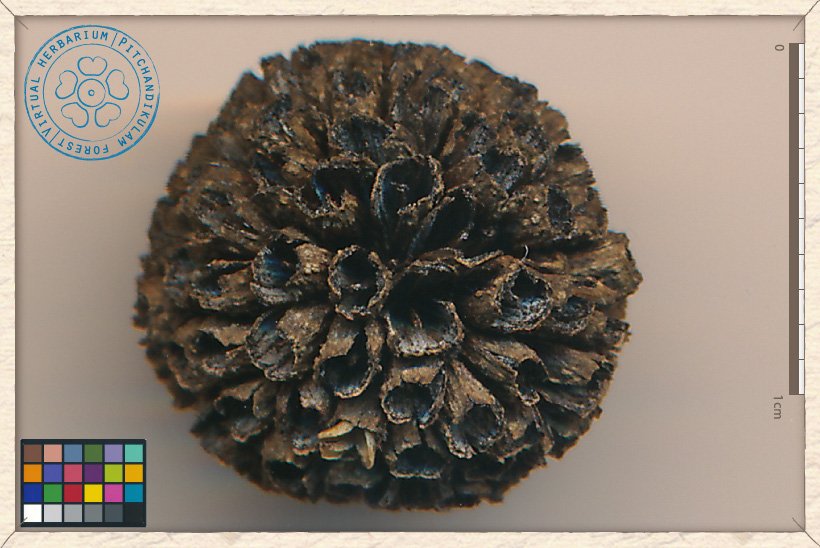
The fruit of Mitragyna parvifolia is a capsule. All the capsules are aggregated into a globular and dense head/infructescence (1 cm in diameter). The capsules are 1.5-2 mm long.
Mitragyna parvifolia infructescence
Mitragyna parvifolia infructescence
Mitragyna parvifolia infructescence
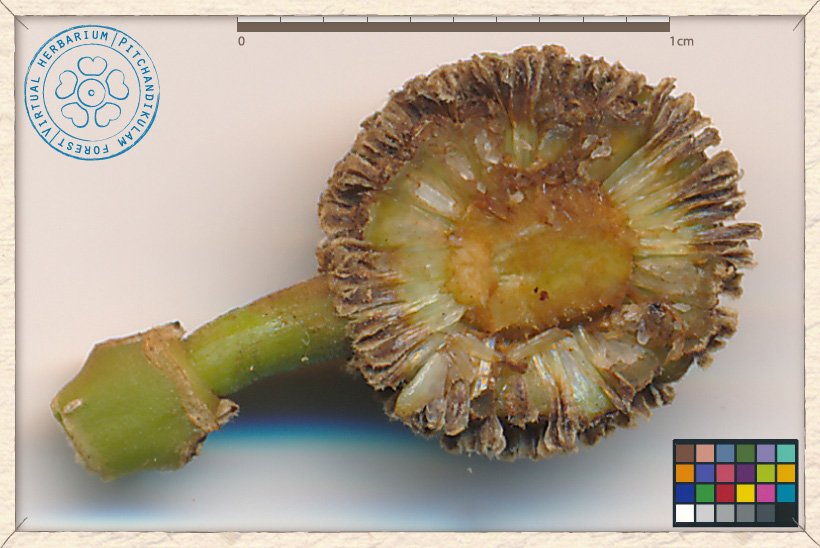
Mitragyna parvifolia infructescence section
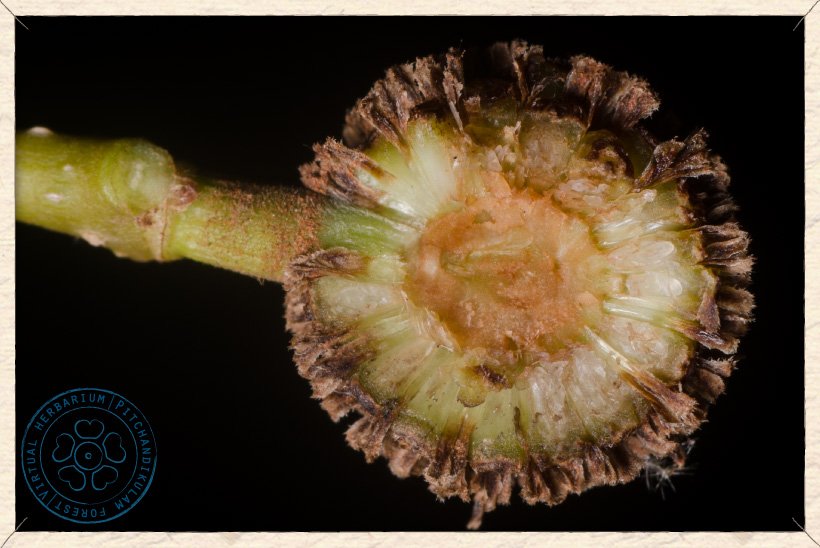
Mitragyna parvifolia infructescence section
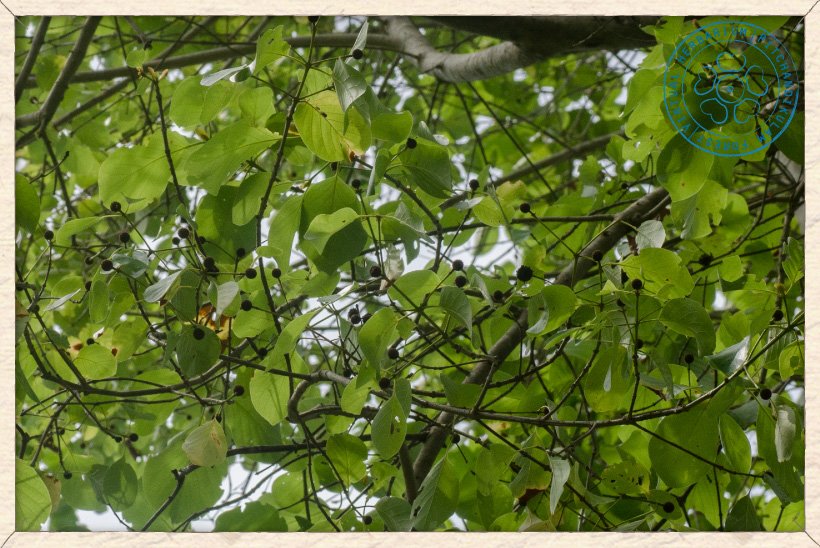
Mitragyna parvifolia in fruit
Seed
The seeds of Mitragyna parvifolia are flat, spherical and less than 1 mm in diameter.
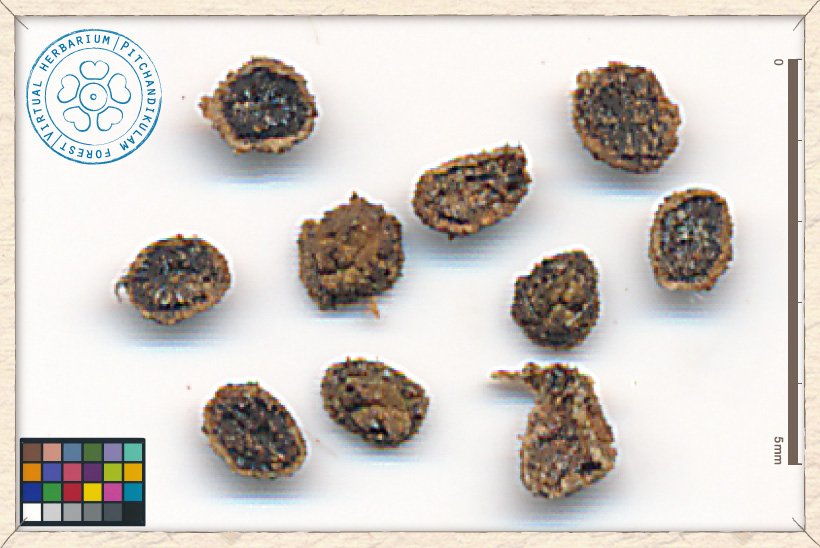
Mitragyna parvifolia seeds
Human Uses
The wood of Mitragyna parvifolia is hard and durable if not exposed. It takes a good polish. The wood is used in building construction (planks and rafters), for making furniture, agricultural implements, small articles and for turning.
A fibre from the bark is used to make cordage.
Source : Dastur, 2006, Useful Plants of India and Pakistan
The roots, bark and the leaves of Mitragyna parvifolia are used in internal and external haemorrhages, skin diseases, leprosy and fever. (Arya Vaidya Sala, 1996, Indian Medicinal plants)
The leaf paste is applied on wounds.
The pounded leaves with garlic are used to treat chronic cough.
The leaf juice is used as hepatic stimulant, hepatoprotective, to cure jaundice and for liver ailments.
The bark paste and juice are applied for muscular pains and dog bite.
Source : Quattrocchi, 2012, CRC World Dictionary of Medicinal and Poisonous Plants
Ecology
Mitragyna parvifolia is found in deciduous forests, ravine areas and along river banks from the coastal plains up to 900-1000 m high in the hills.
Distribution
Indo-Malesia biogeographical region.
Source
Information on this page is sourced from: